

12 NGSS Mapped 3rd Grade Science Experiments with Story Prompts
Here is a ready-to-run collection of third-grade science experiments built around household items, each one mapped to NGSS performance expectations. Every entry includes an objective, a materials list, three steps, an expected result, and a time and difficulty estimate so you can pick one and start today. Most take 15 to 40 minutes and use things already in your kitchen or recycling bin.
TL;DR:
- The balloon rocket demonstrates how air pressure creates thrust and can be modified by changing straw length or release angle to test variables.
- Seed germination activity illustrates the plant life cycle, with roots and shoots typically appearing within a week under proper moisture and light conditions.
- The baking soda and vinegar volcano provides a safe, quick chemical reaction experience that produces visible gas bubbles and foam overflow.
- Mini terrariums and water cycle bags model ecosystems and weather patterns but require more building time and careful observation over days or weeks.
- Repeating simple experiments weekly with prediction and evidence prompts helps develop science habits more effectively than rare, complex projects.
Table of Contents
- 1. Forces and motion experiments worth trying
- Life science and earth science in a bag
- Chemistry and states of matter
- How to turn a demo into a real investigation
- Materials, safety, and clean-up basics
- Scaling experiments up or down for different learners
- How story-driven experiments support engagement
- Why habit beats novelty in science learning
- Bring the story into your next experiment
- FAQ
- Sources
1. Forces and motion experiments worth trying
Balloon rocket. Objective: show how air pressure creates thrust. Materials: a balloon, a straw, string, and tape. Steps: thread the string through the straw, tape the straw to an inflated balloon, then release the balloon’s air and watch it race along the string. Expected result: the balloon shoots forward as escaping air pushes it in the opposite direction. Time: 15 minutes. Difficulty: easy.
Ramp races. Objective: compare how surface and incline affect speed. Materials: a board or stiff cardboard, books for height, and several toy cars or balls. Steps: build a ramp, roll the same object from three heights, and time each run. Expected result: steeper ramps produce faster, longer rolls. Time: 20 minutes. Difficulty: easy. Our Newton’s Laws for Kids guide walks through more force and motion setups if you want to extend this one.
Straw-powered rocket. Objective: explore thrust and air resistance with a lighter-weight build. Materials: a straw, paper, and tape. Steps: roll a paper tube slightly wider than the straw, seal one end, then blow sharply through the straw to launch it. Expected result: distance changes with breath force and rocket weight. Time: 15 minutes. Difficulty: easy.
Magnetism and static electricity
Magnet sorting and static balloon. Objective: distinguish magnetic force from static electricity. Materials: a magnet, assorted small objects, a balloon, and wool fabric or hair. Steps: sort objects by whether the magnet attracts them, then rub the balloon on hair and hold it near paper bits. Expected result: only certain metals respond to the magnet, while the charged balloon lifts paper without touching it. Time: 20 minutes. Difficulty: easy. Our magnetism experiments post and this magnet tiles activity collection both offer follow-up ideas, and our 15-minute electromagnet build makes a strong next step.
Life science and earth science in a bag
Seed germination race. Objective: observe plant life cycle stages and what seeds need to sprout. Materials: beans, paper towels, a zip-top bag, and water. Steps: fold a damp paper towel around beans, seal them in the bag, and tape it to a window to check daily. Expected result: roots and shoots appear within 3 to 7 days. Time: 10 minutes setup, observed over a week. Difficulty: easy.
Mini terrarium ecosystem. Objective: model how organisms depend on their environment. Materials: a clear jar, soil, small plants or moss, pebbles, and water. Steps: layer pebbles then soil, add plants, mist lightly, and seal the jar. Expected result: condensation cycles form inside as the mini-ecosystem self-sustains for weeks. Time: 25 minutes to build. Difficulty: moderate.
Water cycle in a bag. Objective: model evaporation, condensation, and precipitation. Materials: a zip-top bag, water, blue food coloring, and tape. Steps: add colored water to the bag, seal it, and tape it to a sunny window. Expected result: droplets form and “rain” down the inside of the bag within hours. Time: 10 minutes setup. Difficulty: easy.

Chemistry and states of matter
Baking soda and vinegar volcano. Objective: observe a chemical reaction that produces gas. Materials: baking soda, vinegar, dish soap, and a container. Steps: add baking soda and a drop of soap to the container, then pour in vinegar. Expected result: immediate fizzing and foam overflow as carbon dioxide forms. Time: 10 minutes. Difficulty: easy. The ACS Kids & Chemistry student guide outlines similar reaction demos with safety notes worth reviewing first.
Oobleck (states of matter). Objective: explore non-Newtonian fluids that act as both solid and liquid. Materials: cornstarch and water. Steps: mix two parts cornstarch with one part water, press it quickly, then let your hand relax into it. Expected result: it feels solid under pressure and liquid when still. Time: 10 minutes. Difficulty: easy.

Foil boat buoyancy test. Objective: test how shape affects floating capacity. Materials: aluminum foil, a basin of water, and pennies. Steps: shape foil into a boat, float it, and add pennies one at a time until it sinks. Expected result: wider, flatter boats hold more pennies before sinking. Time: 20 minutes. Difficulty: easy.
Light and shadow tracking. Objective: observe how light source position changes shadow size and direction. Materials: a flashlight, a small object, and paper. Steps: shine the flashlight from three different angles and trace the shadow each time. Expected result: shadows lengthen and shift direction as the light angle changes. Time: 15 minutes. Difficulty: easy. Our household science experiments roundup and nine physics experiments guide both include more light-based demos.
How to turn a demo into a real investigation
A demo becomes an investigation once students predict an outcome, control a variable, and record evidence. For the balloon rocket, ask: “What do you think will happen if we use a longer straw?” For seed germination, ask: “Will beans sprout faster in light or in darkness?” Writing the prediction down before starting is what separates a show from a science practice, and inquiry-based approaches show that asking for a prediction first builds hypothesis-forming habits in young learners.
To run a fair test, keep everything the same except one variable:
- Keep straw length, balloon size, and string tension constant while changing only the release angle.
- Keep soil type and water amount constant while changing only light exposure for the seed test.
- Keep boat shape constant while changing only the foil thickness for the buoyancy test.
A simple data table with columns for “Prediction,” “Observation,” and “What Changed” covers most of these activities. Afterward, ask analysis questions like “Which boat held the most pennies, and why do you think that shape worked best?” The NGSS third-grade standards expect students to plan investigations and build explanations from evidence, and these activities map directly to that expectation: the balloon rocket and ramp races sit under 3-PS2 (forces and motion), the seed and terrarium activities under 3-LS1 and 3-LS2 (life cycles and ecosystems), and the water cycle bag under 3-ESS2 (weather and climate patterns).
Materials, safety, and clean-up basics
Adult supervision matters most during the vinegar-and-baking-soda reaction and any activity involving effervescent tablets or indicator liquids, where ACS safety guidance recommends goggles and a tray to contain spills. Run the volcano and terrarium builds outdoors or over a sink when possible.
- Swap citric acid for vinegar if that is what you have on hand, since both react similarly with baking soda.
- Use washable paint instead of food coloring if staining is a concern.
- Pre-measure dry ingredients into labeled cups the night before to speed up group transitions.
- Keep paper towels and a damp cloth nearby for fast clean-up between stations.
Pro Tip: Set every wet or messy experiment on a baking tray first, so spills stay contained and clean-up takes seconds instead of minutes.
Scaling experiments up or down for different learners
Most of these experiments flex easily. For the balloon rocket, an easier version skips measurement and just compares “fast” versus “slow,” while an advanced version times multiple trials and graphs the results. For seed germination, younger students can simply observe daily, while advanced students track growth in centimeters and compare light versus dark conditions on a chart.
- Use a quick recall prompt: “What did you observe happening first?”
- Use a comparison prompt: “How did your result match or differ from your prediction?”
- Use an evidence prompt: “What evidence supports your explanation?”
- Run any of these as a 15-minute station during a busier lesson, or stretch the terrarium and germination activities into week-long observation logs.
Group work suits the volcano, ramp races, and boat test well, while journaling activities like the terrarium and seed bag work equally well independently.
How story-driven experiments support engagement
Our Fizz Force and Gravity Gang comic books build each kitchen experiment into a story scene, so kids predict what a character will discover before trying it themselves. That structure turns a one-off demo into a running narrative kids want to finish, which matters most for reluctant readers who tune out a plain instruction sheet. Parents commonly tell us their kids ask to read the next chapter specifically to get to the next experiment.
Why habit beats novelty in science learning
The experiment that sticks is rarely the flashiest one. It’s the one you repeat often enough that predicting, testing, and explaining becomes second nature. Running one short experiment a week, with a simple journal entry before and after, builds that habit faster than any single big project.
Ask for a prediction before every activity and an evidence-based explanation after, even when the answer seems obvious to you. We would love to see what your family or classroom tries next.
— Brainie Comics
Bring the story into your next experiment
We built Fizz Force and Gravity Gang so kids get the story and the science in one sitting, with each chapter ending in a kitchen-safe experiment, a prediction prompt, and a short journal page instead of a worksheet. For reluctant readers, a comic panel that sets up a prediction tends to pull them into the activity faster than an instruction list ever could.
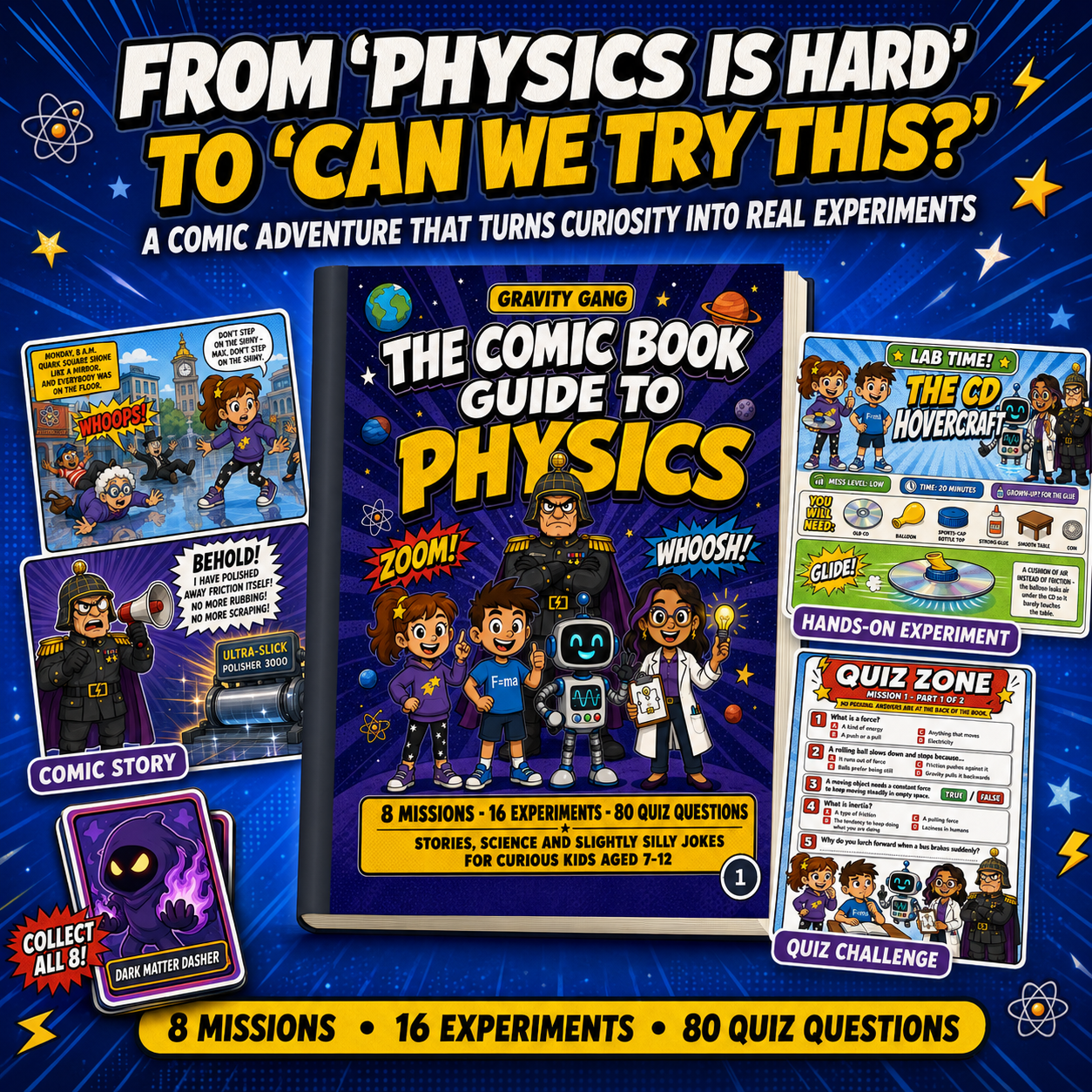
Both titles are sold as one-off purchases, and you can browse the full lineup on our comic book collections page to find the right fit for your young scientist.
FAQ
What are some simple experiments for third graders?
Simple options include the balloon rocket, baking soda and vinegar volcano, and foil boat buoyancy test, all of which use household materials and take 15 to 20 minutes. Each one produces a clear, observable result that supports a short prediction-and-explanation discussion.
What are the top science projects for this age group?
Strong choices span forces and motion, life cycles, earth systems, and chemistry, such as ramp races, seed germination bags, water cycle bags, and Oobleck. Teacher roundups like WeAreTeachers’ project list group dozens of similar activities by difficulty and materials needed.
What are some good science experiments for 3rd grade specifically?
Experiments that map to third-grade standards work best, including forces and motion activities like the balloon rocket (3-PS2) and life cycle activities like seed germination (3-LS1). The NGSS grade 3 standards outline these specific performance expectations in detail.
What are some chemistry experiments kids can try safely?
The baking soda and vinegar volcano and Oobleck are both safe, low-mess chemistry demonstrations for this age group under adult supervision. The ACS Kids & Chemistry guide provides step-by-step procedures and safety notes for reactions like these.
How much does a Brainie Comics book cost?
You can see current availability and pricing on our collections page.
Sources
- NextGenScience: 3 combined DCI standards
- ACS: Chemical reaction student guide (Kids & Chemistry)
- WeAreTeachers: 65 3rd Grade Science Projects
- Edutopia: Constructivist approach to science education