

Newton's Laws for Kids: 3 Simple Rules, 3 Easy Experiments
Newton’s three laws of motion boil down to this: things don’t change how they’re moving unless something pushes or pulls them (Law 1), a bigger push or a lighter object speeds things up more (Law 2), and every push has an equal push-back (Law 3). Sir Isaac Newton wrote these rules down in 1687 in a book called the Principia, and scientists still use them today to explain everything from rolling marbles to rocket launches.
Here’s a rhyme that sticks: “Stay the same, push it more, every push gets one back for sure.” Say it three times fast and you basically know physics.
Teachers love these laws because they’re some of the only science ideas kids can watch happen in real time with a ball, a toy car, and a balloon. That’s exactly why lesson plans built around structured, hands-on progressions tend to work better than reading a textbook page and moving on.
Quick summary before we dig in:
- Law 1 (Inertia): Objects keep doing what they’re doing unless a force changes them.
- Law 2 (Force = mass × acceleration): Heavier things need more push; more push makes things speed up faster.
- Law 3 (Action-Reaction): Every force has an equal, opposite partner force happening at the same time.
Key Takeaways
Newton’s three laws explain why objects resist changes in motion, why force and mass together determine acceleration, and why every push generates an equal push back.
| Point | Details |
|---|---|
| First Law in one line | Objects keep doing what they’re doing until a force changes them. |
| Second Law in one line | More force speeds things up faster; more mass needs more force to match. |
| Third Law in one line | Every push has an equal, opposite push happening at the same instant. |
| Try this first | Start with the marble-in-a-bowl experiment since it needs no measuring and shows inertia instantly. |
| Story-first learning | Brainie Comics pairs an illustrated story with a matching kitchen experiment so kids see each law in action before testing it themselves. |
Table of Contents
- What Is Newton’s First Law of Motion for Kids?
- How Does Newton’s Second Law Explain Force and Motion?
- What Does Newton’s Third Law Mean for Kids?
- Three Hands-On Physics Experiments Kids Can Try Today
- Common Newton’s Laws Misconceptions Kids Believe (and How to Fix Them)
- Key Physics Vocabulary Every Kid Should Know
- How to Turn Newton’s Laws Into a Classroom or Home Lesson
- Why Comics and Stories Help Kids Actually Understand Physics
- Give Kids a Story-First Way Into Physics
- Frequently Asked Questions
- Sources
What Is Newton’s First Law of Motion for Kids?
Newton’s First Law says a resting object stays at rest, and a moving object keeps moving at the same speed and direction, until an unbalanced force acts on it. Scientists call this property inertia, and it’s basically an object’s stubbornness. A soccer ball sitting on the grass will not suddenly roll away on its own. Something has to kick it. According to Britannica’s explanation of Newton’s laws, inertia is the tendency of any object to resist a change in its motion, whether that object is sitting still or already zooming along.
You’ve felt this law yourself, probably without noticing:
- A ball left on the grass stays put until someone kicks it.
- A skateboard rolling across the driveway eventually slows down and stops because of friction, not because it “gets tired.”
- When a car stops suddenly, your body keeps moving forward until the seatbelt stops you.
- A stack of coins stays balanced until a hand bumps the table.
- A hockey puck slides for a long distance on ice because there’s very little friction to slow it down.
- Dishes on a tablecloth stay put if you yank the cloth out fast enough (magicians use this trick on purpose).
Mini-experiment: The stubborn coin
Materials: an index card, a coin, and a cup.
- Balance the index card flat on top of the cup, then place the coin on top of the card.
- Flick the card sideways quickly with one finger.
- Watch what happens to the coin.
The card flies off, but the coin drops straight down into the cup. Inertia kept the coin in place even though the card underneath it moved. Have kids write down what they predicted before the flick and compare it to what actually happened.
Pro Tip: Friction is the invisible force that eventually stops most moving objects, so if an experiment doesn’t behave “perfectly,” that’s often friction at work, not a broken rule. Keep ramps low and let an adult supervise anything that rolls or slides fast.
How Does Newton’s Second Law Explain Force and Motion?
Newton’s Second Law says force equals mass times acceleration, written as F = ma. In plain words: pushing harder makes something speed up faster, and pushing a heavier object gives you less speedup for the same amount of push. The Smithsonian’s How Things Fly team explains it as a direct relationship: more force means more acceleration, and more mass means you need more force to get that same acceleration.
Picture two toy cars sitting side by side, a light 1 kg car and a heavier 3 kg car. Give both the exact same push, say a force of 2 newtons.
- For the 1 kg car: acceleration = force ÷ mass = 2 ÷ 1 = a higher acceleration.
- For the 3 kg car: acceleration = force ÷ mass = 2 ÷ 3 = a lower acceleration.
Same push, very different result. The lighter car zips off while the heavier one barely budges, because mass resists acceleration.
Picture this: imagine a short arrow labeled “F” pointing into the side of a toy car, a small tag on the car labeled “m,” and a longer arrow shooting out the front labeled “a.” Drawing all three every time helps kids remember which piece is which.
Experiment: Push, measure, compare
- Line up two toy cars of different weights (tape a few coins to one to make it heavier) at a starting line.
- Give each car one firm push with the same hand motion.
- Measure how far each car travels with a tape measure or a strip of masking tape marked in inches.
- Record the distance for each car in a simple chart.
The lighter car should travel farther for the same push. That gap in distance is the Second Law showing up on your living room floor. A university physics lab manual uses this same idea with carts and sensors to graph force against acceleration, which works well as an extension activity for older kids ready for real data.
What Does Newton’s Third Law Mean for Kids?
Newton’s Third Law says that when one object pushes on a second object, the second object pushes back with equal force in the opposite direction, at the exact same moment. According to the University of Arizona’s physics textbook, these forces always come in pairs and happen simultaneously, not one after the other. That last part trips kids up constantly, so it’s worth repeating: the “reaction” isn’t a delayed response. It’s happening at the exact same instant as the “action.”
Force pairs are everywhere once kids start looking for them:
- Walking pushes the ground backward, and the ground pushes your foot forward.
- A balloon rocket squirts air out one end and shoots forward from the push-back.
- Pushing on a wall means the wall pushes back on your hand just as hard.
- Swimming pushes water backward, sending the swimmer forward.
- A rowboat oar pushes water back, and the boat glides ahead.
- Jumping off a skateboard pushes it backward while you go forward.
Mini-experiment: Balloon rocket race
Materials: a long balloon, a straw, string (10 to 15 feet), tape, and two chairs.
- Thread the string through the straw and tie each end tightly between the two chairs so it’s stretched flat and level.
- Blow up the balloon (don’t tie it off) and tape it to the straw with the opening facing backward.
- Let go and watch the balloon zoom along the string as air rushes out one end.
Air shooting backward out of the balloon is the “action.” The balloon shooting forward is the “reaction,” and both happen at once, which is exactly why the NASA Newton Car activity uses the same principle with a rubber-band-powered car to show how force pairs create motion. This is also a first taste of conservation of momentum: the total “push” in the system stays balanced even as the balloon and the escaping air go opposite directions.
Three Hands-On Physics Experiments Kids Can Try Today
Each experiment below targets one law, uses items already in most kitchens or classrooms, and takes under 15 minutes.
Experiment 1: Marble in a bowl (First Law). Roll a marble around the inside curve of a large mixing bowl and watch it circle a few times before slowing down. Objective: show that the marble keeps moving until friction (an unbalanced force) gradually stops it. Materials: a smooth bowl, a marble. Steps: place the marble at the bowl’s edge, give it a gentle push so it circles the rim, time how long it keeps moving before stopping, then repeat on a rougher surface like a towel-lined bowl to compare.
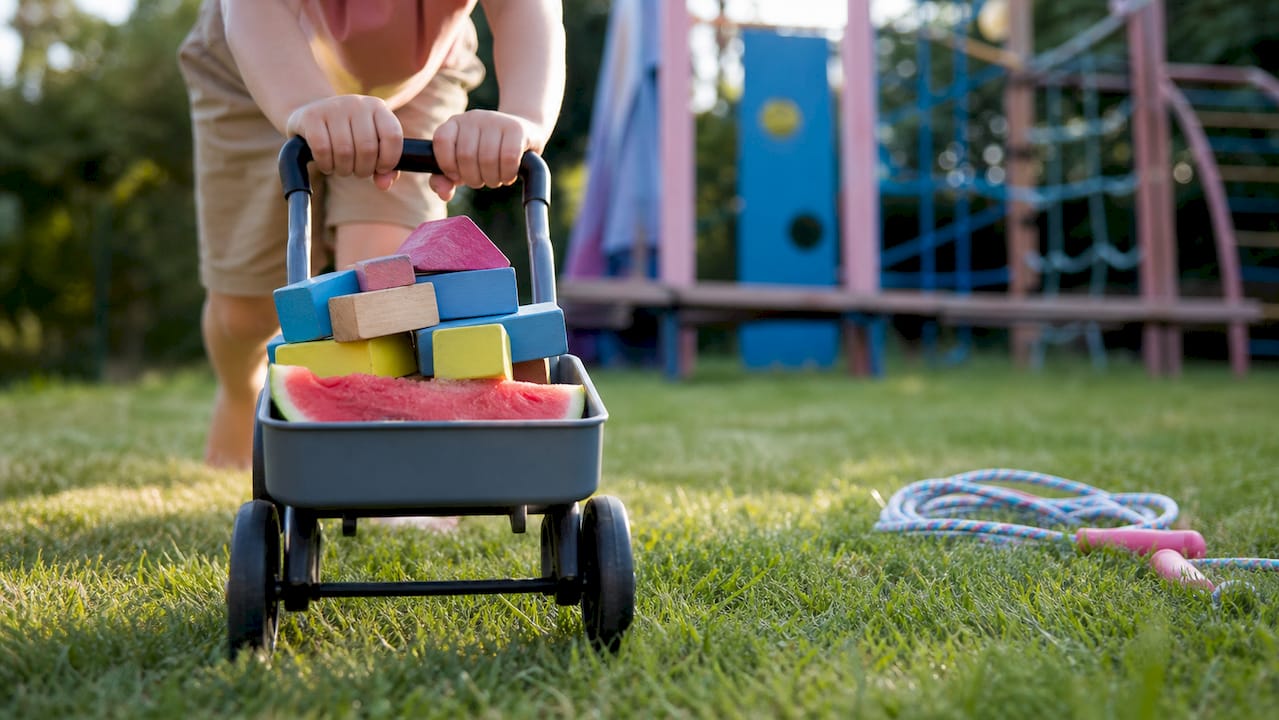
Experiment 2: Weighted cart push (Second Law). Objective: measure how mass changes distance traveled for the same push. Materials: a small wagon or toy cart, a bag of rice or a few books for added weight, a tape measure. Steps: push the empty cart and record the distance, add weight and push with the same effort, record the new distance, then repeat once more with even more weight added.
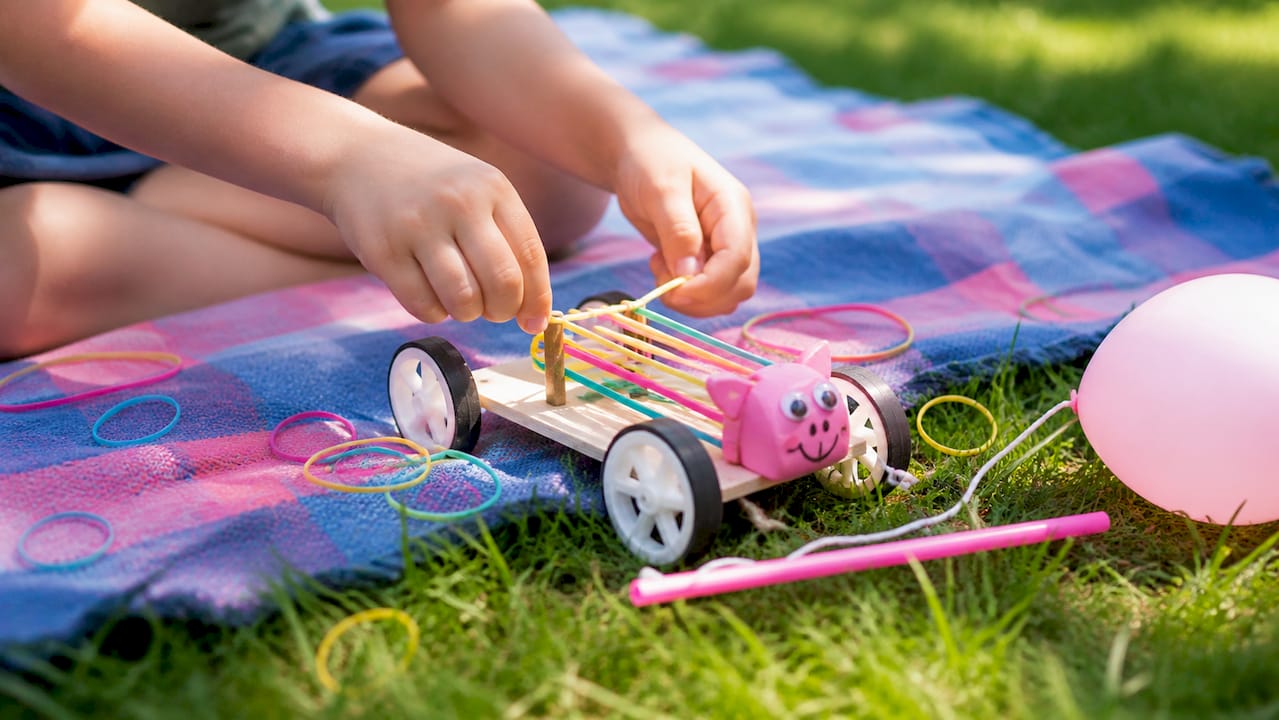
Experiment 3: Newton Car or balloon rocket (Third Law). Objective: show that expelling mass in one direction pushes an object the opposite way. Materials: rubber bands, a small wood block or toy car chassis, string, or a balloon and straw setup from the earlier experiment. Steps: attach rubber bands to power the car, wind or stretch them a set number of times, release and measure distance traveled, then change the number of rubber bands and measure again.
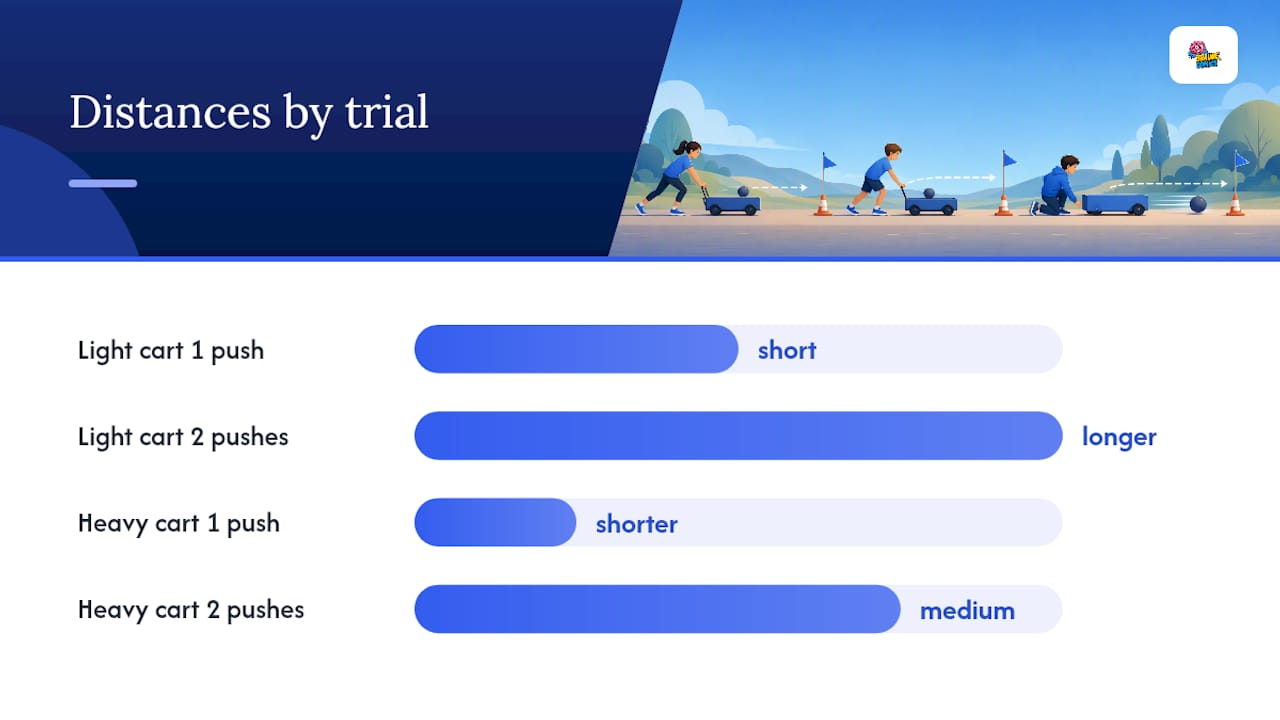
| Trial | Mass | Push Strength | Distance/Time | Observation |
|---|---|---|---|---|
| 1 | Light cart | 1 push | short distance | Moves quickly, stops soon |
| 2 | Light cart | 2 pushes | longer distance | Travels farther, same weight |
| 3 | Heavy cart | 1 push | shorter distance | Same push, less distance |
| 4 | Heavy cart | 2 pushes | medium distance | Force increase offsets added mass |
Pro Tip: Always clear the “landing zone” before any pushing or rolling experiment, and keep balloon rockets and rubber-band cars pointed away from faces. A stretched rubber band has more stored force than it looks like.
Common Newton’s Laws Misconceptions Kids Believe (and How to Fix Them)
“Moving things need a constant push to keep going, right?” Not on Earth, and definitely not in space. Objects in motion stay in motion unless something like friction or air resistance slows them down. A hockey puck on ice barely needs any push to travel a long way because there’s so little friction to fight against.
“Heavier things fall faster than lighter things, don’t they?” No. Gravity pulls all objects at the same rate regardless of weight, as long as air resistance is small. Drop a marble and a golf ball from the same height at the same time. They land together.
“Does the reaction force happen after the action force?” No, they happen at the exact same instant. Push on a wall and it pushes back on your hand immediately, not a second later. Using two spring scales pulled against each other makes this obvious because both scales show equal force readings the instant you pull.
“Newton’s laws don’t really work in real life since things always slow down anyway.” They still apply, kids just aren’t accounting for hidden forces like friction and air resistance acting in the opposite direction. Teaching kids to list every force acting on an object, including the ones they can’t see, clears this up fast.
Key Physics Vocabulary Every Kid Should Know
- Force: a push or a pull on an object. “Give the toy car a gentle force to start it moving.”
- Mass: how much matter is packed into an object, measured in kilograms or grams. “The heavier block has more mass than the light one.”
- Acceleration: how quickly something speeds up, slows down, or changes direction. “The bike’s acceleration increased once we pedaled harder.”
- Inertia: an object’s tendency to keep doing whatever it’s already doing. “The ball’s inertia kept it rolling until the grass slowed it down.”
- Net force: the total force left over after all the pushes and pulls on an object are combined. “If two kids push a wagon equally from opposite sides, the net force is zero.”
- Friction: a force that resists motion when two surfaces rub together. “Friction is why the skateboard eventually stops.”
- Action-reaction pair: two equal, opposite forces that happen at the same time. “Your foot pushing the ground and the ground pushing your foot back is an action-reaction pair.”
- Unbalanced force: a force strong enough to actually change an object’s motion. “An unbalanced force from the kick sent the ball flying.”
- Gravity: the force pulling objects toward Earth. “Gravity pulls the dropped pencil straight to the floor.”
How to Turn Newton’s Laws Into a Classroom or Home Lesson
A simple three-step flow works whether you’re running a 45-minute science block or a rainy Saturday activity:
- Observe (5 to 10 minutes): Show a quick real-world example, like rolling a ball or popping a balloon, and ask kids what they notice before naming any law.
- Guided experiment (15 to 20 minutes): Run one of the three experiments above, letting kids predict the outcome before testing it.
- Discuss (10 minutes): Connect what happened back to the vocabulary and ask kids to explain the result in their own words.
Good discussion questions before the experiment: “What do you think will happen if we push harder?” and “Why doesn’t the ball keep rolling forever?” After the experiment, ask: “What force stopped it?” and “Where did you see a force pair today?”
For a quick formative check, use an exit ticket: have kids draw one object and label the forces acting on it, or write one sentence naming which law they saw in action and why. Grade it simply: full credit if they name the correct law and identify at least one force involved.
For younger kids around age 7 or 8, shorten each step and skip the math, focusing purely on the observation and vocabulary. For kids age 10 to 12, add the measuring and graphing steps, and encourage them to calculate acceleration using the F = ma formula from actual push and mass values.
Why Comics and Stories Help Kids Actually Understand Physics
Pairing a story with a hands-on experiment builds stronger understanding than either one alone, since narrative gives kids a reason to care about the forces they’re about to test. Interactive simulations and story-driven activities are effective specifically because they make invisible forces tangible instead of asking kids to imagine something they can’t see or touch.
Here’s a paired activity that works well at home or in a classroom: read a short comic scene where a character launches a rocket or gets knocked backward by a push, then immediately run the balloon rocket experiment from earlier and ask kids to point out where the story matched what they just built.
A few connecting questions to ask afterward:
- “What force did the character in the story use, and which law does that match?”
- “Did the story show the reaction force happening instantly, like it should?”
- “How is your balloon rocket similar to what happened in the comic?”
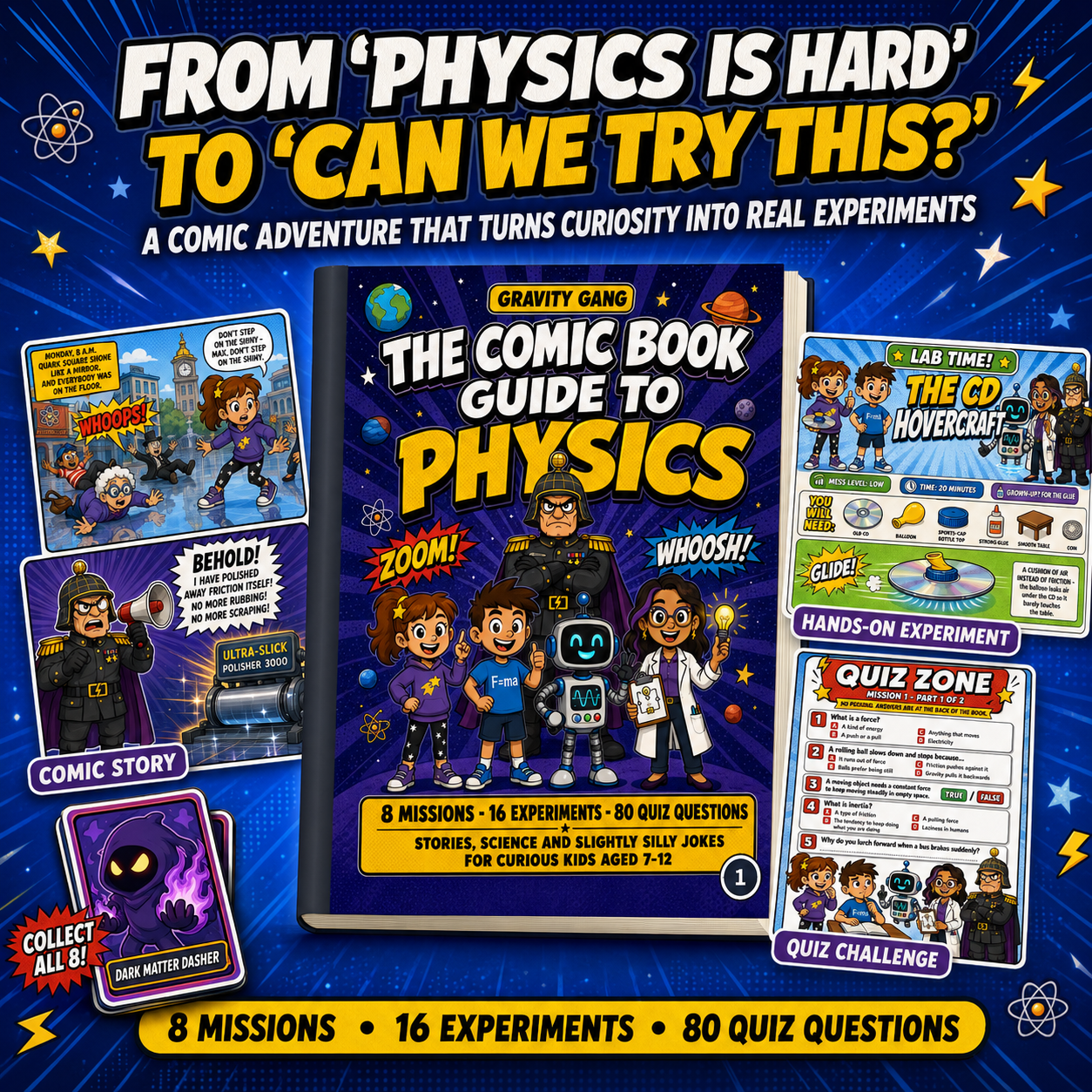
This is exactly the approach behind Brainie Comics’ Gravity Gang comic book, which uses illustrated adventure stories to introduce force and motion concepts before handing kids a matching kitchen experiment to test what they just read.
A teacher’s trick for the “reaction happens later” mix-up
I’ve found that the “action then reaction” mix-up disappears fastest when kids physically hold both ends of the interaction at once, like two kids each holding a spring scale and pulling against each other. The moment they see both dials move together, the timing question answers itself.
Try saying this out loud during the demo: “Watch both numbers at the same time. Do you see either one move first, or do they move together?” Nine times out of ten, kids answer their own misconception before you have to correct it.
Give Kids a Story-First Way Into Physics
Reading about inertia and force pairs is one thing. Watching a character use them to solve a problem sticks a lot longer, especially for kids who’d rather do anything than open a textbook. Gravity Gang wraps Newton’s three laws into an illustrated adventure story, then hands kids a kitchen-table experiment tied to exactly what they just read, so the comic and the science reinforce each other instead of living in separate worlds.
A simple way to use it at home or in class: read one chapter together, run the matching experiment from that chapter the same day, then ask your child or student to explain what happened using the vocabulary from this article. It takes maybe 30 minutes total and turns an abstract law into something they built with their own hands. For chemistry fans, Fizz Force follows the same story-plus-experiment format. Browse the full lineup at Brainie Comics and pick the title that matches what your reader is curious about right now.
Frequently Asked Questions
What are Newton’s laws for kids in simple terms? They’re three rules describing how objects move: things keep doing what they’re doing unless pushed (Law 1), bigger pushes or lighter objects cause faster speedups (Law 2), and every push creates an equal push-back (Law 3).
What age is appropriate to start teaching Newton’s laws? Kids around age 7 or 8 can grasp the basic ideas through observation and simple experiments, while the F = ma formula and measuring activities work best for kids age 10 and up.
What’s an easy Newton’s First Law experiment for kids? The coin-and-card trick works well: balance a coin on an index card over a cup, flick the card away fast, and watch the coin drop straight into the cup because of inertia.
Why do heavier objects need more force to speed up? Because mass resists acceleration. The Second Law, F = ma, shows that for the same force, more mass results in less acceleration, which is why a loaded wagon is harder to speed up than an empty one.
Do action and reaction forces happen at different times? No, they happen at the exact same moment. A common mix-up is thinking the reaction follows the action, but pulling on a rope or pushing a wall shows both forces occurring simultaneously.
Sources
- Celebrating 330 years of Isaac Newton’s Principia
- What does F=ma mean? — Smithsonian National Air and Space Museum (How Things Fly)
- Newton’s Third Law — Open Textbooks, University of Arizona
- Rocket Activities - Newton Car — NASA Glenn Research Center