

8 Water Science Experiments Parents Can Run in 10–40 Minutes
Try these eight water experiments to teach surface tension, density, capillary action, convection, filtration, and osmosis using cups, food coloring, and paper towels you already own. Start with the penny water dome or walking water if you want a fast win, and save the density tower or gummy bear osmosis for a slower afternoon. Most take 10 to 40 minutes, work for ages 3 and up with supervision, and need zero screen time.
TL;DR:
- The walking water experiment requires several hours overnight for full color transfer, making it better suited for a morning start.
- The penny water dome experiment demonstrates surface tension by building a water dome with only five to ten minutes of setup time.
- Density and buoyancy are explored through a sink or float test, which can be extended with a foil boat challenge to measure object density.
- The density tower experiment uses multiple liquids in order of weight, with slow pouring preventing muddiness in the layers.
- Pairing water experiments with narrative stories enhances retention and encourages children to ask questions about the science concepts.
Table of Contents
- The Best Science Experiments with Water for Kids
- Safety, Prep, and Troubleshooting Before You Start
- The Science Behind Each Experiment, Explained Simply
- Turning a Quick Demo Into a Real Experiment
- Matching Experiments to Age, Time, and What’s in the Pantry
- Why Story and Science Stick Together Better Than Science Alone
- Get Lesson-Ready Water Experiments With a Story Attached
- Sources
- FAQ
The Best Science Experiments with Water for Kids
These experiments with water rank from fastest to most involved. Each one lists what it teaches, what you need, how long it takes, and a quick way to stretch it into something closer to a real experiment rather than a one-time demo.
1. Walking water
Concept: capillary action. Materials: 6 clear cups, food coloring, paper towels. Time: 20 minutes to set up, several hours to overnight to see full color transfer. Age: 4 and up.
Arrange cups in a row, alternating empty and water-filled. Fold paper towels into strips, place one end in a filled cup and the other in an empty one, and add food coloring to the water. Color climbs the paper towel and drips into the empty cup through capillary action, the same adhesion and cohesion that pulls water up a plant’s stem. ScienceBuddies notes the full color exchange often needs an overnight wait, so start this one before bed or first thing in the morning. Extend it by swapping in coffee filters or felt strips to compare absorbent materials side by side.
2. Penny water dome
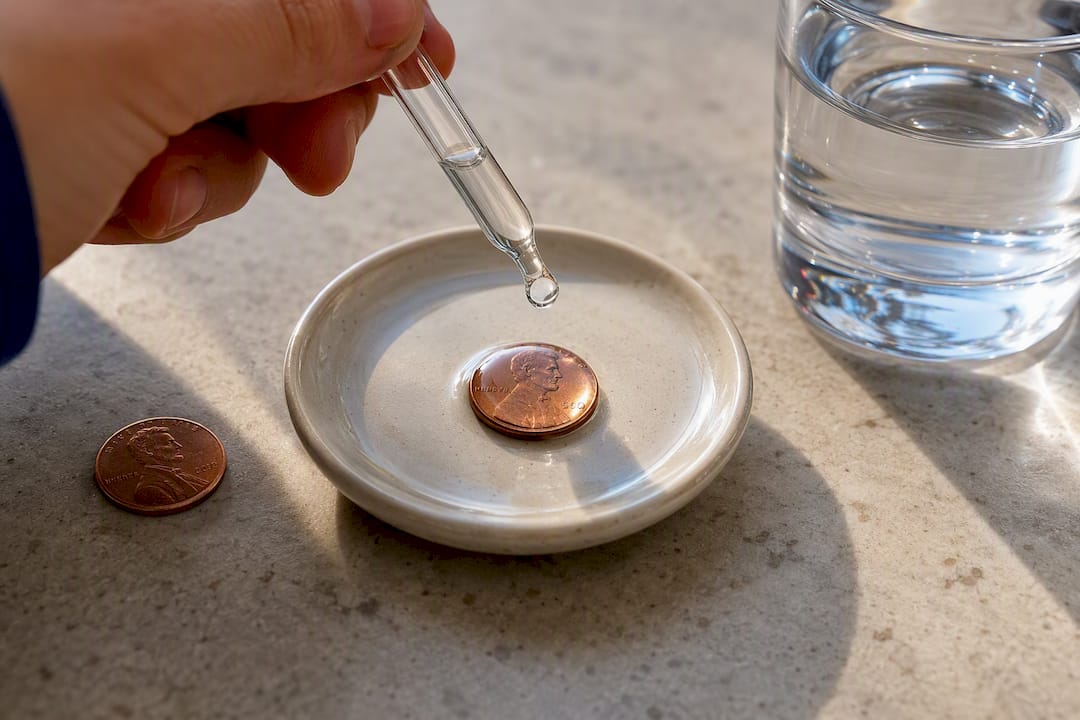
Concept: surface tension. Materials: a penny, an eyedropper or medicine dropper, water. Time: 5 to 10 minutes. Age: 5 and up.
Ask your child to guess how many drops fit on a penny before it spills. Then drop water one drop at a time and watch a dome build above the rim. The water dome forms because cohesion between water molecules holds it together until gravity finally wins. Extend it by adding a drop of dish soap to a fresh penny and comparing the drop count. Soap breaks surface tension, so the dome collapses much sooner.
3. Sink or float
Concept: density and buoyancy. Materials: a tub of water, a mix of small household objects (bottle caps, coins, grapes, foam pieces). Time: 15 to 30 minutes. Age: 3 and up.
Have your child sort objects into “will sink” and “will float” piles before testing each one. Younger kids can stick with predictions and observations; older kids can weigh objects and measure volume to calculate actual density. This one pairs naturally with a foil boat challenge, where kids design a shape that holds the most pennies before sinking.
4. DIY water filter
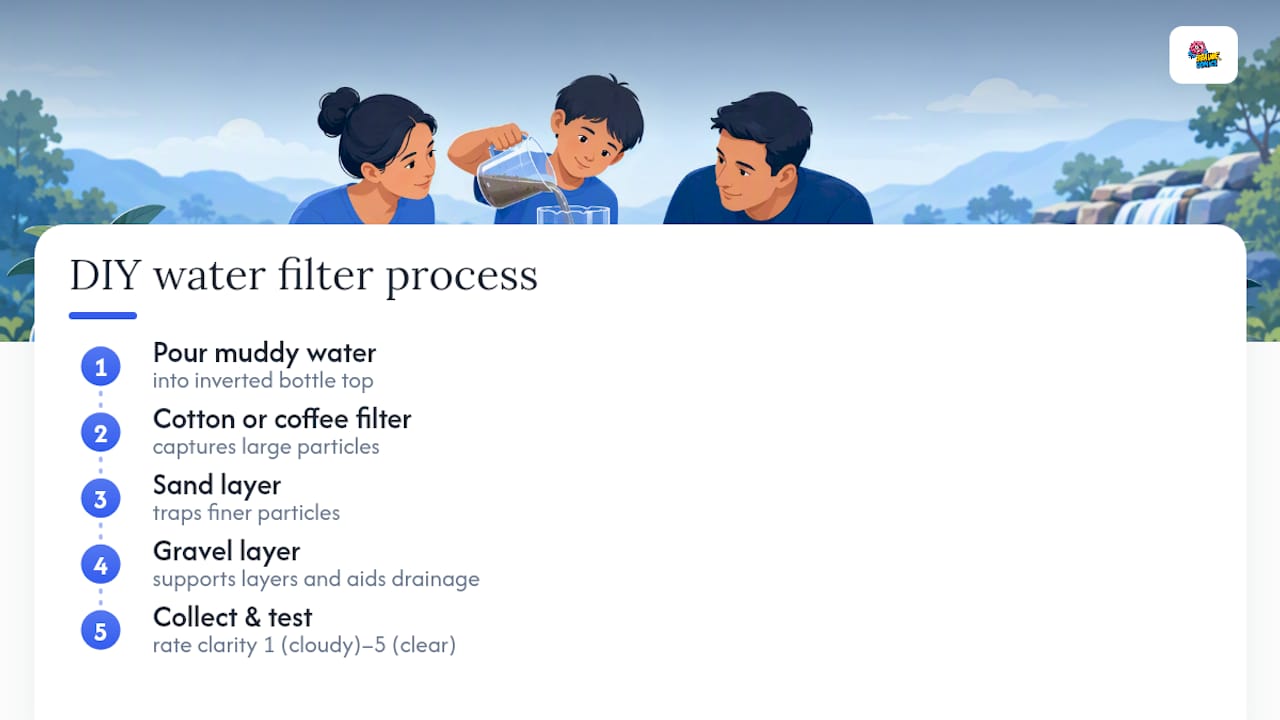
Concept: filtration. Materials: a plastic bottle cut in half, sand, gravel, cotton balls or a coffee filter, and dirty water (mud mixed with clean water works fine). Time: 20 to 40 minutes. Age: 6 and up.
Layer cotton, sand, and gravel inside the inverted bottle top, then pour muddy water through and collect it below. The layers trap larger particles, though this kind of filter won’t remove anything dissolved, like salt. Extend it by testing water clarity before and after with a simple turbidity scale, cloudy to clear on a 1 to 5 rating.
5. Density tower (“fireworks in a glass”)
Concept: density and immiscible liquids. Materials: honey, dish soap, water, vegetable oil, food coloring. Time: 15 to 30 minutes. Age: 6 and up.
Pour liquids into a clear glass from heaviest to lightest, honey first, then dish soap, water, and oil. Each liquid floats on the one below because of density differences. A slow pour down the side of the glass, ideally with a spoon or narrow-neck bottle, keeps the layers from mixing. Extend it by timing how long colored drops take to sink through each layer.
6. Convection color currents
Concept: convection. Materials: two jars of water at different temperatures (hot and cold), food coloring. Time: 10 to 20 minutes. Age: 7 and up.
Drop colored dye into hot water and separately into cold water, then watch how each spreads. In the Exploratorium’s convection currents activity, hot water rises and cold water sinks, visualizing the same density-driven movement that drives ocean currents and weather patterns. Extend it by connecting the results to how a room heats up unevenly or why lake water stratifies by temperature in summer.
7. Gummy bear osmosis
Concept: osmosis. Materials: gummy bears, three cups (plain water, salt water, sugar water). Time: several hours, check every hour or two. Age: 6 and up.
Drop one gummy bear in each cup and measure or photograph its size over several hours. Plain water usually causes the most swelling as water moves into the candy; salt water often shrinks it. Extend it by having kids graph size change over time across the three solutions.
8. Oil and water lava lamp
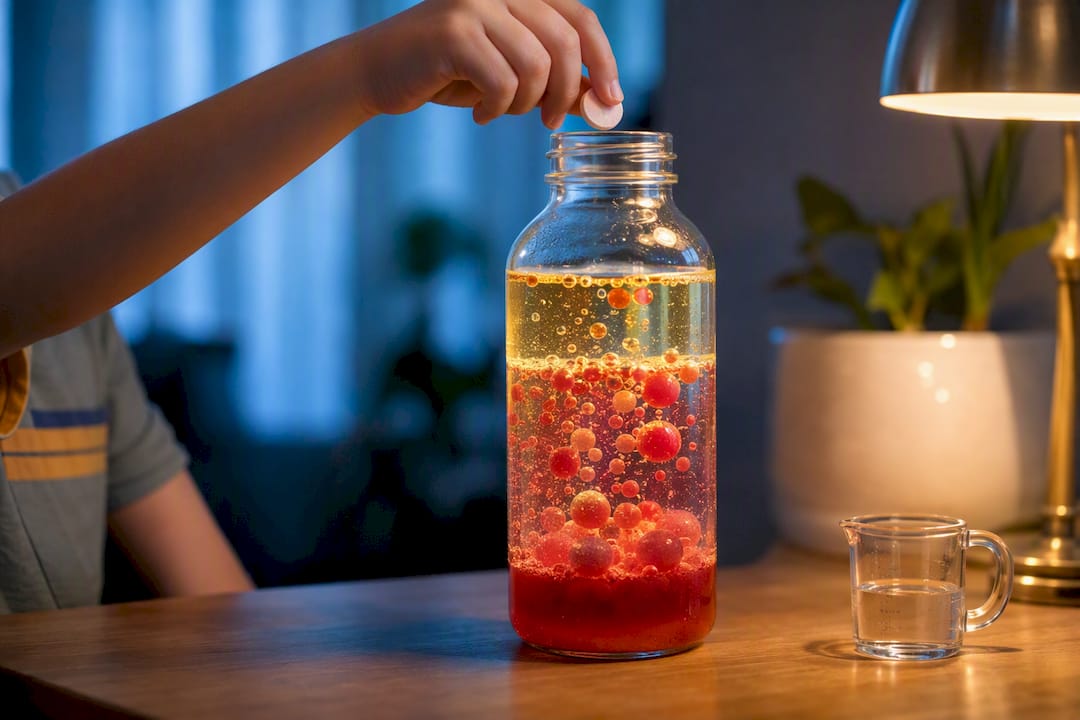
Concept: density and immiscible liquids. Materials: vegetable oil, water, food coloring, an effervescent tablet (like Alka-Seltzer). Time: 10 to 30 minutes. Age: 7 and up.
Fill a bottle two-thirds with oil, add colored water, then drop in a piece of effervescent tablet. Bubbles carry colored water up through the oil before sinking back down, since oil and water don’t mix and gas bubbles temporarily change the water’s density. Extend it by trying warm versus cold water to see which produces bubbles faster.
Safety, Prep, and Troubleshooting Before You Start
A few minutes of setup prevents most of the mess and most of the frustration. Run through this checklist before any water science experiments session:
- Cover the table with a plastic cloth or old towels, especially for the density tower and lava lamp.
- Supervise closely around small parts (pennies, bottle caps) with kids under 5, and never leave a toddler unattended near a filled tub.
- Keep measuring cups, a timer, and a simple recording sheet on hand so kids can jot down predictions and results, not just watch.
- Label cups if you’re running more than one experiment at once, since food coloring makes everything look the same fast.
- Plan disposal: sand and gravel from the filter project can go outside; oil-based mixtures should go in the trash, not the sink.
Three failure points come up constantly. Inverted-container and dome demos often fail because of air trapped along an uneven rim; dry the rim completely and test it once before your child watches. Walking water sometimes stalls if the paper towel is oversaturated and can’t wick further, so use a fresh, tightly folded strip rather than a limp one. Density towers turn muddy when liquids are poured too fast; pour slowly against the inside of the glass, not straight down the middle.
Pro Tip: Keep a roll of paper towels and a shallow tray under every experiment. Spills are part of the process, not a sign something went wrong.
The Science Behind Each Experiment, Explained Simply
Kids don’t need textbook definitions, they need one clear mental model per concept.
- Surface tension is water’s “stickiness” at its surface, caused by cohesion between water molecules. It’s strong enough to hold a bug on a pond’s surface or build a dome above a penny’s rim, but gravity eventually wins once enough water piles up.
- Capillary action happens when adhesion (water sticking to a surface, like paper fibers) and cohesion (water sticking to itself) team up to pull water through narrow spaces. It’s the exact mechanism plants use to move water up through their stems, which makes walking water a great segue into a plant biology lesson.
- Density is how much mass is packed into a given space. Honey is denser than water, water is denser than oil, so they stack. Sink or float works the same way: an object sinks when it’s denser than water, floats when it’s not.
- Convection describes how temperature changes density. Hot water expands slightly and rises; cold water contracts and sinks, creating the currents you see with dye in the Exploratorium’s demonstration.
- Osmosis moves water across a membrane toward a higher concentration of dissolved particles. A simple filter, by contrast, only traps solid particles physically caught between grains of sand and gravel. It won’t remove anything actually dissolved in the water.
Turning a Quick Demo Into a Real Experiment
A demo shows kids what happens once. An experiment asks them to test whether it happens the same way twice, and that shift is where real STEM thinking starts.
- Pick one variable to change. For walking water, that might be paper towel brand versus coffee filter versus cloth napkin.
- Decide what you’re measuring. Time for color to travel 10 mL, or how far up a strip water climbs in 30 minutes, both work.
- Hold everything else constant. Same cup size, same water volume, same starting temperature, same amount of food coloring.
- Record results in a simple table rather than relying on memory, columns for material, time, and observation are enough.
- Compare and discuss. Which absorbed fastest? Did that match the prediction made beforehand?
Younger kids can stick to drawing what they observed. Older kids can plot results on a basic graph and talk through why one trial might have looked different from another, which is really just an early introduction to measurement error.
Matching Experiments to Age, Time, and What’s in the Pantry
Pick based on how much supervision you can give and how long you have, not just what looks fun.
- Preschool (ages 3 to 5): Sink or float and basic color mixing with washable paint work well. No small parts, minimal prep, and short attention span friendly.
- Early elementary (ages 5 to 8): Penny water dome (close supervision required), walking water, and simple density layering with safe liquids like water and oil.
- Upper elementary (ages 8 to 12): DIY water filter, convection color currents, and gummy bear osmosis, all of which support real measurement and data recording.
- Budget swaps: Clear plastic cups instead of glass, vegetable oil instead of specialty oils, and recycled bottles instead of new containers keep every experiment under a few dollars.
Why Story and Science Stick Together Better Than Science Alone
A kid who reads about a character solving a problem with density is far more likely to remember what density means than one who just watches a demo and moves on. Narrative gives an experiment a reason to matter, a character needs to figure out why the boat sinks, and that context turns a five-minute activity into something a child actually thinks about later.
That’s the premise behind Brainiecomics’s approach: pairing a short story arc with a hands-on task so the science has stakes, not just steps. A kid who just read a comic about pressure and buoyancy comes to the sink-or-float tub already asking questions, not waiting to be told what to do. If you’re building a lesson plan or a rainy afternoon around water experiments, try reading one short comic page before or after the activity. It gives the concept a narrative hook that a worksheet alone rarely provides, and it works especially well for kids who resist science content in traditional formats.
— Brainie Comics
Get Lesson-Ready Water Experiments With a Story Attached
Every experiment above works fine on its own, but pairing it with a story is what makes a kid ask to do the next one. That’s the entire premise behind Fizz Force and Gravity Gang, Brainiecomics’s comic books that build chemistry and physics concepts, including water-based reactions and buoyancy challenges, directly into an ongoing adventure.
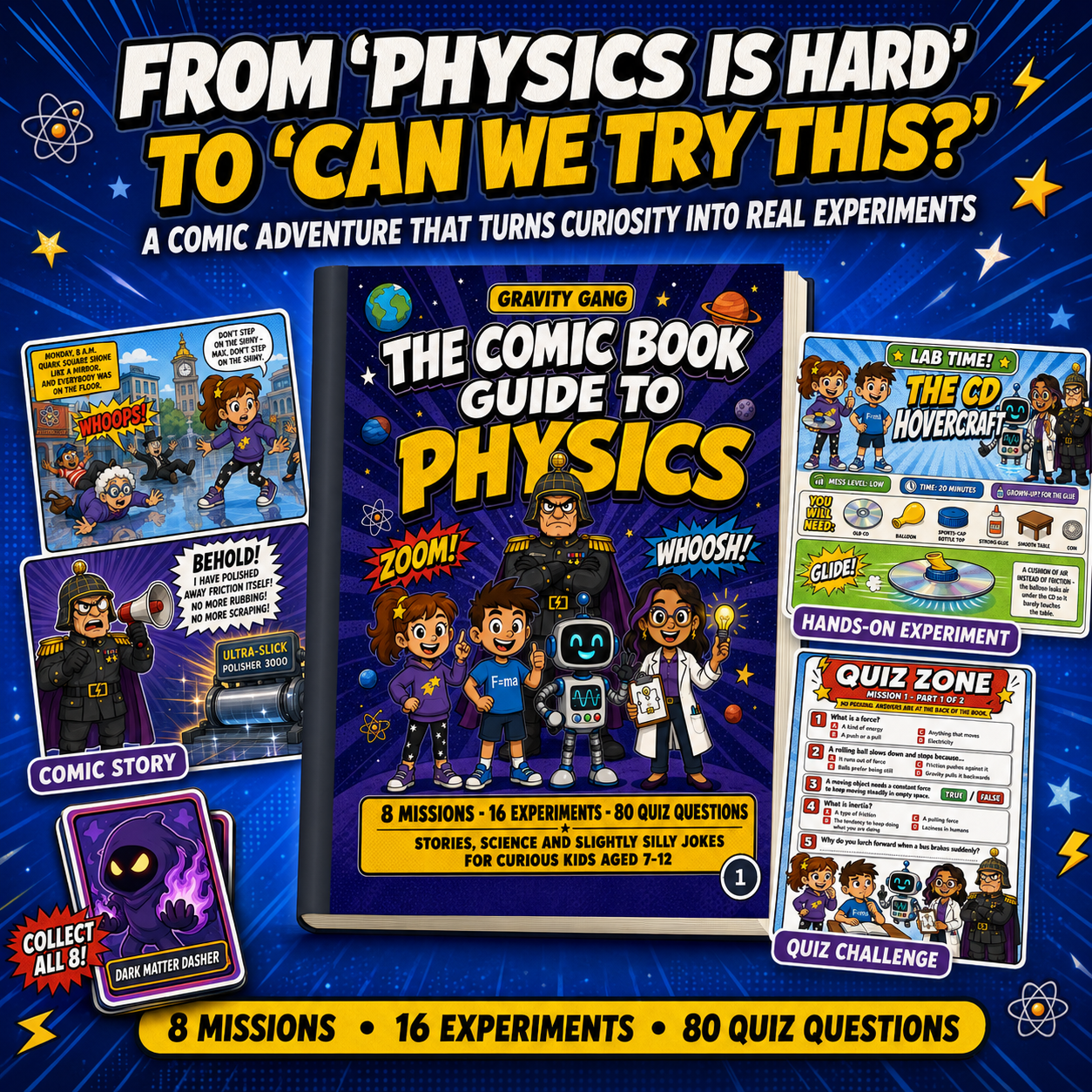
Each book comes with kitchen-safe experiments already mapped to the story, so there’s no separate lesson plan to build. Use one page as a five-minute lesson starter, hand a book to a small group as a self-guided experiment packet, or send it home as a weekend family activity. Parents interested in the physics side, currents, buoyancy, and forces at work, can start with Gravity Gang, while chemistry-leaning readers might prefer Fizz Force for its reaction-based experiments. Both are priced similarly, and if it doesn’t land with your reader, the publisher offers a 30-day money-back guarantee. Browse the full collection and pick the storyline that matches what your kid is curious about.
Sources
A few sources go further than a quick recipe if you want printable handouts or the theory behind an activity:
- Exploratorium — Convection currents activity
- USGS — Adhesion and cohesion of water
- ScienceBuddies — Walking water activity
- 3M — Water Dome experiment
FAQ
What are some cool water tricks kids can do at home?
The penny water dome and the oil-and-water lava lamp are the fastest crowd-pleasers, both take under 15 minutes and use materials most kitchens already have.
What are 10 easy science experiments for kids?
Walking water, penny water dome, sink or float, DIY water filter, density tower, convection color currents, gummy bear osmosis, and oil-and-water lava lamp cover eight strong starting points; pairing sink or float with a foil boat challenge and adding a soap-versus-water dome comparison rounds out ten.
What are some fun water projects for preschoolers?
Sink or float and basic color mixing work best for ages 3 to 5 since they need no small parts and very little prep; save the penny dome and walking water for closer supervision once a child is past age 5.
How long does the walking water experiment actually take?
Setup takes about 20 minutes, but the full color transfer between cups often needs several hours or overnight, so plan to start it well before you need to see the finished result.
Can Brainiecomics books replace a full experiment guide?
Both Fizz Force and Gravity Gang include kitchen-safe experiments built directly into their storylines, making them a solid lesson starter or take-home activity rather than a replacement for a dedicated science curriculum.