

10–60 Minute Acids and Bases Experiments for Ages 7–12
The five best household acid and base experiments are the baking soda volcano, the red cabbage pH rainbow, litmus or pH strip testing, neutralization circles, and a simple buffering demo with limewater. Every one uses kitchen or drugstore items, runs in under an hour, and works for kids ages 7 to 12 with adult supervision. This guide walks through setup, procedure, safety, and how to turn each into a real teaching moment.
TL;DR:
- Using red cabbage indicator provides a visible, multi-color pH range and is suitable for children ages 7 to 12 with minimal hazard.
- Repeating tests on different household liquids with natural indicators like cabbage or turmeric helps children recognize patterns in pH levels.
- Safety should focus on weak household acids and bases, using protective glasses and gloves, and performing experiments on a small scale to reduce hazards.
- The most educational experiments involve comparison and pattern recognition, such as neutralization reactions and strip testing, rather than spectacle-focused volcanoes.
- Incorporating prediction and storytelling, such as through comics, enhances engagement and helps children grasp the concepts of pH and acid-base reactions.
Table of Contents
- Which Acid and Base Experiment Should You Start With?
- How to Run Three Core Acid and Base Experiments
- How Do You Measure pH at Home?
- What Safety Rules Matter for Home Chemistry?
- How Do You Turn This Into a Real Lesson?
- Why Brainie Comics Cares About Kitchen Chemistry
- Our Take: Skip the Spectacle-Only Approach
- Want a Ready-Made Chemistry Adventure?
- Sources
Which Acid and Base Experiment Should You Start With?
Not every experiment fits every kid or every afternoon. Some are pure spectacle, some are built for actual measurement, and some are better for open-ended exploration where a child gets to poke around and ask questions.
- Baking soda + vinegar volcano. Best for ages 5 to 10. Takes 10 minutes. Low hazard. High value because it makes gas production visible and loud in the best way.
- Red cabbage pH rainbow. Best for ages 7 to 12. Takes 20 to 30 minutes including juice prep. Low hazard. High value because it turns an abstract number line into eight visible colors.
- Litmus or pH strip station. Best for ages 6 and up. Takes 15 minutes. Very low hazard. High value for quick comparisons across many household liquids.
- Neutralization circles. Best for ages 9 to 14. Takes 30 to 40 minutes. Low to moderate hazard, needs closer supervision. High value because it shows a reaction happening in real time, not just a before-and-after.
- Buffering demo with limewater. Best for ages 10 to 14. Takes 40 to 60 minutes. Moderate hazard due to limewater handling. High value for students ready to think about resistance to pH change, not just pH itself.
If your goal is a wow moment, run the volcano. If your goal is measurement and vocabulary, run the strip station or the cabbage rainbow. If your goal is open exploration, the neutralization circles let a kid drop, watch, and guess. For younger children or a first attempt at any of these, scale everything down to a few drops on filter paper rather than full cups. It cuts cleanup time and lowers hazard without losing the visual payoff.
How to Run Three Core Acid and Base Experiments
These three cover the full range of what a beginner acids and bases lab needs: a fast reaction, a natural indicator, and a neutralization demonstration you can actually see happen.
1. Baking soda volcano Materials: baking soda, white vinegar, a small container, food coloring (optional), a tray to catch overflow.
- Put two tablespoons of baking soda in the container.
- Add a few drops of food coloring to a quarter cup of vinegar.
- Pour the vinegar in and step back.
- Watch the fizzing overflow and note how fast it slows down.
The chemistry: vinegar (acetic acid) reacts with baking soda (sodium bicarbonate) to produce carbon dioxide gas, water, and sodium acetate. The bubbles are the reaction leaving the container in real time.
2. Red cabbage pH indicator Materials: half a head of red cabbage, boiling water, a strainer, clear cups, household liquids to test (vinegar, baking soda solution, lemon juice, soapy water).
- Chop the cabbage and pour boiling water over it in a heat-safe bowl. Let it sit 10 minutes.
- Strain out the purple liquid. This is your indicator.
- Pour a small amount into several cups.
- Add a different household liquid to each cup and watch the color shift.
Anthocyanin, the pigment in red cabbage, changes structure depending on how many hydrogen ions are floating around, which is why it swings through as many as eight color zones from red through purple, blue, green, and yellow.
3. Neutralization circles Materials: filter paper, diluted vinegar, diluted ammonia or baking soda solution, universal indicator solution, a dropper.
- Place two drops of diluted acid and two drops of diluted base about 2 to 3 centimeters apart on the filter paper.
- Let them spread until the edges touch.
- Add a drop of universal indicator over the whole wet area.
- Watch a band of color appear where the two solutions meet and neutralize each other.
This classroom-tested procedure from RSC Education leaves a permanent colored record you can compare against a pH chart afterward.
Pro Tip: Turn any of these into a reusable tool by soaking coffee filter strips in cabbage juice and letting them dry. You get homemade pH paper you can rewet and use for weeks.
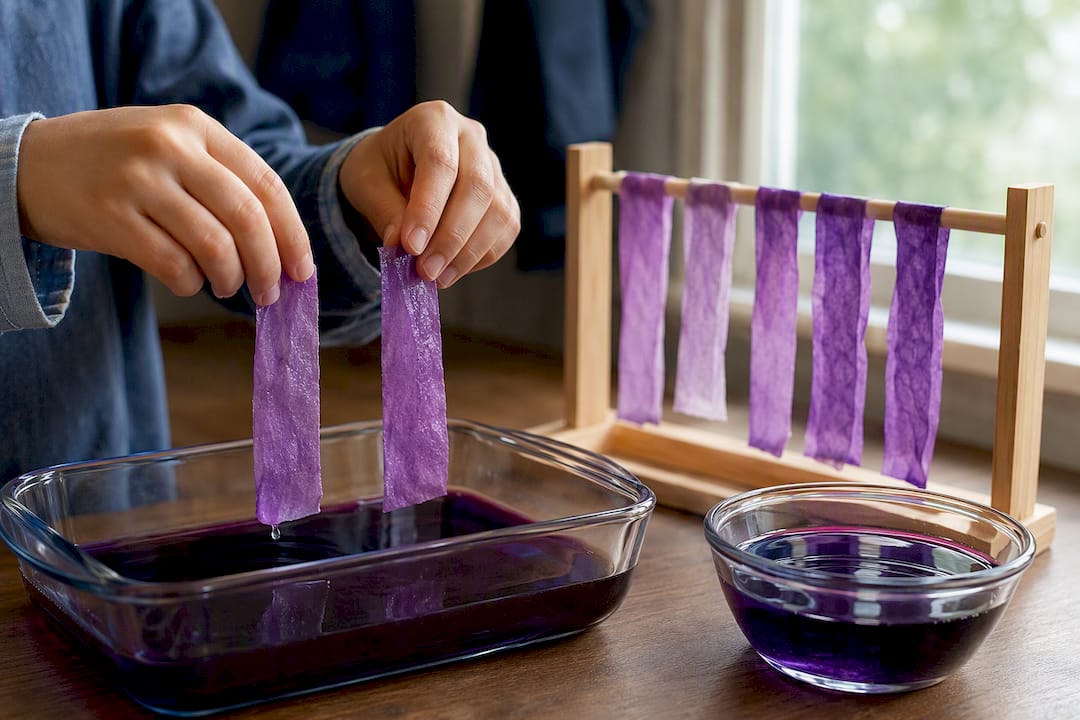
Extension idea: repeat the cabbage test with turmeric alongside it. Turmeric only flips from yellow to red-brown once you cross into strongly basic territory, while cabbage shows the whole gradient. Comparing the two teaches kids that not every measuring tool has the same range.
How Do You Measure pH at Home?
pH measures how acidic or basic a solution is on a scale that typically runs from 0 to 14, and it is logarithmic. That means each single-unit step represents a tenfold change in hydrogen ion concentration, so a solution at pH 4 is ten times more acidic than one at pH 5, not just slightly more.
Three tools cover most home and classroom needs:
- Cabbage juice gives a qualitative, multi-zone read and works best for visual comparison across several samples at once.
- pH strips are cheap, semi-quantitative, and good for a quick numeric-ish answer without buying equipment.
- Digital pH meters give precise numeric readouts but need calibration before use and cost more than the other two combined.
To make DIY strips, soak coffee filter paper in concentrated cabbage juice, dry it flat, then cut into test strips. Before trusting a digital meter, check it against a known solution like distilled water (should read close to 7) or vinegar (should read around 2 to 3).
What Safety Rules Matter for Home Chemistry?
Stick to weak household acids and bases: vinegar, lemon juice, baking soda solution, and diluted dish soap are all fine for hands-on work. Avoid strong drain cleaners and oven cleaners entirely. These contain concentrated sodium hydroxide and can cause real chemical burns, so they don’t belong in a kids’ experiment regardless of supervision level.
- Wear safety glasses whenever you’re pouring or mixing liquids.
- Use gloves if handling anything labeled “corrosive” on its container.
- Work in a ventilated room, especially with ammonia-based solutions.
- Keep an adult within arm’s reach for every step, not just setup.
Pro Tip: Run experiments at microscale first, drops instead of cups, especially with a group of kids. You’ll spend less time cleaning and cut the chance of splashes reaching eyes or skin.
How Do You Turn This Into a Real Lesson?
A good experiment becomes a lesson the moment you ask a question before running it. Try: “What color do you think the cabbage juice will turn with vinegar? Why?” Predicting before observing is what separates a science lesson from a science show.
- Build a “pH ladder” on paper and have kids place each tested liquid on it by color.
- Use a prediction-versus-observation chart: write the guess, then the actual result, side by side.
- Send strips home so kids can test tap water, soda, or soap and report back.
- For older students, try a dilution series: cut vinegar with water in known ratios and track how the color or strip reading shifts, which introduces the idea of concentration directly.
Repeating the same test on different liquids, rather than running five different experiments once each, builds the pattern recognition that makes pH concepts stick.
Why Brainie Comics Cares About Kitchen Chemistry
Brainiecomics built its chemistry title around one idea: kids retain science better when a story hands them a reason to run the experiment, not just instructions. Fizz Force pairs a comic narrative with kitchen-safe tasks using household materials commonly found in kitchens. Parents report that kids often want to redo an experiment after finishing the chapter, indicating the story engages readers alongside the science.
Our Take: Skip the Spectacle-Only Approach
Most lists of acid and base experiments lean hard on the volcano because it photographs well. That’s fine for a five-minute wow, but it teaches almost nothing about pH itself, since baking soda and vinegar just react until one runs out. The experiments that actually build understanding are the ones with a visible range: red cabbage, strip tests, neutralization circles. They force a kid to compare, not just watch.
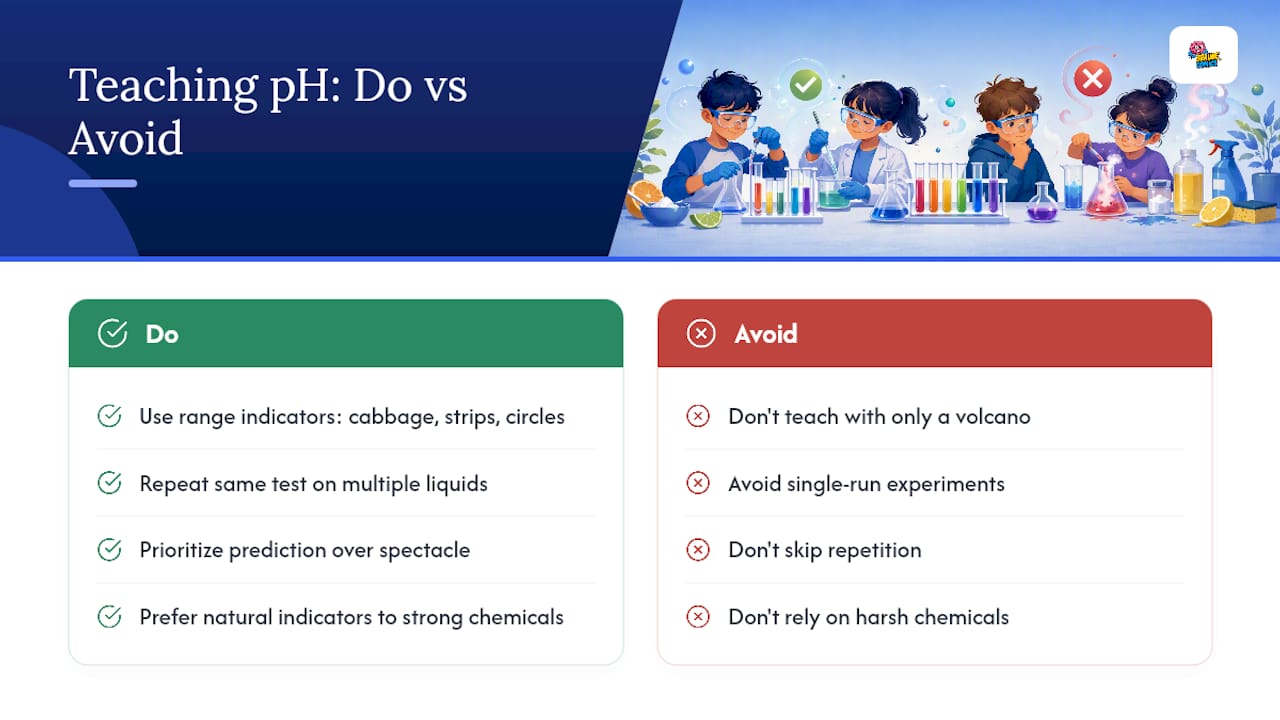
The conventional advice also underrates repetition. Running one experiment five times on different liquids beats running five experiments once each. Pattern recognition is what turns “purple means basic” into an actual grasp of the pH scale.
If you take one thing from this guide, prioritize natural indicators over strong chemicals, and prioritize prediction over pure spectacle. A kid who guesses wrong and figures out why has learned more than one who just watched something fizz.
— Brainie Comics
Want a Ready-Made Chemistry Adventure?
Running these experiments solo works, but pairing them with a story is what actually keeps a reluctant reader coming back for the next chapter. Brainiecomics built Fizz Force around exactly that pairing: real chemistry, real household materials, and a narrative that gives kids a reason to care about the result.
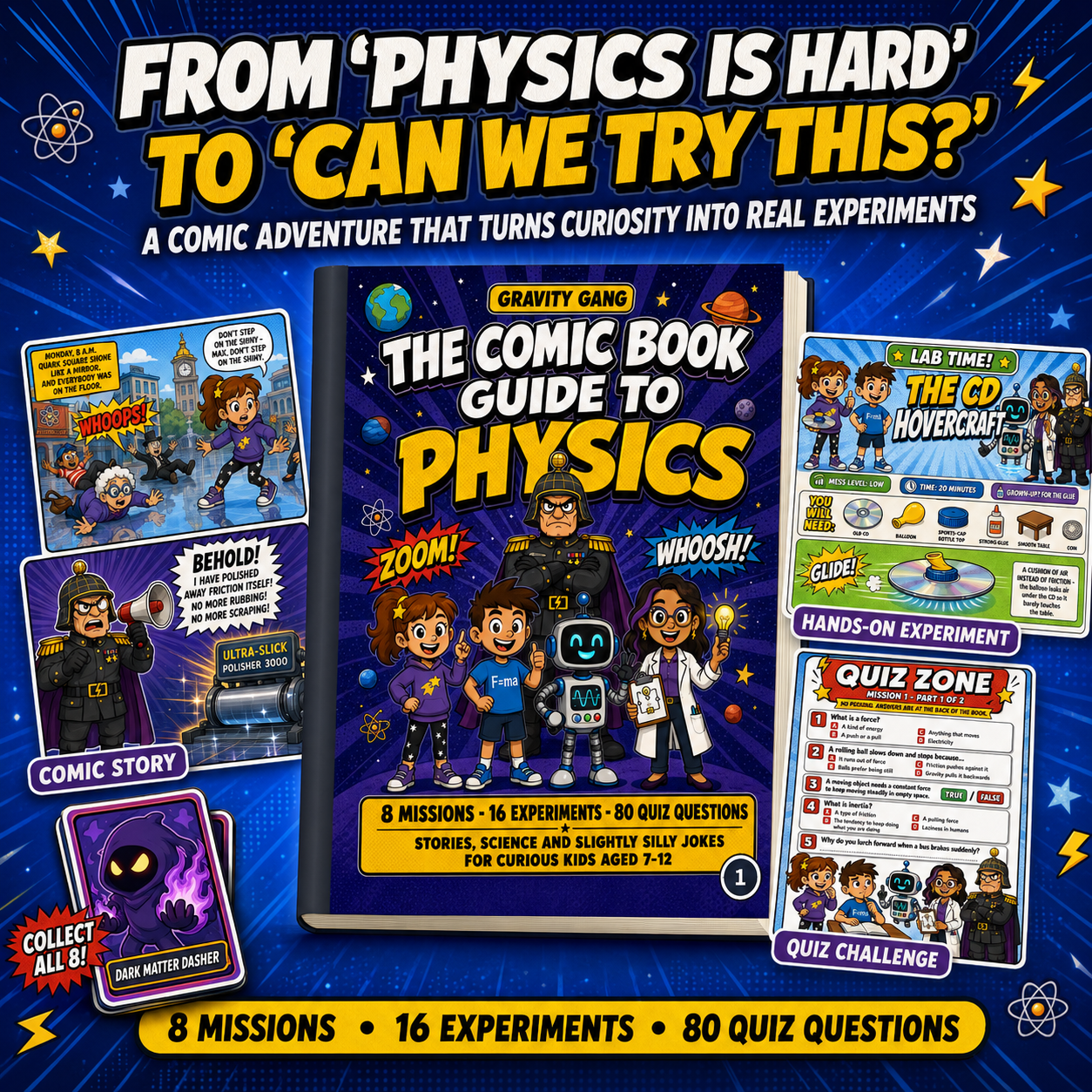
Fizz Force includes a comic story arc introducing chemistry concepts, hands-on experiments using common kitchen items, quizzes, and tools for parents to track progress.
If your child enjoyed the cabbage rainbow experiment and wants more, consider exploring additional educational comic books available online.