

Parents: Research Backed Critical Thinking Activities for Ages 4–9
You can start teaching critical thinking to a four-year-old this afternoon: ask one open-ended question instead of a yes-or-no one, “think aloud” once so your child hears how you weigh a decision, and run a single simple prediction experiment before dinner. Critical thinking is a trainable skill, not a fixed trait, and the earlier you start, the more it compounds through elementary school and beyond.
TL;DR:
- Explicit, guided instruction significantly improves children’s reasoning skills compared to unguided discovery, leading to better performance on complex tasks.
- Teaching early cause-and-effect relationships and encouraging open-ended questions help preschoolers develop foundational critical thinking habits.
- Age-appropriate activities like predicting, sorting, and simple experiments are effective for children aged 4 to 9, especially when combined with patience and scaffolding.
- Short, consistent routines of asking for evidence and testing claims build strong reasoning habits faster than sporadic, elaborate lessons.
- Incorporating story-based, hands-on materials such as comics with experiments offers engaging ways to model inquiry and reinforce reasoning skills.
Table of Contents
- Why Critical Thinking for Kids Matters More Than Ever
- Ages 4 to 6: Building the Foundation With Everyday Wonder
- Ages 7 to 9: Weighing Evidence and Testing Claims
- A Toolkit of Critical Thinking Activities for Children, Sorted by Time and Materials
- What the Research Actually Says About Teaching This Skill
- How Comics With Kitchen Experiments Put This Research Into Practice
- The Overlooked Piece Most Advice on This Topic Skips
- Try a 20-Minute Inquiry Session With a Brainie Comics Book
- Where to Go Deeper on This Research
- Sources
Why Critical Thinking for Kids Matters More Than Ever
A child today meets more competing claims before breakfast than most adults handled in a week a generation ago. Video platforms, AI chat tools, and playground rumors all arrive with the same confident tone, whether they’re true or not. Teaching kids critical thinking isn’t an academic nice-to-have anymore. It’s the skill that determines whether a ten-year-old can tell a real science claim from a convincing fake one.
The payoff shows up in measurable places. Kids who practice reasoning skills tend to perform better on tasks that require weighing evidence, not just recalling facts, and they handle open-ended school assignments with less frustration. They also make better everyday decisions, from choosing how to spend allowance to deciding whether a “fact” a friend shared is worth repeating.
The research backing this is more encouraging than most parents realize. A meta-analysis covering 117 separate studies on teaching critical thinking found that structured, explicit instruction produces meaningfully larger gains than letting kids simply discover reasoning skills on their own. Left to chance, most children develop weaker analytical habits than kids who get direct coaching.
What does that gain actually translate to at home and school?
- Stronger performance on open-ended, multi-step assignments in math and science
- Better resistance to misleading claims online and from peers
- More persistence when a first attempt at a problem fails
- Improved confidence expressing disagreement respectfully
- Faster recovery from being wrong, since evidence, not ego, drives the answer
The core finding: explicit, guided instruction beats unguided discovery for building reasoning skills in children, according to Abrami and colleagues’ review of over a hundred studies. That single result should reshape how most households approach “just let kids figure it out.”
Ages 4 to 6: Building the Foundation With Everyday Wonder
Preschoolers and kindergartners already grasp basic cause and effect. A four-year-old who’s rolled enough balls down enough ramps knows a steeper ramp means more speed. What they don’t yet have is the vocabulary or patience to explain why. Developmental research on children’s scientific reasoning shows that early cause-effect expectations are already in place well before school starts, which means you’re not planting a seed from nothing. You’re giving language to something that’s already growing.
This is the age for short, playful activities that don’t require sitting still for long:
- Prediction jars: Fill a jar with mixed objects and ask, “Which of these will float?” before dropping them in water.
- Story pause-and-predict: Stop mid-picture-book and ask, “What do you think happens next, and why?”
- Sorting games: Hand over a pile of buttons, leaves, or toy animals and ask your child to group them by any rule they choose, then explain the rule.
- “Why do you think so?”: Attach this question to nearly anything your child claims, from “the sky is falling” to “dogs are smarter than cats.”
The scaffolding matters as much as the activity. Wait several seconds after asking a question. Kids this age need real thinking time, and jumping in with the right answer trains them to wait for you instead of reasoning it out themselves. When they give a wrong or wild answer, resist correcting it immediately. Ask, “What makes you think that?” first. Correcting too fast teaches a child that guessing is risky, and risk-averse kids stop guessing altogether.
Pro Tip: Let a wrong prediction stand for a minute before you fix it. Ask “How could we check?” instead of “Actually, no.” The goal at this age isn’t the right answer. It’s the habit of asking how you’d find out.
Ages 7 to 9: Weighing Evidence and Testing Claims
Early elementary kids can hold two competing explanations in mind at once and start weighing which one has better support. This is roughly when kids begin genuinely evaluating what other people tell them rather than just absorbing it. Research on children’s reasoning about testimony shows that kids in this range already differentiate between trustworthy and shaky sources of information when given the chance to practice.
That’s the opening for activities with more structure than the preschool versions:
- Step-up experiments: Change one variable at a time (does the paper airplane fly farther with a bigger wing or a heavier nose?) and record what happens.
- “Whose claim is stronger?”: Present two competing explanations for something (a rainbow, a magnet sticking to steel but not aluminum) and ask which explanation has more evidence behind it.
- Adapted SIFT prompts: For anything read online or heard from a friend, ask “Who said this?” and “Is there another source that agrees?” as a simplified first pass at fact-checking habits.
- Grocery store math: Ask your child to figure out which size of a product is the better deal and explain their math.
Daily routines double as practice grounds at this age. A trip to the store, a disagreement between siblings, or a claim from a video game forum all work as raw material. The trick is treating ordinary moments as small investigations instead of saving critical thinking for worksheets. A kid who’s practiced comparing prices at the grocery store transfers that same “which claim has better evidence” instinct to a science fair project without anyone explicitly teaching the connection.
A Toolkit of Critical Thinking Activities for Children, Sorted by Time and Materials
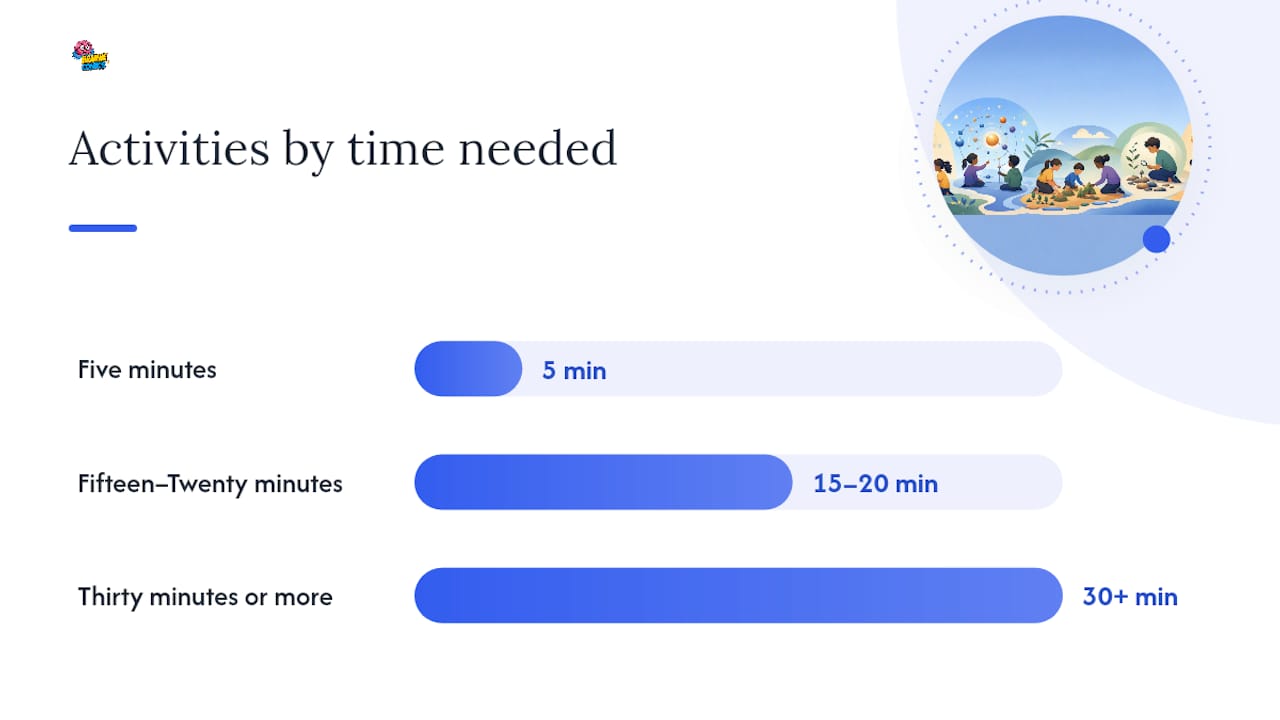
Not every evening has room for a 45-minute experiment. These are organized by how much time and what materials you have on hand, so you can grab one that fits tonight rather than waiting for a free Saturday.
Five minutes, no materials:
- The “why three times” game. Ask “why” about any statement your child makes, then ask why again about their answer, then a third time. By the third why, you usually hit either genuine curiosity or the edge of what they actually know, both useful.
- Prediction before the reveal. Before opening a wrapped gift, finishing a movie, or checking a game score, ask for a quick prediction and a one-sentence reason.
- Two truths and a guess. State two real facts and one you’re not sure about, and ask your child to identify which one needs checking.
Fifteen to twenty minutes, household materials:
- Sink or float, revised. Instead of just testing objects, have your child sort them into predicted categories first, then test, then explain any surprises. The explanation step is where the real thinking happens.
- Classification challenge. Dump a junk drawer or toy bin on the table and ask for three different sorting systems in a row (by color, then by use, then by a rule they invent).
- Evidence hunt. Pick a household claim, like “this plant needs more light,” and have your child gather three pieces of evidence for or against it before acting.
Thirty minutes or more, slightly more setup:
- A full design task. Challenge your child to build something with a constraint, like a tower that holds a book using only paper and tape, then test, fail, and redesign. A structured version of this, built around dropping an egg safely, works well as a longer investigation.
- A kitchen-science investigation. Water-based experiments are cheap, low-mess, and give visible cause-and-effect results kids can predict and check, and a handful of starter water experiments work for a wide age range.
- SIFT practice with a real online claim. For kids nine and up, pull up something they’ve actually seen online and walk through checking its source together, step by step.
Adapt difficulty by adding or removing variables, not by changing the activity entirely. A six-year-old does the sink-or-float test with two categories; a ten-year-old adds a third variable like water temperature. The learning outcome you’re after in nearly every one of these is the same: a child who pauses before accepting a claim and asks what would prove it true or false. If a session goes flat, it’s usually because the question was too closed. “What color is this?” ends the conversation. “What do you notice about this?” opens it back up.
What the Research Actually Says About Teaching This Skill
The single most useful finding in this whole field is one many parents get backward. Abrami and colleagues’ review of 117 studies on critical thinking instruction found that explicit, structured teaching outperforms unguided, discovery-only approaches. Handing a kid a puzzle and walking away isn’t the fastest route to sharper reasoning. Naming the strategy, modeling it, and coaching it directly gets there faster.
That doesn’t mean drilling worksheets. It means being specific about the thinking move you want a child to practice, rather than assuming they’ll absorb it by osmosis. UC Berkeley’s Understanding Science project describes this as building scientific habits of mind: questioning, investigating, staying skeptical of first impressions, seeking evidence, and actively trying to poke holes in your own ideas. Those five habits translate directly into home language.
A few rules make the difference between advice that sounds good and advice that actually works:
- Ask for reasons every time, not just on special occasions (“What makes you say that?” becomes a reflex, not a lecture).
- Require some form of evidence before accepting a claim, even a shaky one (“How do you know?”).
- Push for at least one alternative explanation before settling on the first one (“What’s another reason this could happen?”).
- Scaffold progressively: simple predictions first, then classification, then multi-variable investigation, matching the layered approach developmental researchers recommend for building reasoning over years, not weeks.
The number that should change how you teach: across those 117 studies, structured, explicit instruction consistently beat letting kids figure things out unaided. If you take away only one strategy from this entire article, take that one.
One more piece worth building into the routine early: managing when kids reach for instant-answer tools. Teaching a child when an AI tool is useful for checking evidence, and when leaning on it short-circuits their own reasoning, is quickly becoming as important as teaching them to check sources like books.
How Comics With Kitchen Experiments Put This Research Into Practice
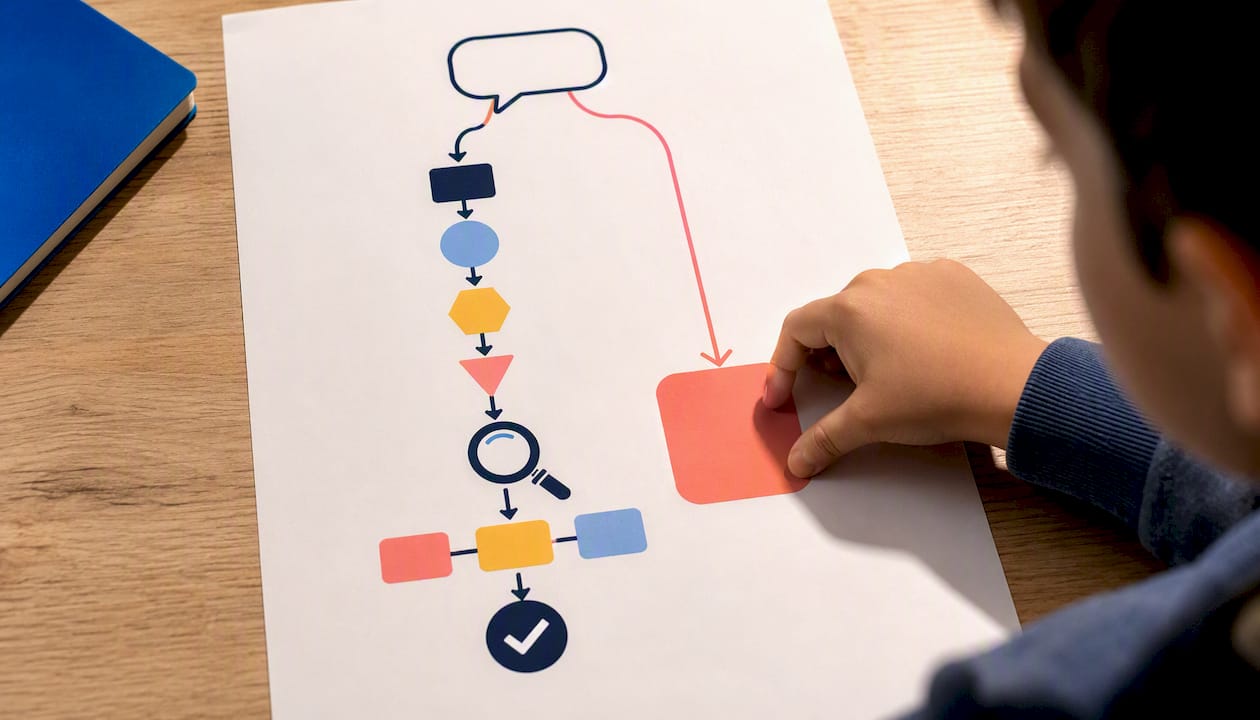
A comic book seems like an odd tool for teaching reasoning skills until you look at what actually happens on the page. A story that pauses mid-chapter to ask “what do you think will happen if you mix this with that” is running the exact same prediction-then-test loop recommended throughout this article, just wrapped in a plot kids want to keep reading.
Some comic series build their stories around that loop specifically. Each issue pairs a science-driven narrative with a hands-on experiment using ordinary kitchen materials, so the “think aloud” modeling this article recommends happens on the page before a child ever picks up a spoon or a rubber band.
- Characters voice their reasoning out loud mid-story, modeling the exact “what makes you think that” habit parents are coached to use at home.
- Kitchen-safe experiments give kids a low-stakes way to test a hypothesis the story just raised, without needing a lab or expensive supplies.
- Built-in quizzes ask kids to explain their reasoning, not just recall the plot, echoing the “ask about process, not just the answer” guidance for ages 10 to 12.
- The screen-free format sidesteps the instant-answer problem entirely. There’s no search bar to short-circuit the thinking.
A story that stops to ask “what do you think happens next, and why?” is teaching the same habit a developmental psychologist would recommend. It just doesn’t feel like a lesson.
For parents or teachers who want a ready-made inquiry-based session structure, a comic issue can anchor a full 20-minute activity block without extra planning.
The Overlooked Piece Most Advice on This Topic Skips
Most guidance on teaching kids to think critically stops at “ask more questions,” as if the question alone does the work. It doesn’t. The research is clear that structured, explicit modeling beats unguided discovery, yet most parenting content still leans on vague encouragement to “let kids explore” without ever naming the specific thinking move being practiced.
Here’s what actually matters most, based on everything the evidence supports: the habit of asking “how would we test that” beats any single clever activity. You don’t need a curriculum. You need a repeatable question you ask often enough that your child starts asking it of themselves.
Where conventional advice falls short is timing. Parents wait for the “teachable moment” instead of building small, repeated reps into ordinary routines, the grocery store, the story before bed, the argument between siblings. Consistency beats intensity here. Five minutes a day of real reasoning practice outperforms one elaborate weekend project a month.
If you take one thing from this, prioritize modeling your own uncertainty out loud before you correct your child’s. Reasoning is contagious. Kids copy how the adults around them handle not knowing something far more than they copy the right answers those adults eventually land on.
— Brainie Comics
Try a 20-Minute Inquiry Session With a Brainie Comics Book
If you want a ready-made way to run everything in this article without building your own lesson plan, that’s exactly what Brainiecomics is for. Each issue of Gravity Gang and Fizz Force turns the prediction-evidence-explanation loop into a story kids actually ask to keep reading, so you get the reasoning practice without the fight to get a workbook opened.
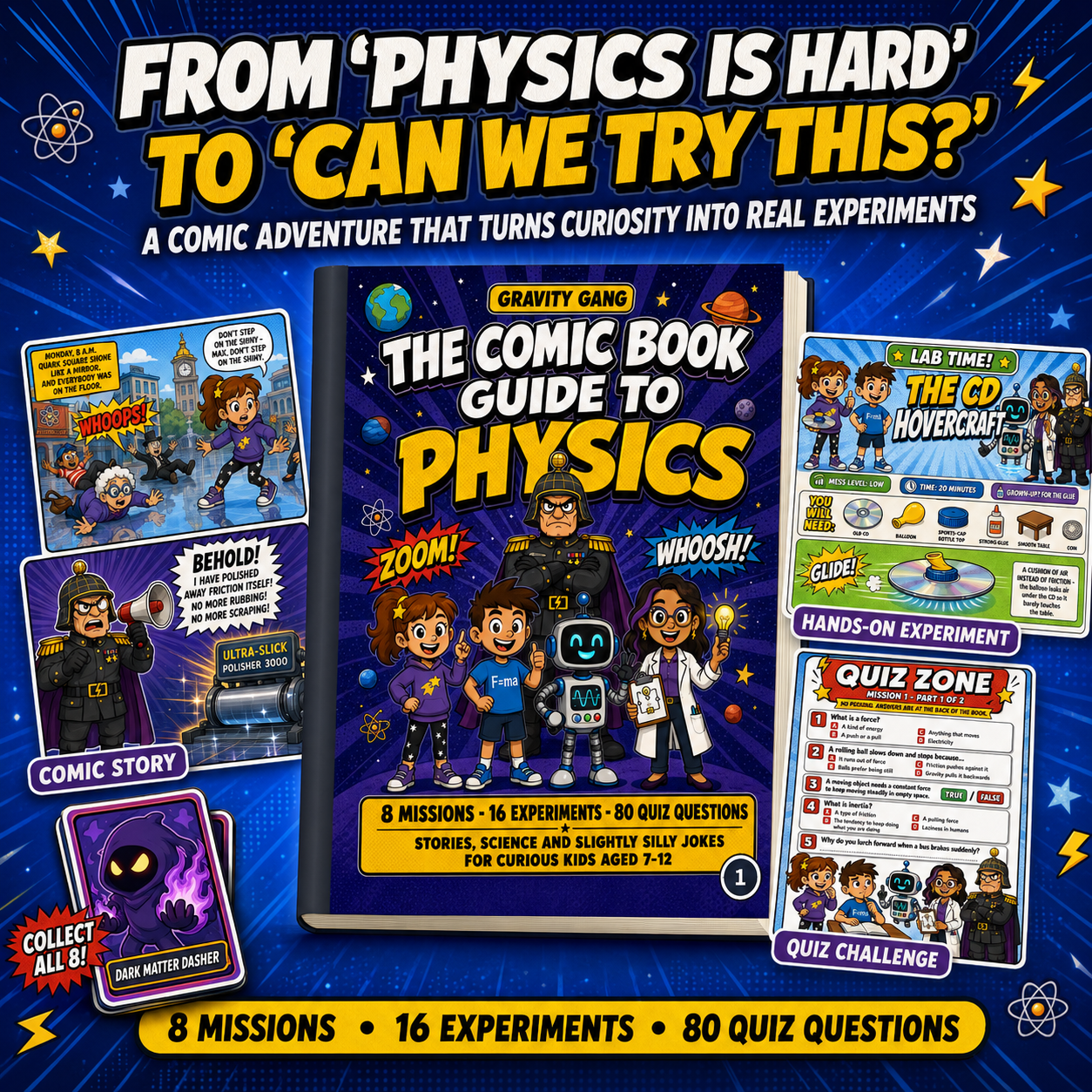
For a home session, pick one chapter, pause before the experiment, and ask your child to predict the outcome before flipping the page. That’s a full inquiry cycle in about 20 minutes, no extra prep required. For a classroom or small group, split kids into pairs and have each pair defend a different prediction before running the same Fizz Force chemistry experiment together and comparing notes on what actually happened.
The Gravity Gang physics guide works the same way for kids more drawn to motion, forces, and building challenges than chemical reactions. Browse the full lineup and classroom bundle options at Brainiecomics to find the right starting issue for your child’s age and interests.
Where to Go Deeper on This Research
For readers who want the underlying studies rather than the summarized version, these are the sources worth reading in full.
- Abrami et al.'s analysis of 117 studies makes the strongest case for explicit instruction over unguided discovery.
- The PMC review on children’s reasoning about testimony explains how early kids start evaluating trustworthiness in what they’re told.
- UC Berkeley’s Understanding Science project breaks scientific habits of mind into language parents can use directly.
- National Geographic’s coverage of child development and critical thinking covers SIFT and how to respond to kids’ questions.
- Assignify’s guide to question-level analysis helps educators design questions that push past recall into real reasoning.
Sources
By upper elementary, kids can genuinely critique where information comes from, not just what it says. This is the age to introduce structured investigations and let kids lead pieces of their own learning.
- Philip Abrami and colleagues (analysis of 117 studies)
- Children’s critical thinking when learning from others
- Understanding Science (UC Berkeley) — scientific habits of mind
The feedback you give matters more at this stage than at any earlier one. Ask about the process, not just the answer: “Walk me through how you got there” tells you far more about their reasoning than whether the final number was correct. A kid who reaches the wrong answer through solid reasoning is in better shape than one who reaches the right answer by guessing.
Pro Tip: When your child gets something wrong, ask “What evidence would change your mind?” before offering the correct answer. If they can’t name any, that’s the actual skill gap, not the wrong answer itself.