

Summer Science Activities That Keep Kids Hooked All Break
Outdoor experiments that mix one big “wow” moment with open-ended testing make the best summer science activities for kids. That combination, recommended by educator Bob Pflugfelder, keeps curiosity alive long after the first eruption fizzles out. Here’s where to start:
- Alka-Seltzer rockets — explore gas pressure and thrust
- Bubble experiments — test surface tension and film strength
- DIY solar oven — observe heat absorption and energy transfer
- Ice-cream-in-a-bag — see freezing point depression in action
- Pinecone weather station — track humidity-driven plant adaptation
Before you launch anything fizzy or pressurized, put on eye protection and move outside. That one rule prevents most of the messes that turn a fun afternoon into a trip to urgent care.
Key Takeaways
The most effective summer science activities pair a dramatic outdoor demo with open-ended testing, matched to a child’s age and attention span.
| Point | Details |
|---|---|
| Lead with outdoor, high-wow demos | Rockets, eruptions, and bubble labs hold attention better than indoor worksheets. |
| Match activity to age and time | Use the age bands and time estimates to pick projects that fit the schedule, not just the topic. |
| Keep safety non-negotiable | Eye protection, outdoor launches, and standing back once a reaction starts prevent most mishaps. |
| Extend a single trial into a project | Log results over several days to turn one afternoon into real data practice. |
| Choose story-driven packs for low-prep weeks | Brainiecomics comic experiment packs bundle the story, materials list, and lab sheets into one ready resource. |
Table of Contents
- 10 Summer Science Activities to Try First
- Categorized Summer Science Projects by Type
- What You Need on Hand and How to Keep It Safe
- Matching Activities to Age and Attention Span
- Running a Session That Builds Real Curiosity
- What Educators Say Actually Works
- Why Story-Driven Experiments Keep Curiosity Going
- Ready-Made Experiment Packs for Busy Summers
- Sources
10 Summer Science Activities to Try First
You don’t need a curriculum to get started, just a short list you can scan in the car or on the back porch. Here are some activities worth prioritizing, with approximate age fit and time guidance so you can match the project to your afternoon.
Younger kids do better when you narrate the steps out loud and handle anything hot or fizzy yourself. Older kids get more out of these when you hand them a stopwatch and ask them to run the same trial three times and average the results.
Categorized Summer Science Projects by Type
Water and ice
- Ice excavation: Freeze small toys in a block of ice, then test salt, warm water, and sunlight to see which melts fastest. Learning goal: heat transfer.
- Sink or float sort: Test coins, corks, and clay against water density predictions. Learning goal: density and buoyancy.
- Melting race: Time ice cubes on different surfaces (metal, wood, foil). Learning goal: thermal conductivity.
- Extension: Log melt times daily for a week and graph the differences.
Chemistry in the kitchen
- Baking soda volcano: Vinegar plus baking soda in a plastic bottle. Learning goal: acid-base reactions producing carbon dioxide.
- Elephant toothpaste: Yeast and hydrogen peroxide create a foam eruption. Learning goal: catalysts speed up reactions.
- Color-changing cabbage juice: Test household liquids as natural pH indicators. Learning goal: acids and bases.
- Extension: Turn one reaction into a five-day investigation by testing a different ratio of ingredients each day and recording foam height.
Physics and flight
- Bottle rockets: Teaches the four forces of flight — lift, weight, thrust, and drag — in one dramatic launch.
- Paper helicopters: Vary blade length and paperclip weight to test drag and fall speed.
- Straw rockets: Cheap, repeatable, and great for testing launch angle.
- Extension: Chart flight distance against a single changed variable, like fin size or launch angle, across several trials.
Bubbles
- Bubble solution lab: Test dish soap ratios and glycerin for the strongest bubble film. Learning goal: surface tension.
- Giant bubble wands: Homemade wands from string and dowels. Learning goal: how shape affects bubble surface area.
- Extension: Record which recipe survives longest before popping, three trials per batch.
Weather and sky
- Pinecone weather station: Cones open in dry air and close in humid air, but only when placed somewhere genuinely exposed like a porch rail, not a sheltered shelf.
- Cloud in a jar: Hairspray and ice demonstrate condensation.
- Rain gauge tracking: A marked jar left outside teaches measurement and data logging.
Nature and outdoor exploration
- Leaf and bark rubbings: Compare textures across tree species.
- Nature’s Bingo or scavenger hunts adapt easily across grade levels, according to Project Learning Tree’s outdoor game guides.
- Ant trail mapping: Track foraging paths with chalk marks and observe over several days.
STEM building challenges
- Egg drop contraptions: Test cushioning materials against a controlled fall.
- Toothpick and marshmallow towers: Explore structural engineering.
- Extension: Use a phone stopwatch and a spreadsheet to log trial times, drop heights, or tower strength across a week, turning a single afternoon into a short data project.
What You Need on Hand and How to Keep It Safe
Most of these projects run on things already in your pantry or recycling bin. Keep a shared bin stocked with:
- Baking soda, vinegar, and dish soap
- Film canisters or empty plastic bottles
- Alka-Seltzer tablets
- Straws, tape, and string
- Safety glasses or protective goggles
Safety checklist:
- Wear eye protection during any fizzy, foaming, or pressurized reaction.
- Launch rockets and run eruptions outdoors, never in a kitchen or garage.
- Keep kids standing back once a reaction starts, especially with Alka-Seltzer rockets.
- Set a clear distance rule for anyone not directly running the launch.
- Lay down a tarp or towel for messy demos on hard surfaces.
Pro Tip: Launch rockets in pairs of two kids per station instead of gathering the whole group around one bottle. It cuts wait time, reduces lost caps, and keeps everyone close enough to see without crowding the blast zone.
Eye protection and outdoor launch spots aren’t optional extras. They’re the difference between a great story at dinner and a trip to urgent care.
Matching Activities to Age and Attention Span
Attention spans and safety needs shift fast between kindergarten and middle school, so matching the project to the age group saves you from a session that fizzles early or runs too long.
| Age Band | Best Activity Types | Supervision Notes |
|---|---|---|
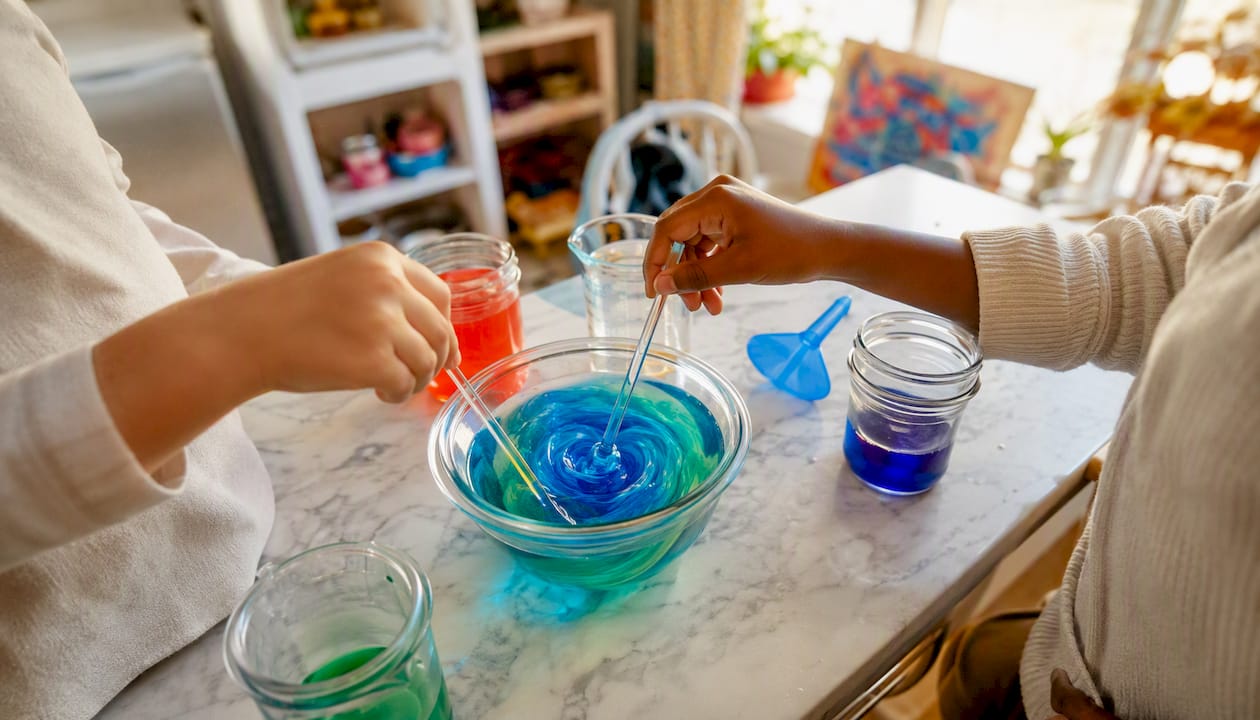
| PreK-K | Sensory water play, ice melting, color mixing | Adult handles all mixing and heat |
| Grades 1-3 | Bubble labs, film canister rockets, chalk chromatography | Adult preps materials, kids run trials |
| Grades 4-6 | Bottle rockets, solar ovens, egg drops | Kids run most steps with spot checks |
| Grades 7 | Multi-day investigations, data logging, STEM builds | Kids work independently, adult reviews safety |
Quick demos run 5 to 15 minutes. Hands-on builds usually take 30 to 60 minutes including cleanup. Multi-day projects, like the pinecone station or a rocket distance chart, need just a few minutes of daily check-in. For sensory-sensitive kids, swap noisy eruptions for quieter observation projects like ice melting races or leaf rubbings, and let them set their own pace instead of racing a timer.
Running a Session That Builds Real Curiosity
A good session follows a rhythm: set up, predict, test, record, tweak, compare, and reflect. That loop is what separates a science activity from a one-off magic trick.
- Set up the station before kids arrive.
- Ask a predictive question: “How far do you think this will fly?”
- Run the trial once.
- Record what happened, in words or a simple chart.
- Change one variable, like weight or angle.
- Compare the new result to the first trial.
- Ask what they’d try next time.
Sample prompts that work well: “What do you think will happen if we double the vinegar?” or “Which one do you think will melt first, and why?”
- Rotate kids through stations in small pairs to avoid bottlenecks.
- Keep launches or messy demos to two kids at a time.
- Build five minutes of cleanup into every session plan.
What Educators Say Actually Works
Educators who run these activities season after season tend to repeat the same handful of rules. Pair a dramatic demo, like a fizzy eruption, with a quieter open-ended question, and kids stay curious well past the initial surprise. Outdoor settings also matter beyond containing mess. Time spent outside helps kids connect lab-style concepts to real systems, like weather patterns or plant behavior, rather than treating science as something that only happens on a worksheet.
Combine one big “wow” moment with a chance to test and retest. That’s the recipe that keeps kids asking “what if” instead of just watching once and walking away.
Turning any activity into a mini-experiment is simple: change one thing, predict the outcome out loud, then check if the prediction held up.
Why Story-Driven Experiments Keep Curiosity Going
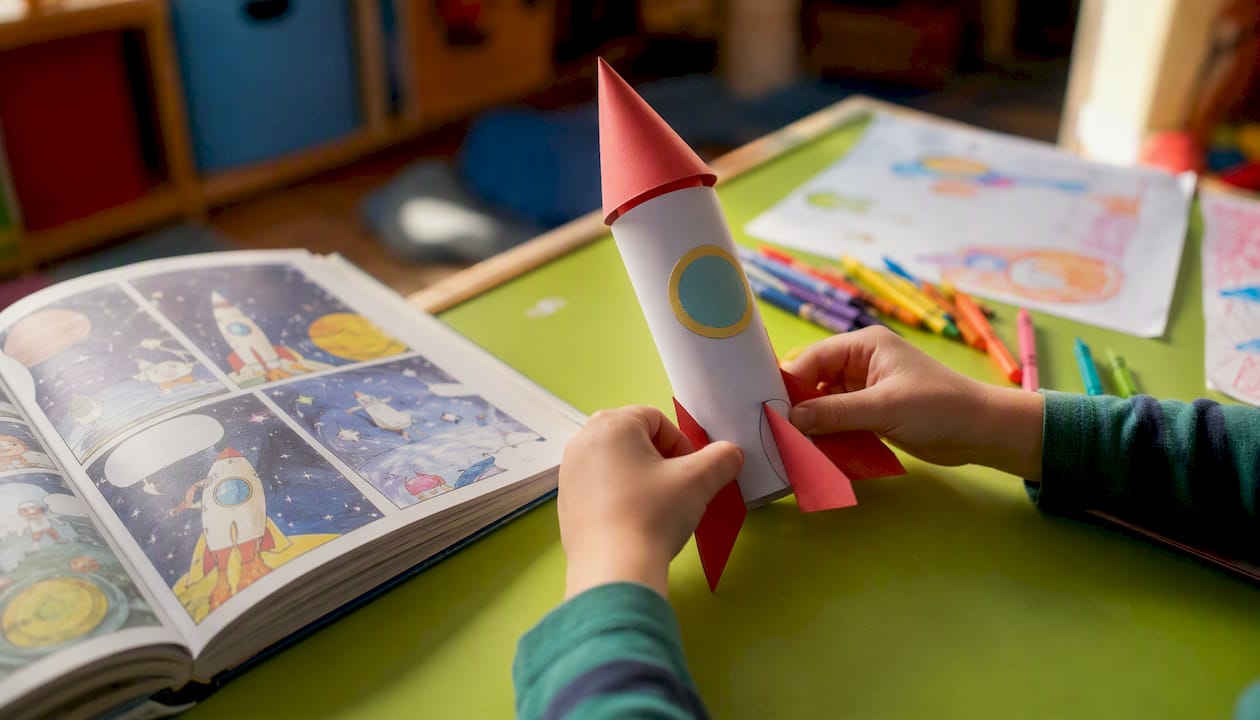
Reluctant readers often disengage from science because it arrives as a worksheet, not a story worth finishing. Pairing a comic narrative with a real kitchen experiment gives kids a reason to turn the page and then a reason to actually do the task. A physics comic that ends its chapter with an unfinished rocket build, for instance, can stretch a single Tuesday afternoon into a three-day project kids ask to come back to.
Ready-Made Experiment Packs for Busy Summers
Not every week allows for planning a full session from scratch, and that’s exactly where a ready-made pack earns its place on the shelf. Brainiecomics experiment packs pair a comic story with kitchen-safe tasks, printable lab sheets, and a suggested age range, so the prep work is already done before you open the book.
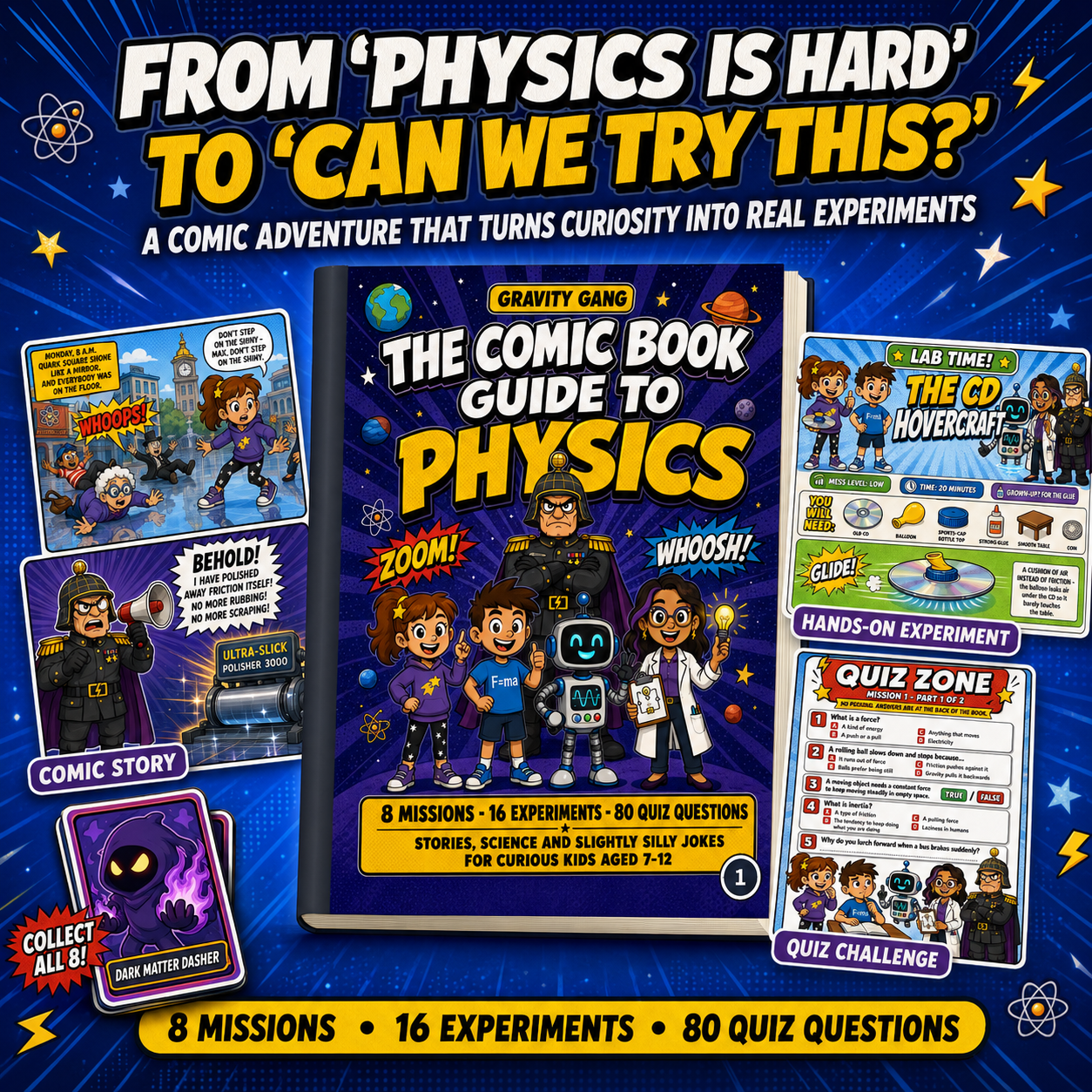
If your family or classroom is short on prep time, running a summer camp, or hunting for a gift that outlasts a single afternoon, a bundled pack solves the planning problem in one purchase. The Fizz Force chemistry guide walks through reactions like the ones covered above, while the Gravity Gang physics guide extends the rocket and flight activities into a full story arc. Browse the full lineup at Brainie Comics and pick the pack that matches what your kids are already curious about.
Sources
- Edutopia — Super simple summer science activities (Bob Pflugfelder)
- Teachers College, Columbia University — Why outdoor experiential learning is key for young learners
- Smithsonian National Air and Space Museum — Four forces of flight
- Project Learning Tree — Outdoor science games for elementary and middle students