

Parents: 20 Minute Inquiry Based Learning at Home with Brainie Comics
Inquiry-based learning at home means using your child’s own questions to drive short, hands-on investigations instead of handing them answers first. Start today with one 20-minute experiment: pick a question your kid actually asked this week, test it together with stuff from your kitchen, then talk about what happened. That single loop, question to exploration to reflection, is the whole method in miniature.
TL;DR:
- Guided inquiry, with proper scaffolding and repeated cycles, significantly outperforms unguided exploration, which often wastes time and frustrates children.
- A structured inquiry corner and a consistent ask-test-reflect routine can produce meaningful critical thinking gains comparable to formal education settings.
- Starting with simple, age-appropriate questions and hands-on projects leads to better engagement than complex or undefined experiments.
- Using open-ended questions and role rotation fosters curiosity and participation while avoiding over-structuring and immediate correction.
- Commercial resources like Brainie Comics provide ready-made prompts and experiments, making it easier for parents to integrate inquiry-based learning into busy routines.
Table of Contents
- What Inquiry-Based Learning At Home Actually Looks Like
- How To Start Inquiry-Based Learning At Home This Week
- Hands-On Inquiry Activities By Age
- How Parents Scaffold Inquiry Without Taking Over
- Where Brainie Comics Fits Into The Routine
- A Realistic Take On Fitting This Into Real Life
- Start Your Child’s First Inquiry Project Today
- Sources
What Inquiry-Based Learning At Home Actually Looks Like
Home inquiry learning works because it flips the usual order of school lessons. Instead of “here’s a fact, now practice it,” the child starts with a question, chases an answer through direct observation, and only then talks through what it means. Curiosity drives the exploration; reflection locks in the learning.
A 2026 meta-analysis in F1000Research pooled 37 studies and found inquiry-based learning produces a large, significant boost to critical thinking, with an effect size (Hedge’s g) of roughly 1.48. That is a big number in education research, though the same analysis flags substantial variation depending on subject and age group, so results at your kitchen table will vary too.
The Research Signal: Across 37 studies, IBL’s effect on critical thinking scored around g ≈ 1.48, one of the stronger effects reported for any instructional approach, but the F1000Research meta-analysis notes that effect shrinks or grows depending on how well the inquiry is scaffolded.
That last caveat matters more than the headline number. A systematic literature review by Raymond W. Francis found that inquiry only pays off when it’s built on structured scaffolds and repeated learning cycles, not when kids are simply left to wander. Unguided exploration tends to waste time and frustrate children; guided inquiry, where an adult curates materials and asks the right question at the right moment, consistently outperforms it.
How To Start Inquiry-Based Learning At Home This Week
You do not need a curriculum. You need a box, a rhythm, and a habit of asking one more question than you answer.
- Build an inquiry corner. A shoebox with tape, string, magnifying glass, measuring cups, food coloring, and a notebook covers most kitchen-table science. Total cost is usually under what you’d spend on a single toy.
- Run the Observe, Ask, Explore, Reflect loop. Fifteen to thirty minutes is the sweet spot: five minutes noticing something (why does the bread rise?), five minutes turning it into a question, ten to fifteen minutes testing it, five minutes talking about what happened.
- Pick one starter project with built-in prompts. Something like “Does salt water float things differently?” works because the question is testable with two glasses, water, salt, and a raisin.
- Hand over more control each week. Week one, you ask the questions. Week three, you just say “what do you notice?” and let your child take it from there.
Curated, technology-supported formats like WebQuests reduce cognitive overload while still letting kids drive the investigation, which is the same principle behind a well-stocked inquiry box: fewer, better-chosen materials beat an overwhelming pile of options.
Pro Tip: Keep the inquiry corner visible but closed. A box your child has to open feels like a discovery. A pile of stuff scattered on the counter feels like a chore.
Hands-On Inquiry Activities By Age
Reproducible projects work best when the question comes before the demonstration. Try these, organized loosely by age, and adjust the complexity rather than the core question.
- Ages 4 to 6, sink or float: Fill a bowl, gather five household objects, ask “which ones will float?” before dropping anything in. Expect wrong guesses. That’s the point.
- Ages 7 to 9, bread and yeast: Make two small batches of dough, one with yeast and one without, and ask “what does yeast actually do?” Kids see the dough rise (or not) within an hour.
- Ages 7 to 12, backyard micro-habitat: Mark off a one-foot square of yard or a potted plant and ask “what lives here that we can’t see from standing up?” Return three days later and compare notes.
- Ages 10 to 13, recyclable bridge challenge: Give a stack of cardboard, tape, and straws, then ask “how much weight can a bridge built from trash hold?” Let it fail. Rebuild.
- Teens, kitchen chemistry: Mix baking soda with vinegar, lemon juice, and dish soap separately, then ask “which reaction produces the most gas, and why?”
Pro Tip: Write the question on a sticky note before starting. When kids get frustrated mid-project, the note reminds everyone what you’re actually trying to find out, not just what you’re trying to build.
How Parents Scaffold Inquiry Without Taking Over
The hardest part of home inquiry learning isn’t finding activities. It’s knowing when to talk and when to stay quiet.
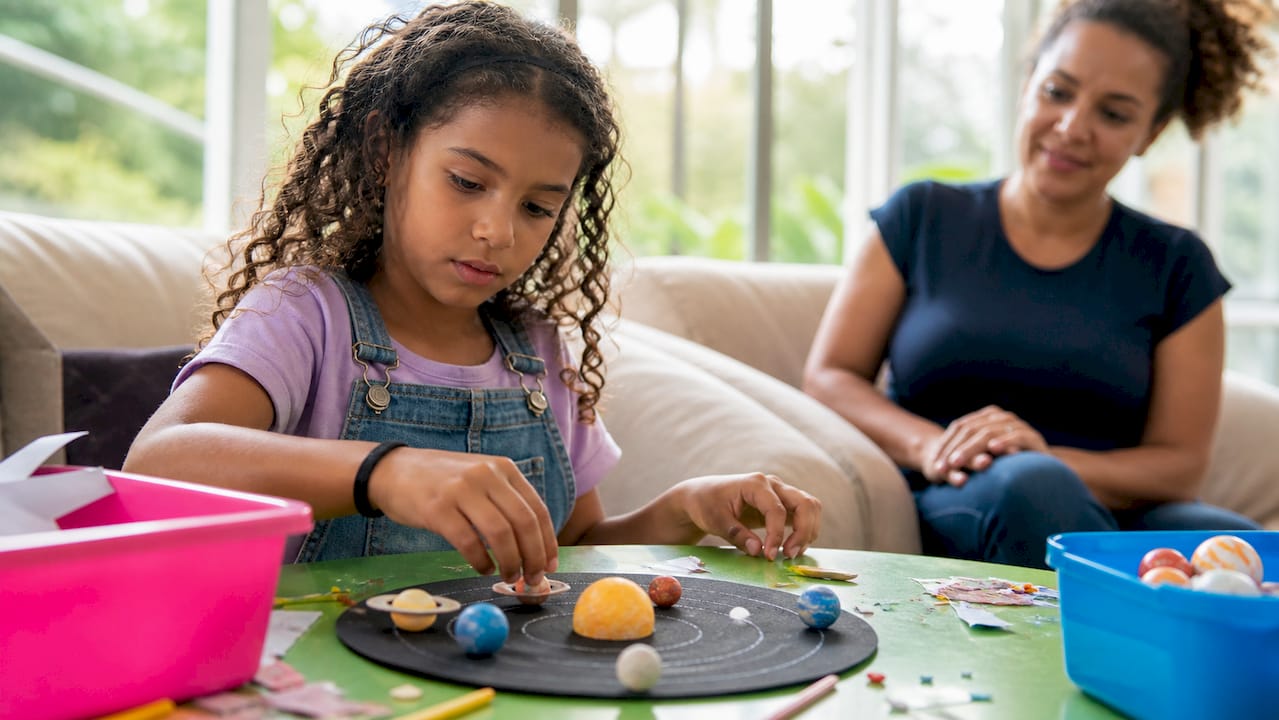
Use open question stems that push thinking without supplying the answer: “What makes you say that?” “How could we test it?” “What would happen if we changed one thing?” These beat yes-or-no questions because they force a kid to explain their reasoning out loud, which is where the actual learning happens.
Step in only when a child is stuck for more than a minute or heading toward something unsafe. Otherwise, let the wrong guess play out. A systematic review of IBL best practices points to curated prompts and simple checklists, like a one-line observation log or a photo journal, as enough to track progress without turning home learning into homework.
- Keep a running journal: one sentence per session, a photo, and a smiley-face rating of “how surprised were you?”
- Rotate roles during sibling projects: one leader, one recorder, one tester, swapped each session. The Francis review found this kind of simple role structure improves participation compared to unstructured group work, where one kid usually does everything.
- Watch for over-structuring and instant correction. Both kill curiosity faster than a wrong answer ever will.
Where Brainie Comics Fits Into The Routine
Brainie Comics builds inquiry scaffolding directly into its stories instead of leaving parents to invent prompts from scratch. Fizz Force follows a chemistry plot where each chapter pauses for a kitchen-safe experiment, matching the vinegar-and-baking-soda inquiry above but with a built-in question sequence and a completion certificate. Gravity Gang does the same for physics, pairing its story with hands-on challenges close to the recyclable bridge project.
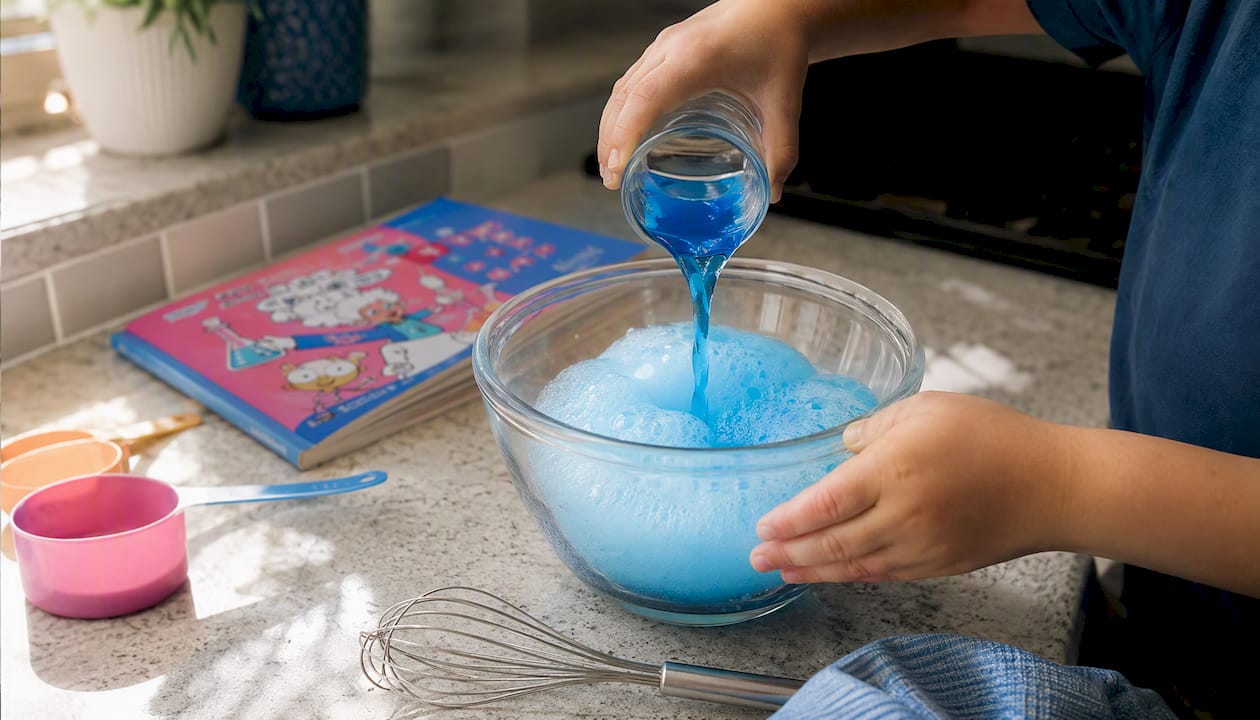
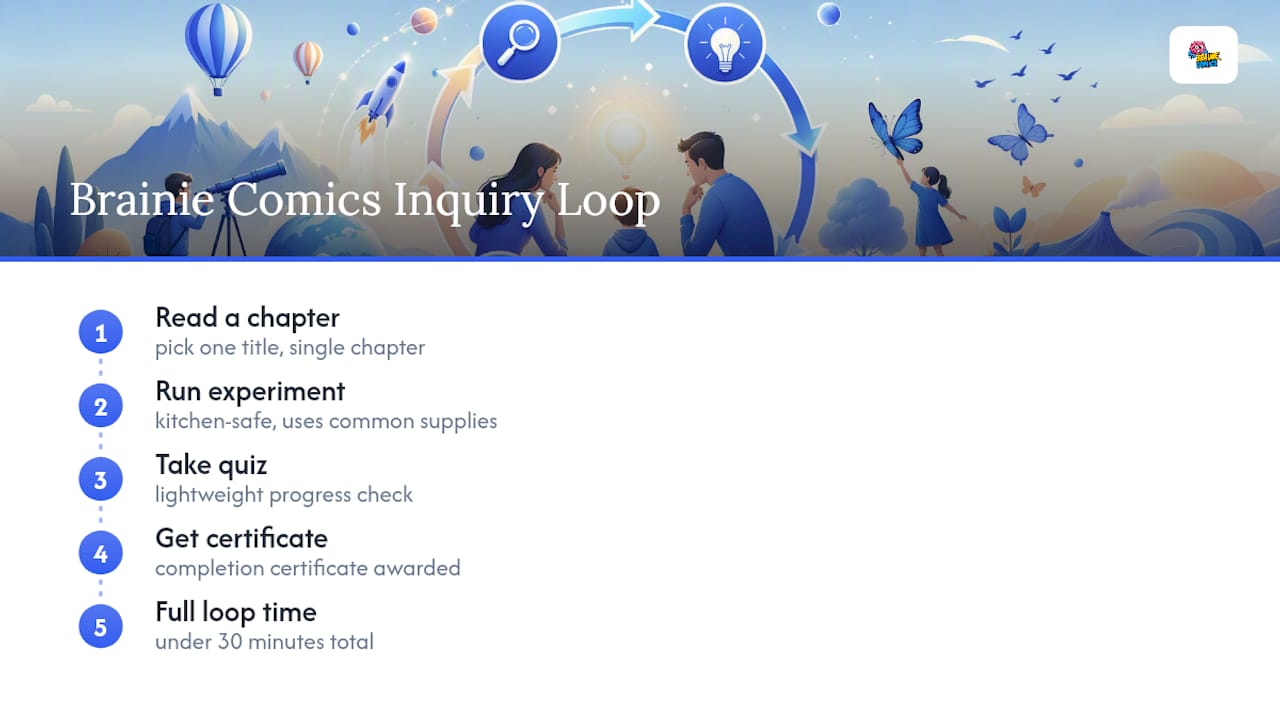
Parents cite the books for pulling reluctant readers into science without a screen in sight, and for the quizzes that double as a lightweight progress check. Pick one title, read a single chapter, and run its attached experiment the same afternoon. That’s a full inquiry loop in under thirty minutes, no extra prep required beyond what’s already in most kitchens.
A Realistic Take On Fitting This Into Real Life
Nobody scaffolds inquiry perfectly on a Tuesday after work, and you don’t need to. The parents who stick with this long term treat it as fifteen minutes bolted onto something already happening, dinner prep, a walk, bath time, rather than a scheduled subject. One question about why the bathwater cools down faster near the drain can carry an entire session.
Drop the goal of “covering material.” Curiosity that survives a busy week beats a curriculum that gets abandoned by March.
— Brainie Comics
Start Your Child’s First Inquiry Project Today
Most inquiry-based learning falls apart at the materials stage, not the motivation stage. Parents want to start tonight, but end up hunting for the right experiment, the right question, and the right amount of guidance all at once. Brainiecomics solves that by putting the question, the household-materials experiment, and the reflection prompt inside a story your kid already wants to finish.
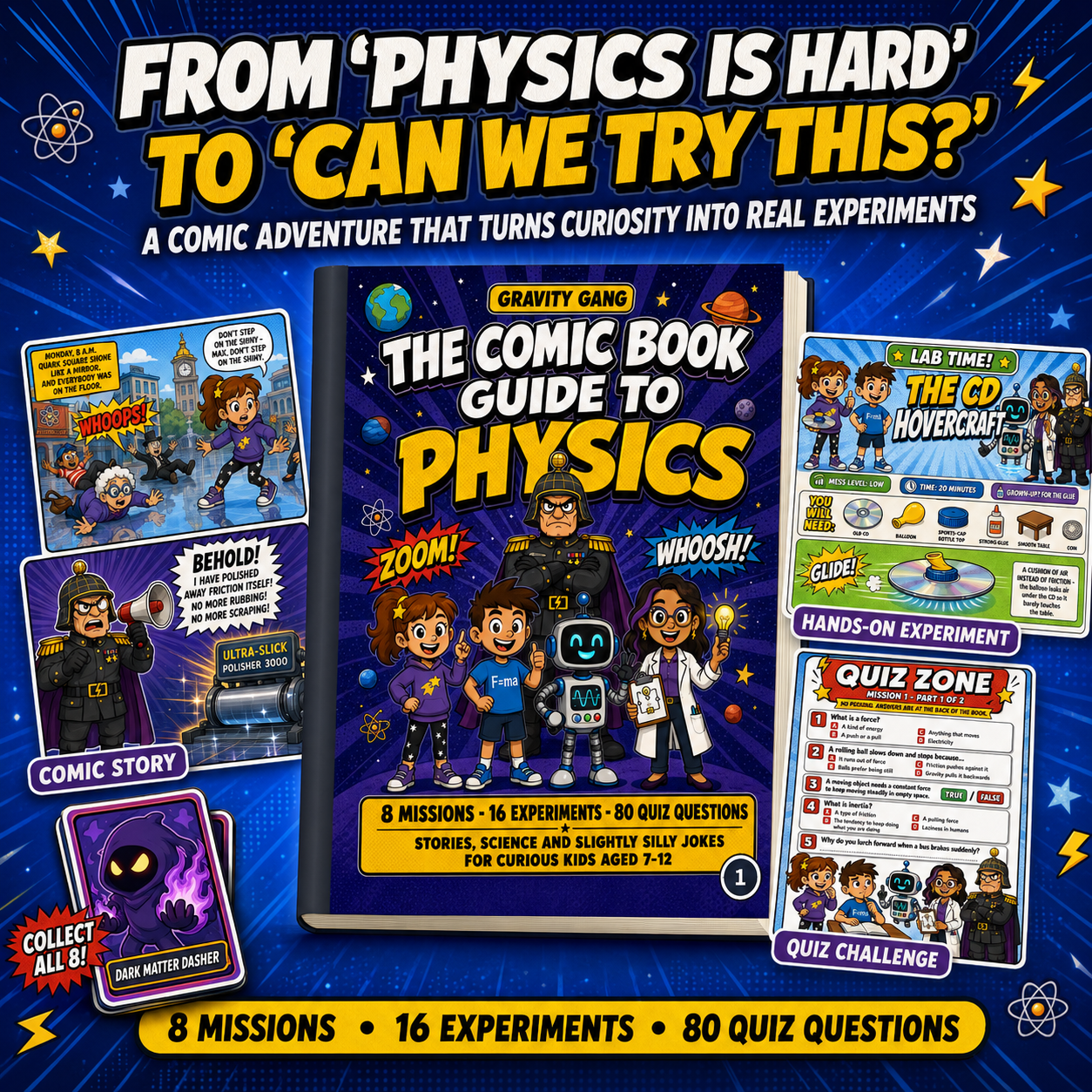
If your child leans toward reactions and fizzing, start with Fizz Force and its chemistry-driven kitchen experiments. If they’re more interested in motion, forces, and things falling over, Gravity Gang covers the same inquiry loop through physics. Either one gives you a ready-made 20-minute session for tonight: read one chapter, run the attached experiment, and let your child fill in the included reflection page. Order a title today and you’ll have your first real inquiry session before the week is out.
Sources
- Using Inquiry to Promote Student Learning in Higher Education: A Systematic Literature Review (Raymond W. Francis)
- Meta-analysis on inquiry-based learning effectiveness (F1000Research, 2026-05-14)