

Homeschool Science Experiments That Kids Actually Remember
Pick three to six household-item experiments per age group and you’ll cover more real science than most workbooks manage in a semester. Elementary kids get the most out of walking water and gummy bear osmosis. Middle schoolers do best with density towers and DNA extraction from strawberries. Early high schoolers should run titration-style color changes and basic rocket builds that require actual measurement. Skip the fancy kits. Success looks simple: your kid explains the concept back to you in their own words, or points at one clear observation in a journal and says, “that’s because of X.”
- Elementary (ages 6-10): walking water, gummy bear osmosis
- Middle school (ages 11-13): density tower, glow stick temperature test
- Early high school (ages 14-15): color-change titration demo, toy rocket data collection
Key Takeaways
Hands-on science experiments teach more effectively when paired with a single learning objective, an adult-modeled demo, and a short written reflection.
| Point | Details |
|---|---|
| Choose by age, not by kit | Pick 3-6 household-material experiments per age band instead of buying specialty science kits. |
| Model before handing it over | Demonstrating the procedure first improves safety and helps kids focus on the actual science question. |
| Reflection locks in learning | A quick journal entry or spoken explanation after each experiment turns activity into retained knowledge. |
| Prep stations reduce mess | Pre-measured cups, labeled trays, and wet/dry zones cut cleanup time and keep siblings from cross-contaminating supplies. |
| Comics package the whole lesson | Brainiecomics titles like Fizz Force and Gravity Gang combine story, experiment, and worksheet into one ready-to-use resource. |
Table of Contents
- Homeschool Science Experiments by Age Group
- Getting Your Materials and Workspace Ready
- Turning Activities Into Real Learning
- Where Brainie Comics Fits Into Your Science Plans
- What Homeschool Parents Get Wrong About Science Time
- Ready-Made Science Activities for Busy Homeschool Weeks
- Sources
Homeschool Science Experiments by Age Group
The trick with hands-on homeschool science isn’t finding exotic materials. It’s matching the right activity to the right developmental stage, then building in one small extension so a five-minute demo turns into a real investigation. Below is a working menu organized by age, with the materials, the procedure, and what each one is actually teaching.
Elementary experiments (ages 6-10)
-
Walking water. Materials: 3 clear cups, food coloring, paper towels, water. Fill outer cups with colored water, leave the middle empty, fold paper towel strips between cups. Watch color travel through capillary action over a few hours. Learning objective: capillary action moves liquid against gravity. Extension: race different paper towel brands and time the results.
-
Gummy bear osmosis. Materials: gummy bears, four cups, water, salt water, vinegar, soda. Drop one bear per cup, measure size after 12 hours. Osmosis experiments with gummy bears typically show plain water producing the biggest, squishiest bear because it moves toward equilibrium fastest. Learning objective: osmosis and concentration gradients. Extension: graph size change by liquid type.
-
Butter in a jar. Materials: heavy cream, a lidded jar, a marble (optional). Shake continuously and check every couple of minutes. Fat coalesces into solid butter, and timed trials from 6 to 14 minutes show exactly how agitation speed changes separation time. Learning objective: physical changes and fat structure. Extension: compare shaking by hand versus in a stand mixer.
-
Baking soda volcano. Materials: baking soda, vinegar, dish soap, food coloring, a small bottle. Build a clay or paper mache cone, load the bottle, pour vinegar in. Learning objective: acid base reactions release carbon dioxide gas. Extension: test how ratio changes eruption height and speed.
-
Seed growth journal. Materials: bean seeds, paper towels, plastic bags or cups, water. Sprout seeds in damp towels taped to a window, measure daily. Learning objective: plant life cycles and the variables that affect germination. Extension: compare light versus dark, or different soil types.
-
Rainbow milk. Materials: whole milk, food coloring, dish soap, a cotton swab. Drop colors onto milk in a shallow dish, touch soap to the center. Learning objective: soap breaks surface tension and disrupts fat molecules. Extension: try skim versus whole milk and compare reactions.
Middle school experiments (ages 11-13)
- Simple circuits. Materials: batteries, copper wire, small bulbs or LEDs, electrical tape. Build open and closed circuits, then add a switch. Learning objective: how electricity needs a complete path to flow. Extension: build a parallel circuit and compare bulb brightness.
- Density tower. Materials: honey, dish soap, water, oil, rubbing alcohol, a tall clear glass. Layer liquids slowly by density, heaviest first. Learning objective: density determines how substances stack or mix. Extension: drop small objects in and predict where each will settle.
- Glow stick temperature test. Materials: 4 glow sticks, three cups (hot, ice water, room temp), a dark room. Crack sticks and submerge, then compare brightness. This setup, drawn from a glow stick chemiluminescence experiment, shows heat speeding up the chemical reaction and cold slowing it down. Learning objective: temperature affects reaction rate. Extension: graph brightness over time for each temperature.
- Rock candy crystals. Materials: sugar, water, a stick or string, a jar. Boil a supersaturated sugar solution, suspend the string, wait several days. Learning objective: crystallization and saturation points. Extension: try different sugar concentrations and compare crystal size.
- Elephant toothpaste. Materials: hydrogen peroxide, dry yeast, dish soap, food coloring, a bottle. An adult should handle the higher-concentration peroxide since this reaction runs hot and foams fast. Learning objective: catalysts speed up decomposition reactions. Extension: test yeast amount against foam volume.
- DNA extraction from strawberries. Materials: strawberries, dish soap, salt, rubbing alcohol (cold), a ziplock bag, coffee filter. Mash, filter, then layer cold alcohol on top to see DNA strands precipitate. Learning objective: DNA exists in every cell and can be physically isolated. Extension: repeat with a banana or kiwi and compare yield.
Early high school experiments (ages 14-15)
-
Color-change titration demo. Materials: red cabbage juice (as a pH indicator), vinegar, baking soda solution, small cups. Add drops of acid or base and record color shifts. Learning objective: pH indicators reveal acid base strength visually. Extension: test household liquids and build a pH color chart.
-
Toy rocket builds. Materials: paper, tape, a launch tube or straw, fins. Build and launch, measuring distance across trials. Learning objective: thrust, drag, and aerodynamics affect flight distance. Extension: change fin shape or nose weight and graph the results.
-
Friction and motion testing. Materials: a ramp, toy cars, different surface materials (carpet, foil, sandpaper). Time cars rolling down each surface. Learning objective: friction coefficients change acceleration and stopping distance. Extension: calculate speed from distance and time data.
-
Data-collection weather log. Materials: a thermometer, notebook, graph paper. Track daily temperature and humidity for two weeks. Learning objective: patterns emerge from consistent data collection over time. Extension: overlay data with local weather station records and calculate variance.
Getting Your Materials and Workspace Ready
Most of what you need for hands-on homeschool science is already in your kitchen, junk drawer, or garage. Sort supplies into five rough categories before you start planning a week of experiments: kitchen items (vinegar, baking soda, food coloring, dish soap), craft supplies (tape, string, paper, cups), outdoor materials (soil, seeds, rocks, sticks), measurement tools (rulers, kitchen scales, thermometers, measuring cups), and safety gear (goggles, gloves, an apron).
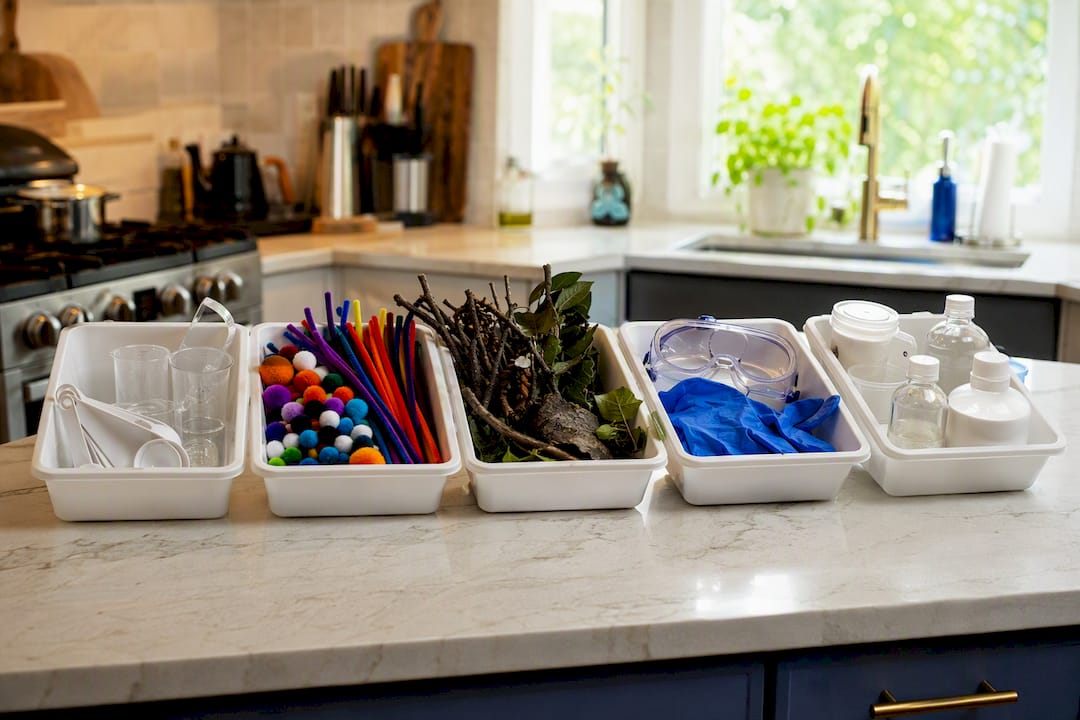
No hydrogen peroxide at the right concentration? Grocery store pharmacy sections carry it, and craft stores or dollar stores cover most of the rest. Pre-measure reagents into labeled cups the night before if you’re running experiments with more than one kid, and use a tray per station so spills stay contained to one surface instead of spreading across the counter.
Pro Tip: Set up a “wet zone” and a “dry zone” on your workspace before you start. It cuts cleanup time roughly in half and stops kids from tracking sticky gummy-bear residue onto the science journals.
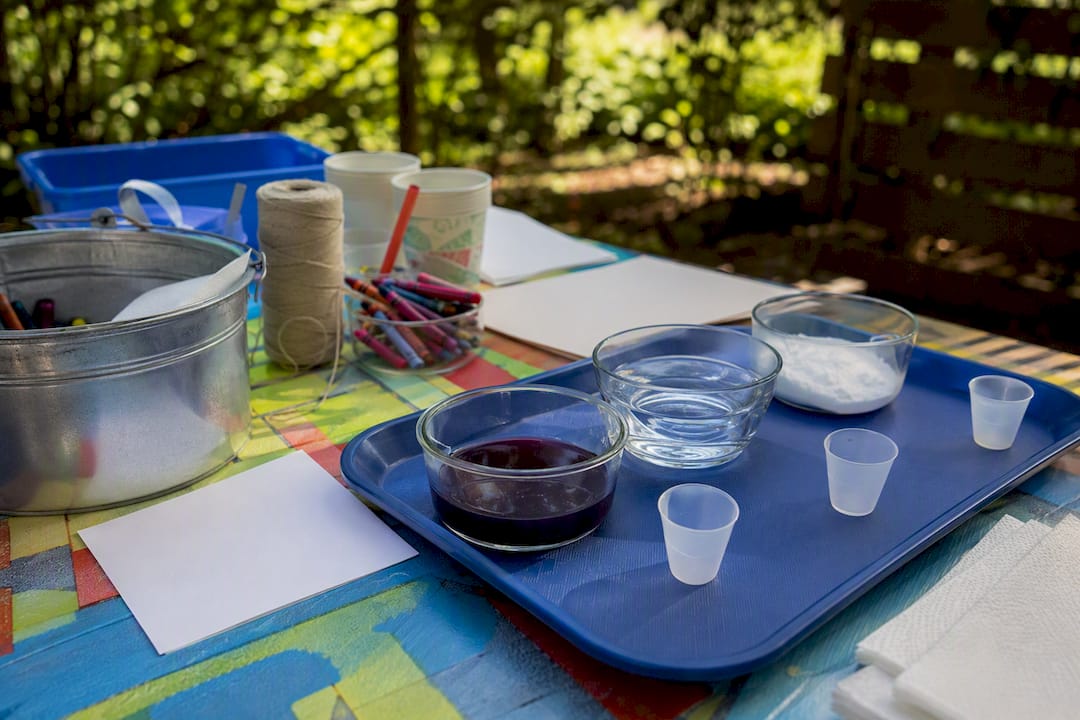
Leftover cabbage juice indicator keeps in the fridge for a few days in a sealed jar. Unused baking soda and vinegar store indefinitely. Toss anything organic (strawberry pulp, sprouted seeds) within 24 hours to avoid mold.
Turning Activities Into Real Learning
Demonstrate the experiment yourself before handing it to your kids. Educators consistently find that modeling the procedure first improves both safety and focus, because kids stop worrying about “doing it wrong” and start paying attention to what’s actually happening.
- Ask a hypothesis question before starting (“What do you think will happen to the gummy bear in salt water versus plain water?”).
- Have kids record one observation in a journal immediately after the experiment, not hours later.
- For open-ended projects, run the engineering design process: ask, imagine, plan, create, improve.
- Use a quick check for understanding: can your kid explain the result to a sibling in one sentence?
Research on combining hands-on and minds-on activities shows that pairing physical experiments with reflection tasks, like journaling or a quick diagram, measurably deepens conceptual understanding compared to the experiment alone.
Where Brainie Comics Fits Into Your Science Plans
Brainiecomics builds each comic around the exact structure this article recommends: a story chapter, a kitchen-safe experiment, and a printable worksheet tied to one learning objective. Fizz Force covers chemistry concepts like the acid-base and catalyst reactions in the middle-school section above. Gravity Gang handles physics, including friction, motion, and force concepts from the high-school list.
Using a comic as a lesson plan is straightforward:
- Read the story chapter together
- Run the paired kitchen experiment
- Assign the journal prompt from the worksheet
- Compare results as a family
- Try the suggested extension activity
Parents report increased science interest and reading engagement after working through the books, which lines up with why story-driven activity packs work better than worksheets alone for reluctant readers.
What Homeschool Parents Get Wrong About Science Time
Most homeschool science advice treats every experiment like it needs a full afternoon and a shopping trip. That’s backward. The experiments that stick, like walking water or a density tower, take fifteen minutes and ingredients already in your pantry. The instinct to save “the good stuff” for a special science day is exactly what kills momentum, because kids lose the thread between concepts when experiments happen once a month instead of weekly.
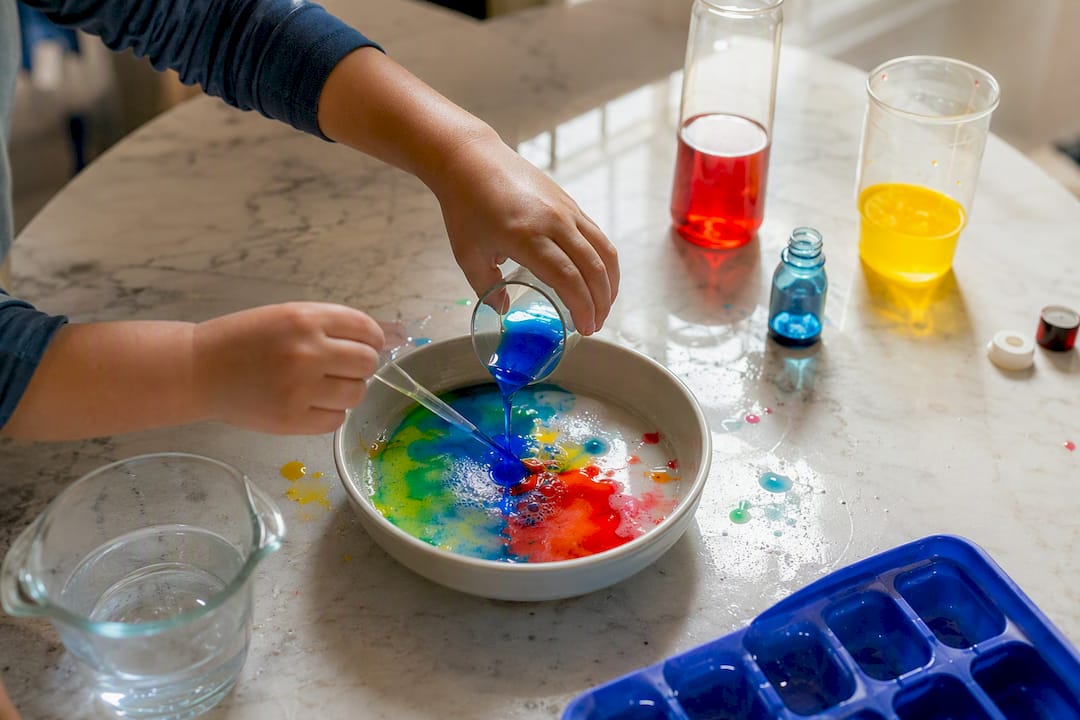
The bigger mistake is skipping the reflection step. An experiment without a journal entry or a spoken explanation is just entertainment. It’s the ten seconds after the vinegar stops fizzing, when you ask “why did that happen,” that turns a mess on the counter into an actual memory of how acids and bases react.
If there’s one thing worth prioritizing over buying more kits or chasing Pinterest-perfect setups, it’s consistency: three short experiments a week beats one elaborate one a month. Pair that rhythm with materials that already tell a story, like a comic chapter that sets up the “why” before the experiment starts, and kids stop treating science as a chore between reading lessons and start treating it as the reason to pick the book up in the first place.
— Brainie Comics
Ready-Made Science Activities for Busy Homeschool Weeks
If your afternoons are already packed with math worksheets and reading logs, hunting down household chemicals and writing your own lesson plans for every experiment above adds a task most parents don’t have time for. Brainiecomics solves that specific problem: every comic bundles the story, the kitchen-safe experiment, and the worksheet into one book, so there’s no separate planning step.
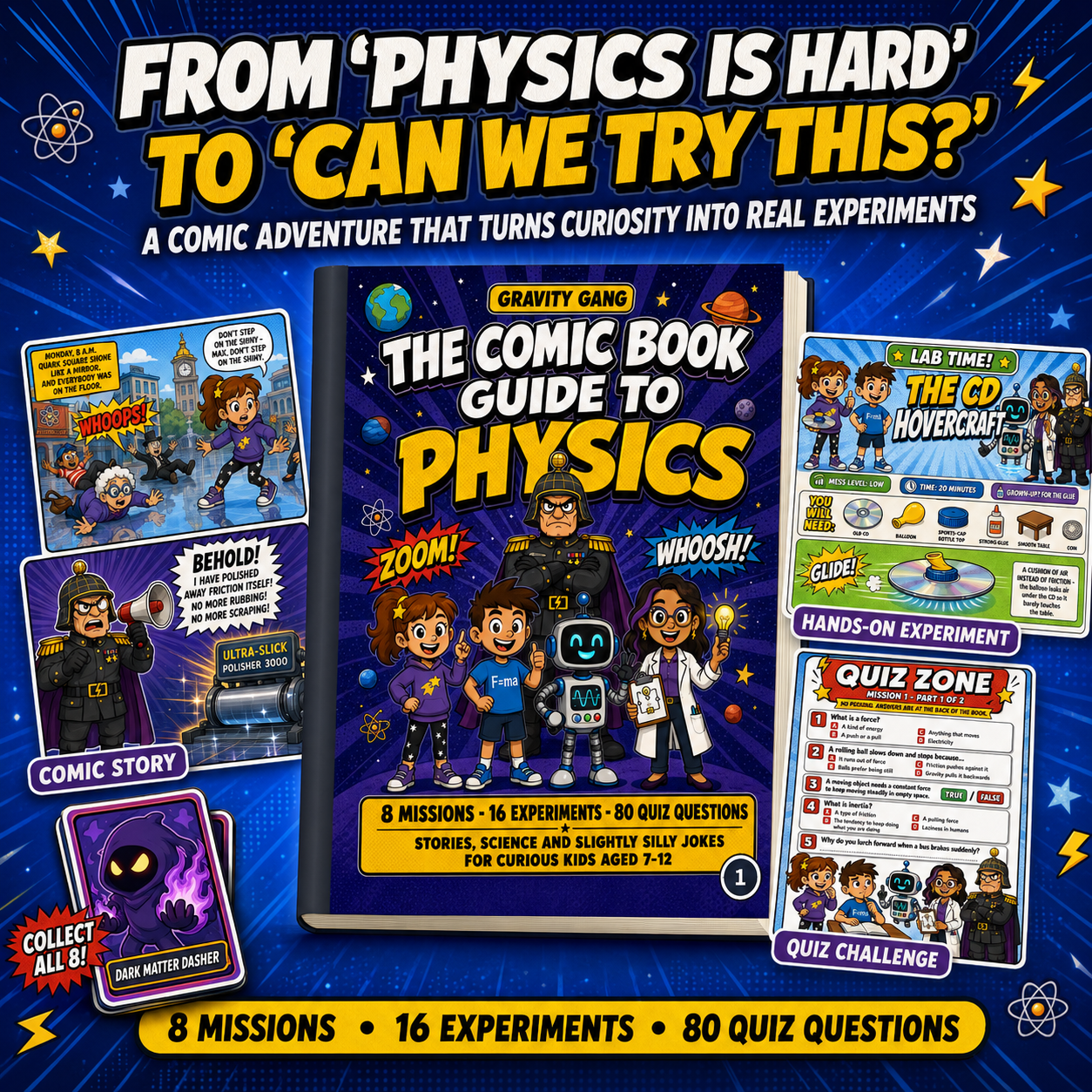
Fizz Force walks kids through chemistry concepts like the acid-base reactions and catalysts covered earlier, with the experiment already scripted into the narrative. Gravity Gang does the same for physics, covering forces and motion through a story kids actually want to finish. Both come with completion certificates that give reluctant readers a reason to see the book through to the last page. Browse the full Brainie Comics catalog and pick the title that matches whatever unit you’re covering this month.
Sources
- Making Butter in a Jar Science Experiment with Worksheets - The Homeschool Scientist
- Glow Stick Experiment with Free Lesson Printable - The Homeschool Scientist
- ‘Hands-on, minds-on’ learning: Revolutionizing early science education
- Getting Hands-On to Learn About Science and Nature | NEA
- DIY Gummy Bear Experiment on Osmosis | Homeschool .com