

10 No Kit Science Experiments for Parents and Teachers
Yes, you can run dozens of safe, educational science experiments at home using pantry and recycling items. Vinegar, baking soda, paper, balloons, and food coloring cover a surprising range of chemistry and physics lessons at little to no cost. These activities suit kids from kindergarten through middle school, and this guide covers the recipes, the safety rules, and the teaching habits that turn a quick demo into real learning.
TL;DR:
- Most household science experiments can be performed safely with pantry items like vinegar, baking soda, and food coloring, often at no cost.
- To ensure reliable results, measure ingredients precisely, check product freshness, and standardize containers and procedures across trials.
- Experiments such as walking water, lemon volcano, and balloon rockets are simple, quick, and suitable for young children, encouraging early engagement.
- More complex activities like crystal growth or elephant toothpaste require patience and longer setup but teach advanced concepts like mineral formation and catalysts.
- Framing experiments as investigations with predictions and observations enhances learning, making kid-led discovery the key to deeper understanding.
Table of Contents
- Quickstarter: what to gather, safety rules, prep and cleanup
- Top 10 ready-to-run household experiments
- Turning a demo into a real investigation
- Matching experiments to a child’s age and skill
- Fixing common problems and keeping kids coming back
- Brainie Comics resources for kitchen science
- Why low-barrier science experiments matter
- Bring the experiments into a story your kid won’t put down
- Sources
- FAQ
Quickstarter: what to gather, safety rules, prep and cleanup
Most of what you need is already in your kitchen or recycling bin. Many of the activities below cost close to nothing to run, since they rely on vinegar, baking soda, salt, paper, and tools that most households already own.
Start with a basic supply box so you are not hunting for items mid-experiment:
- Vinegar, baking soda, salt, and dish soap
- Food coloring, paper towels, and clear cups or jars
- Balloons, straws, and a few recycled bottles or jars
- A tray or baking sheet to contain spills, plus towels and a trash bag nearby
Safety matters as much as materials. An adult should supervise every experiment, and a few rules are non-negotiable. If a recipe calls for hydrogen peroxide, use the 3% concentration sold for household use, since higher strengths raise the risk of skin and eye irritation and need gloves, goggles, and outdoor space. Check for food allergies before any experiment that uses milk, citrus, or candy. Run anything messy or fizzy on a tray, and consider doing bigger reactions outside or over a sink.
Many household chemistry demos can be run for close to $0, since the core ingredients sit in most pantries already.
A few prep habits save time: set a timer for each step, lay out towels before you start, and keep a trash bag within reach for sticky cleanup. For timing, expect kindergarten through second grade to hold focus for 5 to 15 minutes, while middle schoolers can sustain 30 minutes or more. Adults generally play one of three roles: reading instructions aloud, measuring ingredients, or asking questions that keep the child thinking rather than just watching.
Top 10 ready-to-run household experiments
Each of these uses items you likely already have. Difficulty ratings assume no prior experience, and times include setup.
1. Walking water color chain Learning objective: capillary action, how liquids move through narrow spaces. Materials: clear cups, paper towels, food coloring, water. Time: 15 minutes to set up, 2 to 4 hours to watch. Difficulty: easy. Steps: Fill alternating cups with colored water, leave the ones in between empty, and fold paper towel strips so each one dips into a full cup and an empty one. Expected result: color travels up the towel and drips into the empty cups, slowly mixing new colors. Try this next: switch to different paper types and compare travel speed.
2. Lemon and baking soda volcano Learning objective: acid-base reactions produce gas. Materials: a lemon, baking soda, a shallow dish, a toothpick for mixing. Time: 10 minutes. Difficulty: easy. Steps: Cut the lemon in half, squeeze the juice into a dish, and sprinkle baking soda directly onto the juice. The citric acid in lemon juice reacts with baking soda much like vinegar does, producing fizzing and foam. Expected result: steady fizzing and bubbling as carbon dioxide escapes. Try this next: compare lemon juice to vinegar or orange juice and rank which fizzes hardest.
3. Baking soda and vinegar bag inflation Learning objective: gas expansion from a chemical reaction. Materials: a zip-top bag, baking soda, vinegar, a small cup or tissue. Time: 10 minutes. Difficulty: easy. Steps: Wrap a spoonful of baking soda in tissue, pour vinegar into the bag, drop in the tissue packet, and seal quickly. Expected result: the bag inflates and may pop if sealed too tightly, a good lesson in why gas needs somewhere to go. Try this next: change the baking soda amount and compare inflation speed.
4. Elephant toothpaste Learning objective: catalysts speed up chemical reactions. Materials: 3% hydrogen peroxide, dry active yeast, warm water, dish soap, a narrow bottle. Time: 15 minutes. Difficulty: medium, adult-led. Steps: Mix warm water with yeast, add dish soap and peroxide to the bottle, then pour in the yeast mixture and step back. Expected result: a rapid eruption of warm foam. Using the 3% concentration keeps this safe for kids to watch and touch once cooled; stronger peroxide should be left to adults with goggles and gloves. Try this next: change the yeast amount and time how fast the foam appears. Pro Tip: Run this one on a tray outdoors since the foam keeps coming longer than most kids expect.
5. Red cabbage pH indicator Learning objective: acids and bases change color differently. Materials: red cabbage, hot water, a blender or grater, strips of coffee filter or paper towel, household liquids to test (vinegar, soap, baking soda solution). Time: 30 to 45 minutes. Difficulty: medium. Steps: Chop or blend the cabbage, soak it in hot water until deep purple, strain the liquid, and soak paper strips in it. Once dry, dip strips into different liquids. This cabbage-based indicator method works well for elementary-age learners. Expected result: acids turn the strip pink or red, bases turn it green or blue. Try this next: test every liquid in the kitchen and build a color-coded chart.

6. Balloon rocket Learning objective: action and reaction forces. Materials: a balloon, a straw, string, tape. Time: 10 minutes. Difficulty: easy. Steps: Thread the string through the straw, tie it across a room, tape the inflated balloon to the straw, then let go. Expected result: the balloon zips along the string as air escapes. Try this next: change the balloon size and compare distance traveled.
7. Homemade lava lamp Learning objective: density and solubility. Materials: a clear bottle, vegetable oil, water, food coloring, Alka-Seltzer or an effervescent tablet. Time: 10 minutes. Difficulty: easy. Steps: Fill most of the bottle with oil, add colored water, then drop in a piece of tablet. Expected result: colored bubbles rise and fall through the oil as the tablet reacts. Try this next: try different oils and note how bubble speed changes.
8. Growing salt or borax crystals Learning objective: how dissolved minerals form solid structures as water evaporates. Materials: borax or table salt, hot water, a jar, string, a pencil. Time: 20 minutes active, 24 to 48 hours to grow. Difficulty: medium. Steps: Dissolve as much salt or borax as the water will hold, hang a string from a pencil into the jar, and leave undisturbed. Expected result: crystals form along the string over a day or two. Try this next: compare crystal size using salt versus borax.
9. Milk and vinegar plastic (casein) Learning objective: proteins can be separated and reshaped into a new material. Materials: milk, white vinegar, a strainer, cheesecloth or a paper towel. Time: 20 minutes plus drying time. Difficulty: medium. Steps: Heat milk gently, stir in vinegar until it curdles, strain out the solid curds, rinse, and mold into a shape. Expected result: the curds firm up into a plastic-like material as they dry. Try this next: compare the texture from whole milk versus low-fat milk.

10. Dissolving candy and color diffusion Learning objective: solubility and how color spreads through water. Materials: hard shell candies, a shallow white dish, warm water. Time: 10 to 20 minutes. Difficulty: easy. Steps: Arrange candies in a circle in the dish, add warm water to just cover the bottom, and watch without stirring. Expected result: color bleeds from each candy and meets in the middle, showing diffusion in action. Try this next: try cold water alongside warm water and compare how fast the colors spread.
Turning a demo into a real investigation
A fun reaction becomes a genuine experiment the moment a child makes a guess before testing it. Framing the activity as a mystery to solve, rather than a show to watch, is what research on everyday science activities points to as the key engagement driver. The basic cycle is short: ask a question, predict an outcome, run the test, observe closely, then talk about what happened and why.
A few prompts help pull predictions out of a quiet kid:
- “What do you think will happen when we add the vinegar?”
- “Why do you think the color spread faster this time?”
- “What would happen if we used twice as much baking soda?”
Recording does not need to be fancy. A notebook with three columns, prediction, observation, and result, works for most ages, and a photo taken at each stage builds a visual log without much writing. For repeat trials, a simple table tracking one changed ingredient against the outcome teaches the idea of a variable without ever using that word.
Pro Tip: Keep one thing different between trials and hold everything else the same, so the result actually tells you something.
Older kids can graph results, like foam height against peroxide amount, turning a kitchen mess into a measurable dataset; for more tailored support, see Science Tutors London & Worldwide | GCSE, A Level & IB.
Matching experiments to a child’s age and skill
Attention span and fine motor skill should drive which experiment you pick, not the child’s grade alone.
- Ages 5 to 7 (K-2): stick to 5 to 15 minute activities with one or two steps, like the balloon rocket or candy diffusion.
- Ages 8 to 10 (grades 3-5): 15 to 30 minutes works, with room for the red cabbage indicator or the lava lamp.
- Ages 11 to 13 (grades 6-8): 30 to 45 minutes or longer suits the crystal growing or casein plastic projects, which reward patience.
Scaling difficulty up or down is mostly about how many variables you add. A younger child can just watch the lemon volcano fizz, while an older one can measure the baking soda in teaspoons, time the reaction, and compare three different acids. These activities touch physical science, basic chemistry, and simple engineering challenges like building a stable balloon rocket launcher, all without needing a formal lab.
Fixing common problems and keeping kids coming back
Weak reactions are usually a measurement problem: stale baking soda, watered-down vinegar, or peroxide left open too long all blunt the fizz. Faint color in the cabbage indicator often means the water was not hot enough to pull out the pigment, and little or no foam in the toothpaste demo usually points to expired yeast or a peroxide bottle that has lost its strength.
Repeatability improves once you standardize containers, measure every liquid instead of eyeballing it, and time each run with a phone timer.
- Use the same cup size and measuring spoon every time you repeat an experiment.
- Write down the exact brand or concentration of peroxide or baking soda used.
- Change one ingredient amount per trial and keep a written log of the result.
Pro Tip: When a reaction fizzles out, check the age of the baking soda first. It loses potency faster than most people expect.
Changing a single variable, like water temperature or ingredient amount, and graphing the outcome turns a one-time demo into a small ongoing experiment.
Brainie Comics resources for kitchen science
Brainie Comics publishes Gravity Gang and Fizz Force, comic books that pair adventure stories with kitchen-safe experiments for kids ages 7 to 12. Each book folds household-item activities into the narrative, so a reluctant reader gets pulled into the plot while picking up real physics or chemistry concepts. The Brainie Comics blog also hosts age-banded kitchen science collections for parents and teachers who want more structured activity lists beyond the books themselves. Some readers have reported increased interest in science and improved reading skills after using the books.
Why low-barrier science experiments matter
Curiosity does not need a lab coat or a mail-order kit. The kids who light up over a lemon volcano or a walking water chain are doing the same observation, prediction, and reasoning that any scientist does, just with cheaper tools. Try one experiment this week and watch how quickly a simple kitchen reaction turns into a real conversation about why.
— Brainie Comics
Bring the experiments into a story your kid won’t put down
Fizz Force and Gravity Gang take the same kitchen-safe experiments covered above and build them into comic adventures for kids ages 7 to 12, complete with quizzes and a completion certificate at the end of each book. Instead of a loose worksheet, your child gets a chemistry or physics storyline that pauses for a hands-on activity using items already in your kitchen, with zero screen time required.
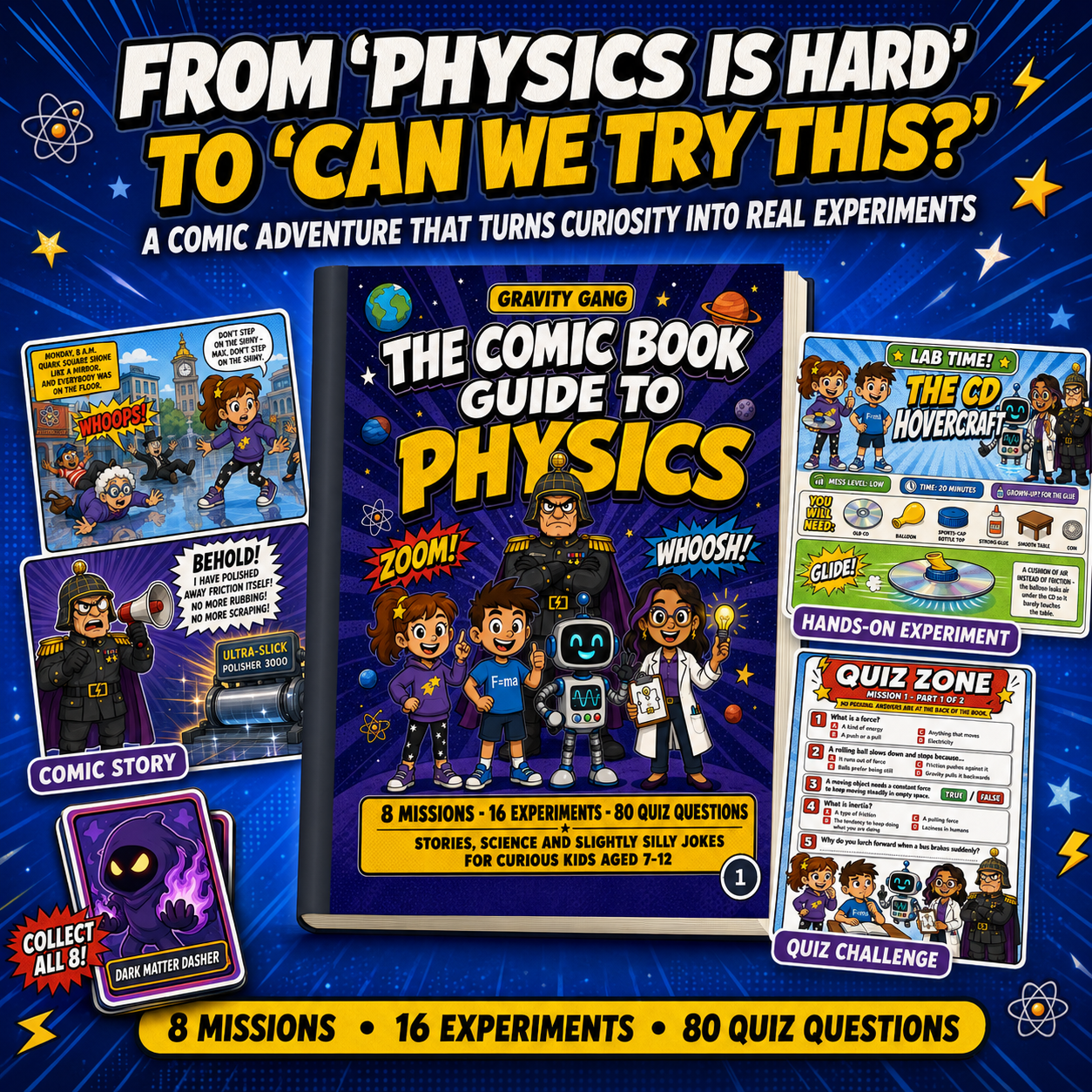
Browse the full Brainie Comics collection to compare both titles, or go straight to the Fizz Force chemistry guide if acid-base reactions are the hook that got your kid interested. The product comes with a money-back guarantee, reducing risk in trying a sample chapter and an experiment.
Sources
- Easy science experiments you can do at home | We Are Teachers
- Science on a shoestring: experiments with everyday items | Science in School
- Acids and bases experiment exploring pH levels – Ohio State WOW
- Elephant toothpaste | Science Buddies
FAQ
What is the easiest science experiment to do?
The lemon and baking soda volcano and the balloon rocket are among the simplest, needing only a handful of pantry items and about 10 minutes. Both give an immediate, visible result that keeps younger kids interested without much setup.
What are 100 easy science experiments I can do at home?
A wide range of experiments stretches beyond household basics, but the core categories, acid-base reactions, density demos, crystal growing, and capillary action, cover most of what a no-kit collection offers. Mixing and matching from household-item experiment guides and age-banded collections gives plenty of variety without buying anything new.
What are 10 easy science experiments for kids?
Walking water, a lemon volcano, a baking soda bag inflation, elephant toothpaste, a red cabbage pH indicator, a balloon rocket, a homemade lava lamp, salt or borax crystals, milk and vinegar plastic, and candy color diffusion all appear in this guide with full instructions. Each uses household items and takes under 45 minutes from start to finish.
What are some easy 5-minute science experiments I can do?
The balloon rocket and the lemon volcano both run in about 10 minutes including setup, making them the closest to a true 5-minute activity. For something even faster, dropping an effervescent tablet into colored water for a quick fizz demonstration takes barely any prep.