

Two Week Trial: ADHD Reading Strategies for Parents & Teachers
The strategies with the strongest track record for ADHD readers combine four things: a clear purpose before reading starts, short timed chunks instead of long stretches, an active comprehension routine like TWA or RAP, and a format that holds attention (audiobooks, graphic novels, or read-aloud). Pick one pre-reading habit and one during-reading habit, run them for a week, and measure whether comprehension checks improve before adding anything else.
TL;DR:
- Using a single reading strategy like RAP or chunking with a timer for three sessions can significantly improve comprehension and retention for ADHD readers.
- Pre-reading routines such as asking questions about headings or setting a purpose clearly prepare attention and enhance understanding before starting.
- Active techniques during reading, including RAP after each paragraph and using line guides or reading aloud, help maintain focus and prevent comprehension gaps.
- Creating an optimized environment with adjustable fonts, text-to-speech, timers, and visual aids supports sustained attention and reduces distractions.
- A two-week trial pairing one pre-reading and one during-reading strategy, with measurable progress, offers the best way to identify what works for each individual.
Table of Contents
- Best ADHD Reading Strategies to Try First
- Set Up Your Reading Session Before You Start Reading
- Active Reading Tactics for While You’re in the Text
- Quick Checks After You Finish Reading
- Build a Reading Environment That Doesn’t Fight You
- Adjust the Approach by Age
- Run a Two-Week Trial to Find What Actually Works
- Where Comics and Hands-On Activities Fit Into Reading Practice
- Progress Looks Slower Than It Is
- A Kid-Friendly Way to Practice These Strategies at Home
- Sources
Best ADHD Reading Strategies to Try First
Start small. Trying five new strategies at once guarantees none of them stick. These are ranked by how fast you’ll see a result and how little setup they require.
- Preview and question the headings. Turn every heading into a question before reading (“What Causes Volcanoes?” becomes “Why do volcanoes erupt?”). Takes 60 seconds. Good for students with textbook assignments.
- Set a purpose sentence. Before opening the book, write one sentence: “I’m reading this to find out ___.” Best for kids and adults alike.
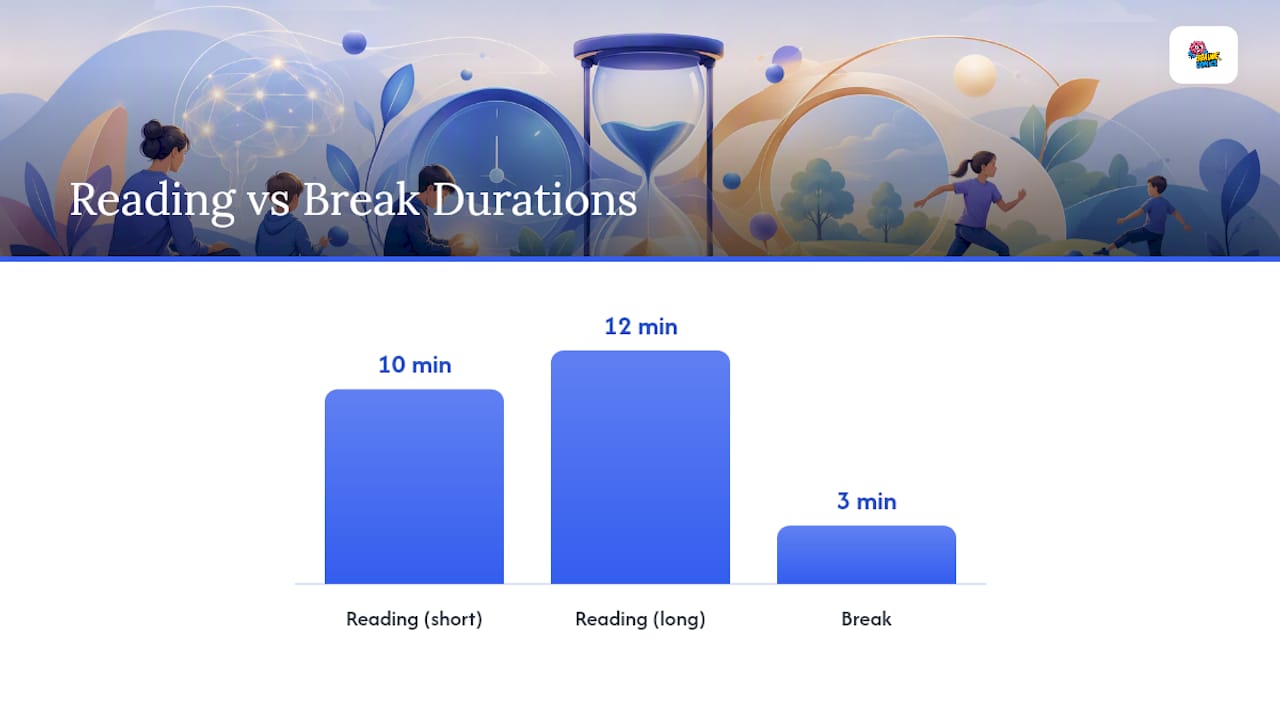
- Run a 12/3 timer. Read for 12 minutes, pause for 3, jot a one-line summary. Best for anyone whose attention drops mid-chapter.
- Pair the text with audio. Listen and read simultaneously. Best for adults and students juggling dense material.
- Try RAP paragraph by paragraph. Read, Ask yourself what it said, Put it in your own words. Best for reluctant readers who reread the same page without absorbing it.
- Add a body double. Read in the same room as someone else, even silently. Best for kids and adults who lose focus alone.
Micro-experiment: pick one from this list, use it for three 15 minute sessions this week, and track whether you remember more afterward. That single data point tells you more than any generic advice.
Set Up Your Reading Session Before You Start Reading
Most comprehension failures for ADHD readers happen before a single word gets read. Attention and working memory both work better when there’s a defined target, which is exactly what TWA (Think before reading, Think while reading, Think after reading) and SQ3R (Survey, Question, Read, Recite, Review) are built to provide.
TWA works well for shorter passages, articles, or a single textbook section. The script is simple:
- Think before: “What do I already know about this topic? What is the author’s purpose?”
- Think while: “Am I reading fast enough? Does this connect to what I already know?”
- Think after: “What was the main idea? What are two supporting details?”
TWA taught through explicit modeling improved recall of main ideas and supporting details, and the gains held up over time rather than fading after the first practice session.
SQ3R fits longer material better, like a full textbook chapter, because the Survey and Review steps give structure across multiple pages instead of one paragraph.
Pro Tip: Before assigning or starting any chapter, spend two minutes scanning bold words and images only. Naming five unfamiliar terms out loud before reading cuts confusion later by giving working memory something to attach new information to.
Active Reading Tactics for While You’re in the Text
This is where most ADHD reading interventions live or die. Reading the words is not the same as processing them, and the gap between the two is often invisible until a comprehension check reveals it.
- Run RAP every paragraph. Read one paragraph, Ask “What did I just read?”, Put the answer into your own words out loud or on paper. RAP produced measurable gains in inferential comprehension for students with learning disabilities and ADHD, with improvements still visible two months later.
- Chunk with a visible timer. Ten or twelve minutes of reading followed by a three minute break resets attention before it collapses. A kitchen timer or phone works fine.
- Use a line guide or index card. Sliding a card down the page as you read blocks visual noise from the rest of the text and keeps your place when attention drifts.
- Annotate in three words or fewer per margin note. Long annotations become their own distraction. A single word (“cause,” “example,” “confusing”) is enough to mark the spot.
- Read aloud for dense sections. Vocalizing forces pacing and catches the moment your eyes are moving but your brain checked out, which is the exact failure mode researchers call the illusion of understanding.
Movement helps more than most readers expect. Standing at a counter, pacing during an audiobook chapter, or reading while on a stationary bike are all normal, effective adaptations rather than signs something is wrong. Reading aloud, using timers, and body doubling are standard recommendations from ADHD coaching resources for exactly this reason.
Pro Tip: If a paragraph doesn’t make sense after one RAP cycle, don’t push forward. Reread just that paragraph and rerun RAP once before moving on. Fixing the gap immediately is faster than trying to patch it after finishing the chapter.
Quick Checks After You Finish Reading
A comprehension check takes 30 seconds and tells you immediately whether the strategy worked or whether you just moved your eyes across the page.
- GIST it. Summarize what you read in one sentence of fifteen words or fewer. If you can’t, that’s your signal to reread.
- Ask three questions. What happened? Why did it happen? What would happen if one detail changed? Answering all three out loud confirms real comprehension.
- Retell to someone else. Explaining the passage to a parent, classmate, or coworker exposes gaps that silent review misses.
- Re-run RAP at the paragraph level if the summary or retell falls apart, rather than rereading the whole page from scratch.
Fix-up strategies matter more than getting it right the first time. A reader who catches confusion and reruns RAP on one paragraph is doing exactly what strong readers do automatically.
Build a Reading Environment That Doesn’t Fight You
The physical setup around a reading session often matters as much as the strategy itself. A few adjustments:
- Paper vs. screens: paper removes notification risk but offers no read-aloud option; screens allow font size, spacing, and text-to-speech adjustments that some readers need.
- Reader mode and spacing: widening line spacing and switching to a sans-serif font in reader mode reduces visual crowding that competes for attention.
- Text-to-speech and read-along audiobooks: pairing audio narration with the printed or digital page keeps pace steady and catches drift immediately.
- Timer apps: any basic countdown timer supports the 12/3 chunking method without extra setup.
- Colored overlays or a reading window: a cut-out card frame or a tinted overlay isolates one line at a time for readers who lose their place easily.
- Fidget items: a quiet fidget in the non-writing hand can support focus, but only if it doesn’t produce noise or require visual attention.
Format flexibility matters too. Literacy guidance from the Scottish Book Trust explicitly endorses graphic novels and audiobooks as legitimate formats to build reading frequency and motivation, not just easier alternatives to “real” reading. For families exploring accessible digital formats, this EPUB accessibility checklist covers practical adjustments worth checking before buying an e-reader edition.
Adjust the Approach by Age
The core routines stay the same across ages. What changes is how you deliver them.
- Children: graphic formats and short rituals work best. Pair a story with a hands-on activity, keep sessions to 10 to 15 minutes, and use guided oral reading rather than silent independent reading at first.
- Students: SQ3R fits textbook chapters well. Turning every heading into a question before reading, then scheduling reading into fixed study blocks rather than open-ended time, cuts down on procrastination.
- Adults: purpose-first reading matters most. Know why you’re reading something before you start, pair long documents with audio, and put reading blocks directly on a calendar instead of hoping for open time.
- Co-occurring dyslexia or low working memory: these strategies support attention and comprehension, but they don’t replace specialist reading instruction. If decoding itself is the struggle, not just focus, loop in a reading specialist alongside these techniques. Families managing multiple neurodivergent needs at home might also find value in structuring routines the way this guide on reducing decision fatigue in neurodivergent households approaches meal planning. The same fixed-routine logic applies directly to reading schedules.
Classroom-specific supports, like structured silent reading blocks and engaging text selection, are covered in more depth by Reading Rockets’ guidance for children with ADHD, and specialist inclusion approaches are explored in this overview of SEND education practices.
Run a Two-Week Trial to Find What Actually Works
Guessing wastes time. Testing doesn’t.
- Pick two strategies — one pre-reading (TWA or purpose-setting), one during-reading (RAP or chunking with a timer).
- Define your measure before starting: time-on-task in minutes, plus a 3-question comprehension check after each session.
- Run daily 15 to 20 minute sessions for two weeks, logging a simple checkbox and a 1 to 5 comprehension rating each time.
- Review at day 14. If comprehension ratings trend up, keep the strategy. If flat, adapt the delivery (shorter chunks, different format). If it never worked, drop it and try a different pairing.
Pro Tip: Don’t judge a strategy after one session. ADHD readers often need three to five tries before a new routine feels automatic enough to show its real effect.
Where Comics and Hands-On Activities Fit Into Reading Practice
Graphic formats work because the art carries part of the cognitive load that text alone demands, which frees up attention for actual comprehension instead of decoding. Brainiecomics builds on that with titles like Gravity Gang, aimed at kids 7 to 12, that pair a story with real physics and chemistry concepts.
- Each book includes kitchen-safe experiments using household items, which turns post-reading review into something hands-on instead of another worksheet.
- Pairing a chapter with RAP (read, ask, put it in your own words) before running the linked experiment reinforces comprehension through action, not repetition.
- The format itself supports reluctant readers the same way audiobooks and graphic novels do elsewhere in this guide: lower barrier to entry, higher chance of a second read.
Progress Looks Slower Than It Is
Reading gains for ADHD readers rarely show up as a dramatic before-and-after. They show up as one more paragraph retained, one fewer reread, a comprehension check that took less effort than it did last week. Consistency beats intensity here. Run the two-week trial, track the small numbers, and adjust based on what the checkboxes actually say rather than how the week felt.
— Brainie Comics
A Kid-Friendly Way to Practice These Strategies at Home
Most of the tactics in this guide, RAP, chunking, purpose-setting, work better when the material itself is worth finishing. Printed comic books that pair adventure stories with real science concepts and kitchen experiments can support this approach.
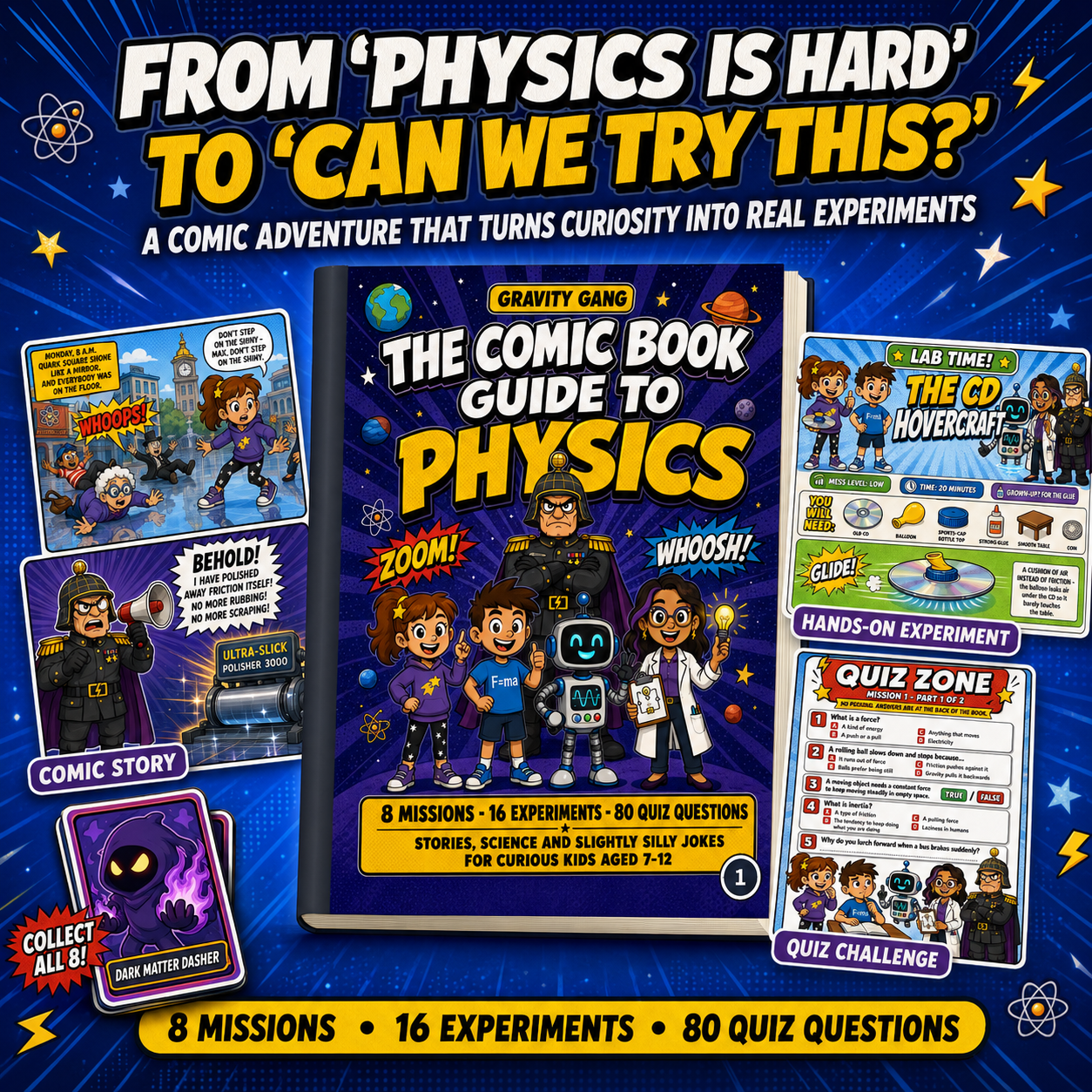
Fizz Force works well as the text for a RAP practice session precisely because the plot gives kids a reason to find out what happens next, and the linked experiment turns the post-reading check into something they do with their hands instead of a worksheet they resist. For a family or classroom trying the two-week trial plan above, a Brainiecomics title makes a natural pick for the “engaging format” strategy, since it’s built around getting reluctant readers to want the next chapter. A short 20-minute inquiry-based activity using the book is a low-effort way to start. Check the current titles and order one to test in this week’s reading session.
Sources
The strategies here draw on the RAP comprehension study from the University of Nebraska, which measured maintained gains two months post-intervention; CHADD’s overview of executive function and reading comprehension; classroom guidance from Reading Rockets; practical tactics from ADDA; and pragmatic tips from Verywell Mind.
- RAP: A Reading Comprehension Strategy for Students with Learning Disabilities and Concomitant Speech-Language Impairments or ADHD