

Static Electricity for Kids: A Hands-On Guide to Charge
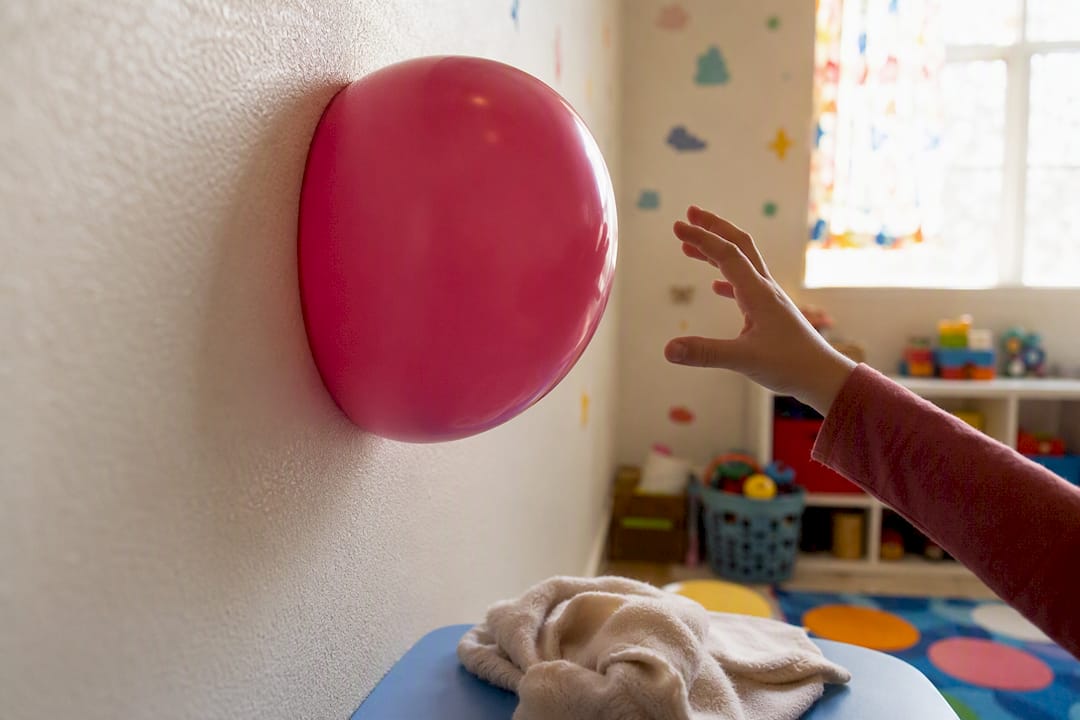
Static electricity is extra electric charge sitting on a surface, usually because electrons got rubbed off one material and piled onto another. That charge makes things pull together or push apart, which is why a balloon can stick to a wall without any glue. Try it right now: rub a balloon on your kid’s hair for ten seconds, then press it against a wall.
- Watch it stick. The balloon clings for a minute or more, even upside down.
- What’s coming next: the science behind why, four experiments you can build from stuff already in your kitchen, safety notes, and questions to turn the trick into a real lesson.
Key Takeaways
Static electricity for kids comes down to one idea: rubbing certain materials together moves electrons, and that leftover charge is what makes balloons stick, hair rise, and tiny shocks happen at the doorknob.
| Point | Details |
|---|---|
| Charge moves, it isn’t created | Rubbing a balloon on hair transfers electrons instead of generating brand new electricity. |
| Balloon-to-wall trick works instantly | A charged balloon sticks to a neutral wall through polarization, no charge needed on the wall. |
| Pick reliable material pairs | Wool or hair paired with rubber or Styrofoam gives the strongest, most repeatable static charge. |
| Humidity is the enemy | Dry rooms hold a static charge far longer than humid ones, so troubleshoot damp days first. |
| Add a prediction step | Asking kids to guess the outcome before each demo turns a trick into an actual experiment. |
Table of Contents
- What Causes Static Electricity in Kids’ Everyday Experiments?
- What Are Everyday Examples of Static Electricity?
- Four Static Electricity Experiments Kids Can Try Today
- Which Materials and Safety Rules Work Best?
- How Do You Turn a Static Demo Into a Real Lesson?
- Brainie Comics Turns One Demo Into a Whole Science Habit
- Our Take on Teaching Static Electricity to Kids
- Sources
What Causes Static Electricity in Kids’ Everyday Experiments?
Picture electrons playing tug-of-war between two materials. Balloon rubber wins that match against hair, so it pulls electrons away and ends up with extra negative charge while the hair goes positive. That’s charging by friction, and it’s the entire trick behind nearly every static demo you’ll run with kids.
The rule that governs what happens next is simple: like charges shove each other away, opposite charges pull together. A negative balloon and a positive strand of hair snap toward each other. But here’s the part most adults skip: the balloon sticks to a neutral wall too, because the balloon’s charge nudges the electrons inside the wall around, called induced polarization. No charge needed on the wall at all.
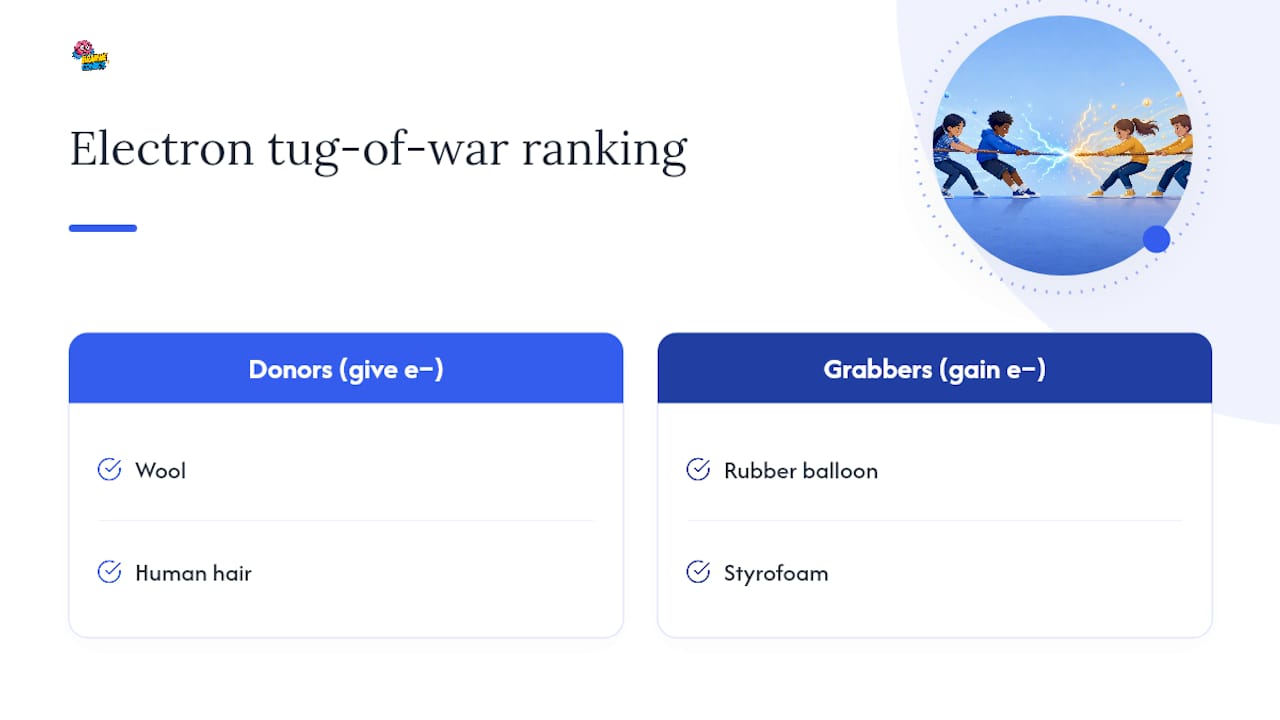
Some materials are just better at grabbing or losing electrons than others. Wool and human hair tend to give electrons away easily, while rubber balloons and Styrofoam grab them greedily. Knowing that “tug-of-war ranking” lets you pick pairs that work every time instead of guessing.
What Are Everyday Examples of Static Electricity?
Kids run into static charge constantly, they just don’t have a name for it yet.
- Balloon sticking to hair or a wall: the balloon steals electrons from hair, then polarizes the wall to hang on.
- Hair standing up after a plastic slide: the slide strips electrons off, leaving each strand positively charged and pushing away from its neighbors.
- Socks clinging together from the dryer: tumbling fabrics rub and swap electrons the same way a balloon does.
- A tiny shock touching a doorknob: built-up charge on you jumps to the metal all at once.
- A comb bending a stream of water: a charged comb polarizes the water molecules and pulls the stream sideways.
Between experiments, send kids on a five-minute hunt around the house to spot one static moment and describe which material probably “won” the tug-of-war.
Four Static Electricity Experiments Kids Can Try Today
Each of these builds on the last, so run them in order if you want a full afternoon of static electricity activities.
- Balloon and hair, then balloon to wall. Inflate a balloon, rub it on dry hair for 15 to 20 seconds, and lift it slowly. Hair should rise and follow the balloon. Press the same balloon on a wall and let go, it should hold for a minute or longer. Swap in wool, silk, or fleece instead of hair to see which fabric produces the strongest static charge.
- Tape or straw electroscope. Hang two thin strips of tape from a pencil so they touch, or balance a drinking straw on a bottle cap. Rub a balloon or comb on hair and bring it close without touching. The tape strips should swing apart, or the straw should spin toward the object, showing an invisible charge that the Exploratorium’s electroscope activity was designed to reveal. This one works well for kids eight and up who like a “detective tool” better than a party trick.
- Flying tinsel or pie-pan levitation. Tape a few strands of metallic tinsel to a tabletop, charge a balloon or a piece of PVC pipe, and hold it above the tinsel. The strands should stand up and reach toward the charged object, demonstrating polarization and repulsion in real time, according to Exploratorium’s flying tinsel demo. Keep this one away from bare skin and never try it near an outlet, since sparks can occasionally jump between charged surfaces.
- Electrical fleas (confetti jumpers). Cut tiny bits of tissue paper or foam packing peanuts, set them on a table, and hover a charged comb or balloon just above. The bits should hop up and stick, then drop off once the charge weakens, sometimes with a faint tapping sound as they let go. Older kids can time how long the “fleas” keep jumping to compare which material holds charge longest.
Charge always fades over time, faster on humid days since moisture in the air helps electrons leak away quietly. If a demo stops working, dry the balloon and your hands with a paper towel, rub longer than you think you need to, and try again in a drier room.
Pro Tip: Keep one “control” balloon rubbed on wool and one rubbed on hair, then race them to see which sticks to the wall longer. It turns a single demo into a mini experiment with a real comparison.
Which Materials and Safety Rules Work Best?
Rubber, plastic wrap, and Styrofoam grab electrons easily, while wool, hair, and cotton give them up. Pairing a strong “grabber” with a strong “giver” gives you the most reliable results.
- Never let a charged object touch a metal surface you’re trying to keep charged. Metal conducts electricity and drains the charge instantly.
- Skip electronics near any spark-producing demo; a static discharge can occasionally scramble sensitive circuits.
- Latex balloons can trigger allergic reactions in some kids, so keep vinyl balloons on hand as a substitute.
- Watch for small parts like tape strips and confetti bits around toddlers.
- On humid days, run a fan or try demos in an air-conditioned room since dry air holds a charge far longer.
Pro Tip: Hold charged objects by a plastic or wood handle rather than bare metal. That keeps the charge from draining into your hand before you even start the demo.
How Do You Turn a Static Demo Into a Real Lesson?
A single “cool trick” becomes real science once you add three habits: observing closely, predicting an outcome, and testing that prediction against what happens.
- Before the demo, ask: “What do you think will happen if I rub this balloon on your sleeve instead of your hair?” Get a guess on paper first.
- During the demo, prompt kids to describe what they see using their own words, not yours: does the hair rise slowly or snap up fast?
- After the demo, have them draw the balloon and hair with plus and minus signs, or record a 30 second video explaining what happened in their own words.
For kids ten and up, add a stopwatch: time how long a charged balloon holds tinsel airborne with wool versus with fleece, then graph the results. It turns one afternoon demo into a repeatable investigation, and it’s the same shift Exploratorium educators recommend when moving kids from watching a trick to measuring one.
Brainie Comics Turns One Demo Into a Whole Science Habit
A balloon trick is a great afternoon. A comic book that keeps kids running experiments week after week is a habit. Brainiecomics builds story-driven comics for kids ages 7 to 12 that pair an adventure plot with kitchen-safe science tasks on nearly every page.
- Each issue includes stepwise experiments using household materials, so there’s no special equipment to buy.
- Quizzes and a completion certificate at the end give kids a reason to finish the whole book, not just the first ten pages.
- Reluctant readers tend to stick with a comic longer than a textbook because the story pulls them forward between experiments.
[Image placeholder: promo graphic for Fizz Force and Gravity Gang comics]
Our Take on Teaching Static Electricity to Kids
Most static electricity activities stop at “watch this trick,” and that’s the biggest missed opportunity in how this topic usually gets taught. A balloon sticking to a wall is a fun 30 seconds. It becomes real learning only when a kid has to guess what will happen before you do it, then explain afterward why they were right or wrong.
The conventional advice leans too hard on one demo, one wow moment, and calls it a day. We’d rather see three shorter demos with a prediction attached to each than one polished trick with no follow up question. Building a simple electroscope matters more than most guides admit, because it shifts kids from being an audience to being an investigator, which is a completely different mental posture.
If you only have ten minutes, skip the flashiest demo and run the balloon test twice, once with wool and once with hair. Comparing results teaches more than repeating the same trick for applause.
— Brainie Comics