

How to Plan a Family Science Night Kids Will Actually Remember
A family science night is an event lasting about two hours where kids and parents work through hands-on stations together, usually several of them, exploring physics, chemistry, and biology with everyday materials instead of textbooks. Schools, libraries, and museums run them after hours, often in the early evening, with volunteers staffing each stop. If you’re organizing one for the first time, expect to spend several weeks on setup and a couple hours of hands-on time the night itself.
TL;DR:
- Lock in volunteers during week two to ensure sufficient staffing for stations and minimize last-minute chaos.
- Choose activities that take 10 to 15 minutes, use common household materials, and reset quickly to prevent long lines.
- Use a non-linear floor plan and clear signage to manage flow and prevent bottlenecks during the event.
- Keep the event to about two hours, with free-flow rotation, to accommodate family-paced exploration without strict schedules.
- Collect feedback through simple cards and observe station engagement to identify areas needing improvement for future events.
Table of Contents
- What Goes Into Planning A Family Science Night?
- What Are Good Family Science Night Activities?
- How Do You Handle Logistics, Safety, And Accessibility?
- How Do You Fund A Family Science Night?
- What Does A Sample Family Science Night Schedule Look Like?
- How Can Comics Extend Family Science Night Learning?
- How Do You Measure Whether The Event Worked?
- What Do Experienced Organizers Wish They’d Known Sooner?
- Sources
What Goes Into Planning A Family Science Night?
Start with the boring stuff first: date, time, and venue. Museum-hosted events like those at OMSI recommend booking group nights at least two weeks out, but if you’re running a school-based event from scratch, give yourself several weeks. That extra runway matters more than people expect, since volunteer schedules and material orders both move slower than you’d like.
Here’s a workable sequence:
- Weeks 1–2: Lock the date, venue, and theme. A single theme, like space or energy, makes every later decision easier, from station selection to flyer design.
- Weeks 2–3: Recruit volunteers and assign station liaisons, floaters, and a night-of coordinator.
- Weeks 3–4: Send home flyers, post to school apps or newsletters, and open RSVPs or headcounts.
- Weeks 4–5: Order consumable materials and print activity cards or instructions.
- Week 6 (or final days): Confirm volunteer count, send reminder emails, and do a walkthrough of the space.
The single biggest planning mistake is treating volunteer recruitment as an afterthought. Lock it in during week two, not week five.
What Are Good Family Science Night Activities?
Good stations share three traits: they take about ten to fifteen minutes, reset in under a minute, and use materials most families already have at home. That combination keeps lines moving and keeps your grocery bill under control.
- Edible DNA models: Twizzlers, marshmallows, and toothpicks build a double helix kids can eat afterward.
- Paper chromatography: Coffee filters, washable markers, and water separate ink into its component colors.
- Spaghetti tower challenge: Dry spaghetti and marshmallows test structural engineering under a timer.
- Balloon rockets: String, straws, tape, and balloons demonstrate Newton’s third law in under a minute.
- Sink-or-float density station: A tub of water and household objects (crayon, cork, coin) sorts by density.
- Shadow and light play: Flashlights and cutouts explore how light bends and blocks.
- Homemade spectroscope: A cereal box, an old CD, and a slit reveal a rainbow spectrum from any light source.
- Static electricity demo: Balloons and hair (or puffed rice and a comb) show charge transfer in real time.
- Seed planting biodiversity station: Cups, soil, and mixed seeds introduce plant variety and growth cycles.
- Simple circuits: Batteries, copper wire, and small LEDs let kids build a working circuit from scratch.
- Sound and vibration table: Rubber bands over a box or rice on a speaker cone show sound as physical motion.
- Chemical reaction fizz station: Baking soda and vinegar in sealed bags demonstrate gas pressure buildup.
Guides like Carly and Adam’s STEM night planner recommend exploration cards at each table so families can self-pace without waiting on a volunteer explanation every time.
Pro Tip: Pre-bag consumables (spaghetti, balloons, seeds) into individual family kits before the event. It cuts reset time at each station to almost nothing and stops one messy group from slowing down the next.
How Do You Handle Logistics, Safety, And Accessibility?
Layout decides whether your night feels lively or chaotic. A non-linear floor plan, where families can hit stations in any order, prevents the bottlenecks a single-file line creates, according to guidance from Childsci’s educator resources. Post clear signage at the entrance showing all stations at once so nobody feels forced into a queue.
Staffing works best with four defined roles:
- Station liaisons: One per table, responsible for reset and quick explanations.
- Floaters: Roam to cover breaks, spills, or a suddenly popular station.
- Student leaders: Older kids or teen volunteers running simpler stations independently.
- Event coordinator: One person tracking the clock, greeting families, and handling problems.
Typical events run about two hours with multiple stations, a scale confirmed across multiple event-planning resources. Budget enough time for setup and teardown.
Before doors open, run through this checklist:
- Confirm no station requires specialized PPE, and check your chemical hygiene plan if any reactions are involved.
- Keep Safety Data Sheets (SDS) on hand for any chemical-based activity, per outreach safety guidance.
- Post an allergy plan near any food-based stations (edible DNA, for instance).
- Set up a quiet space for kids who get overwhelmed by noise or crowds.
- Offer translated materials if your community includes non-English-speaking families.
- Stock a basic first-aid kit at the coordinator’s table.
How Do You Fund A Family Science Night?
Money is rarely the reason a family science night fails, mostly because the best activities lean on materials people already own. Baking soda, dry pasta, and old CDs cost almost nothing.
For the rest of your budget, look to:
- PTA funds: Often the fastest source for small requests under a few hundred dollars.
- Title I funds: Available at many schools for family engagement events, worth checking with your administrator.
- Local grants: County education foundations frequently fund one-time STEM events.
- County extension offices: Some offer free educator training or loaner kits.
On the partner side, reach out to local museums, university outreach programs, public libraries, and STEM professionals willing to run a station for an evening. Funding and materials guidance from university outreach programs confirms this mix of PTA, Title I, and grant funding is standard practice. For in-kind donations, ask hardware or grocery stores directly. A simple thank-you sign at the entrance covers sponsor recognition without needing a formal program.
What Does A Sample Family Science Night Schedule Look Like?
A copyable 2-hour run sheet, adapted from museum and school models, looks like this:
- 6:00–6:15 pm: Arrival, check-in, and name tags.
- 6:15–6:25 pm: Welcome remarks and a 5-minute opening demo (something visual, like a baking soda volcano).
- 6:25–7:35 pm: Open station time, free-flow rotation across all 6 to 10 tables.
- 7:35–7:45 pm: Snack break or transition buffer.
- 7:45–7:55 pm: Closing remarks and a quick group demo or raffle drawing.
- 7:55–8:00 pm: Feedback cards collected at the exit.
Free-flow rotation works better than timed rounds for most family audiences since it lets kids linger at what grabs them. Timed rounds only make sense for large groups where you’re managing 200+ people through a small number of stations. Either way, have your coordinator do a time-check at the halfway mark to see if any station has a backup.
Keep the welcome short: introduce the theme, point out the exit and quiet space, and remind families they can visit stations in any order. Closing remarks should thank volunteers by name and mention where feedback cards go.
How Can Comics Extend Family Science Night Learning?
A good station doesn’t have to end when the night does. Pairing a short read-aloud from Fizz Force with a simple kitchen experiment gives kids a story hook before they touch the materials, which works especially well for reluctant readers who tune out straight instructions. Gravity Gang fits naturally at a motion, force, or balloon rocket station, since its narrative walks through the same physics kids just tested with their hands.
For take-home value, offer a comic as a raffle prize or send one home as a suggested next activity. Since Brainie Comics books use household materials for their built-in experiments, families can repeat the fun without buying anything new.
| Use case | Best station fit | Take-home value |
|---|---|---|
| Read-aloud + kitchen experiment | Chemistry or reaction stations | Extends the fizz station story at home |
| Raffle or door prize | Any station, end of night | Encourages repeat reading and experiments |
| Suggested follow-up activity | Motion, force, or circuits stations | Reinforces same-night concepts days later |
The Fizz Force chemistry comic and the Gravity Gang physics comic both work as standalone station resources or as a bridge between the event and the weeks after it, when most families forget what they learned within days.
How Do You Measure Whether The Event Worked?
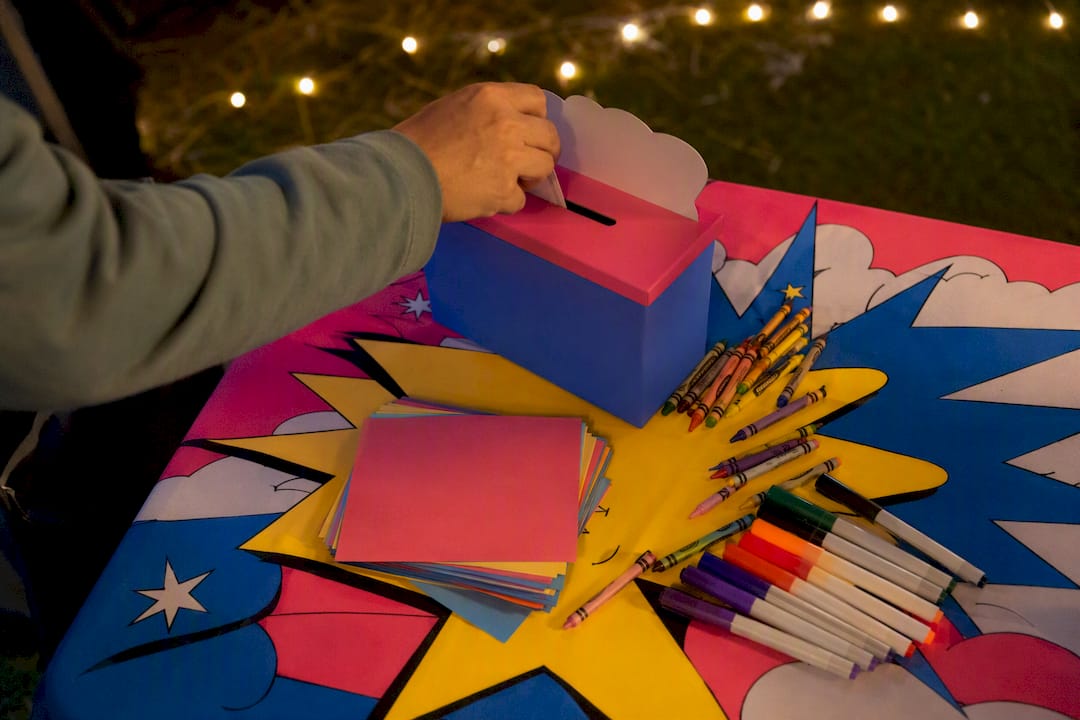
Feedback cards at the exit are the simplest tool you have. Keep them to three questions: what was the family’s favorite station, what they’d change, and whether they’d attend again. You’ll get far more honest answers from a card filled out on the spot than from a follow-up email nobody opens.
Headcount matters too, but compare it against RSVPs, not against last year’s turnout. A school with 400 students and 60 families attending is a healthier ratio than a school with 1,200 students and 150 families, even though the second number looks bigger on paper.
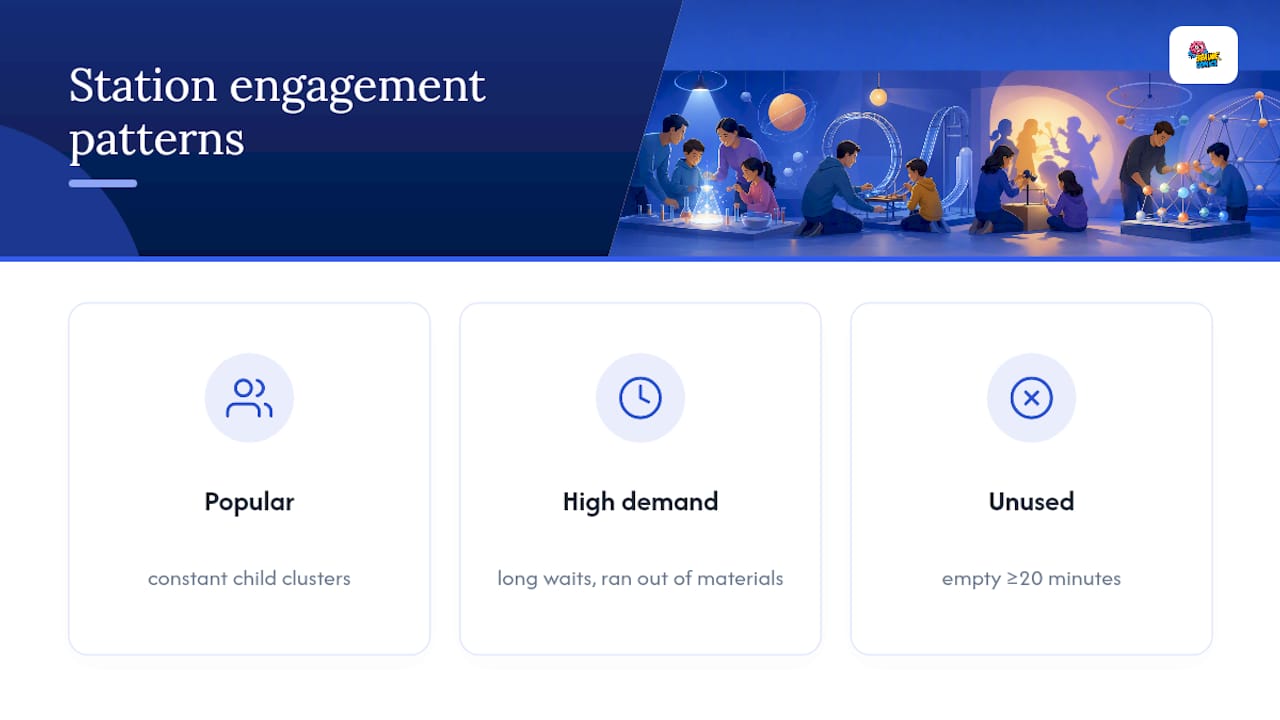
Volunteer debriefs catch problems feedback cards miss. Ask liaisons directly which station ran out of materials, which one had the longest wait, and which one nobody visited. That last detail tells you what to cut next year.
For a rougher gauge, watch the room during the event itself. Stations with a constant cluster of kids are working. Stations sitting empty for 20 minutes straight, even with a friendly volunteer standing there, usually mean the activity needs a redesign or a better spot on the floor.
What Do Experienced Organizers Wish They’d Known Sooner?
Most first-time organizers overbuild the station list. Ten stations sound impressive until you’re short three volunteers and the room turns to chaos. Cut to six or seven and staff them well.
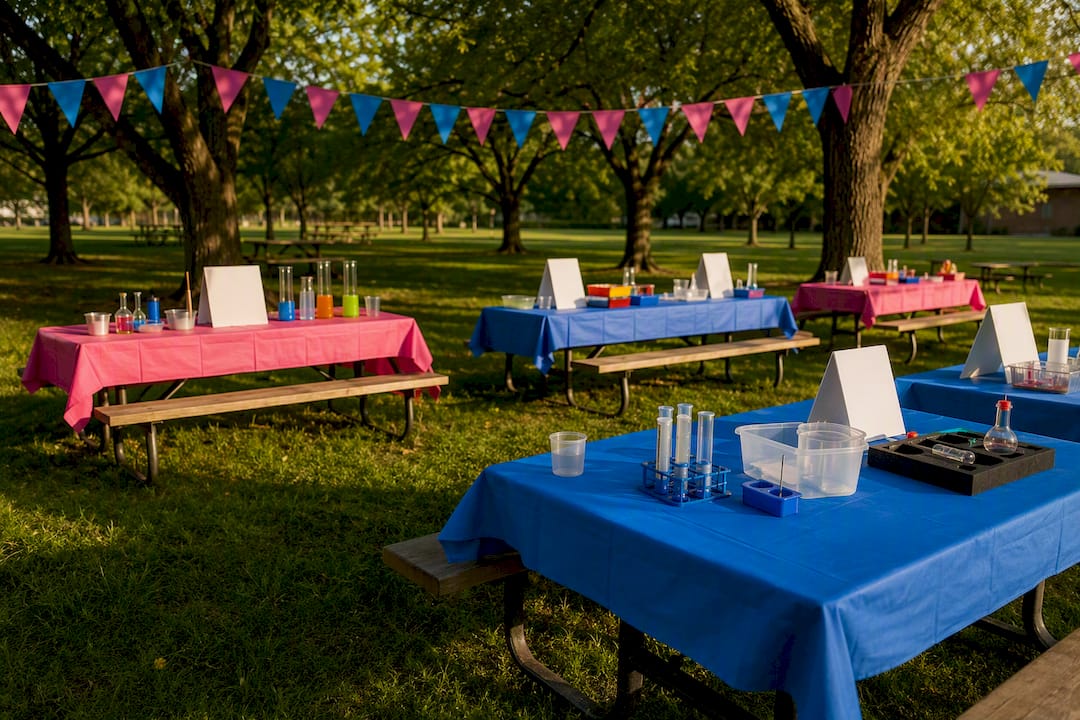
Recruit liaisons the same week you pick a date, not two weeks before. Volunteer leadership and student liaisons reduce bottlenecks more than almost any other single decision. Post signage at every entrance so families never bunch up at one table. Keep a backup bag of consumables in case one station runs hot early. And always plan a quiet corner. Nobody remembers to until a kid is overwhelmed at 6:40 pm.
Two things save more time than anything else: a non-linear layout, and a volunteer group chat you can use the night of the event.
— Brainie Comics
Sources
- Family Science Nights | OMSI
- Getting started with event planning — WWU engage resource guide
- How to plan a Family STEM Night — Carly and Adam
- Family Science Nights — Gasch Lab outreach